
In December 1923, the Minsk cinema workers were still running fundraisers. As the month opened, the Mingubotdel (The Minsk Province Art Workers Trade Union) sent its regular request to the Glavrepertkom (The Main Repertory Commission, for fee waivers for its Monday fundraising film. This time the film was Tot kto poluchayet poshchechiny (He Who Gets Slapped), based on the play by Leonid Andreyev. At that time, the most recent Russian version made was from 1916. It marked the film debut of performer I. N. Pevtsov.1
This film, to be shown at the Red Star cinema, was a fundraiser for the full Rabis, not just for a single cinema’s workers collective, as so many previous fundraisers were. 2
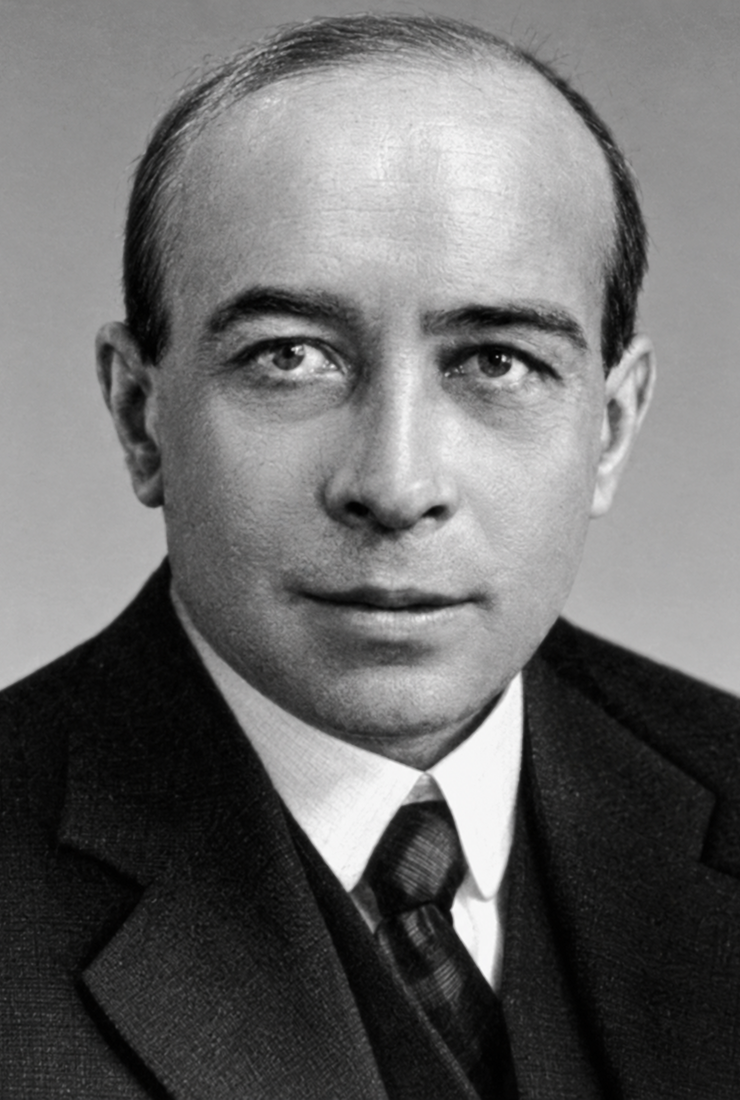
Illarion Pevtsov, AI enhanced.
Source: https://www.kino-teatr.ru/search/199582297/512890/
In Vitebsk, the Vitgubotdel (The Vitebsk Provincial Department of the Rabis) also wanted to use its Mondays for fundraisers. Some Rabis members believed that it was good to have cultural education and fundraising on Mondays, but others saw it as an exploitation of workers, forcing them to come in and contribute money on their day off.3
The city government of Borisov, not far from Minsk, was also working with the local Rabis. The two sides were working on an agreement regarding the “tenants” of the Red Star and Lux cinemas. The agreement was at least temporarily held up by the need to determine workers’ pay in the event the cinemas started taking in more money.4
Back in Minsk, on December 4, Minsk’s main newspaper, Zvezda, ran a story which described the repairs the Gorono (The City Public Education Department) made to the House of Culture, which was the former Choral Synagogue.5 The Zvezda story noted that a cinema for workers would be arranged there, “in the future.”6
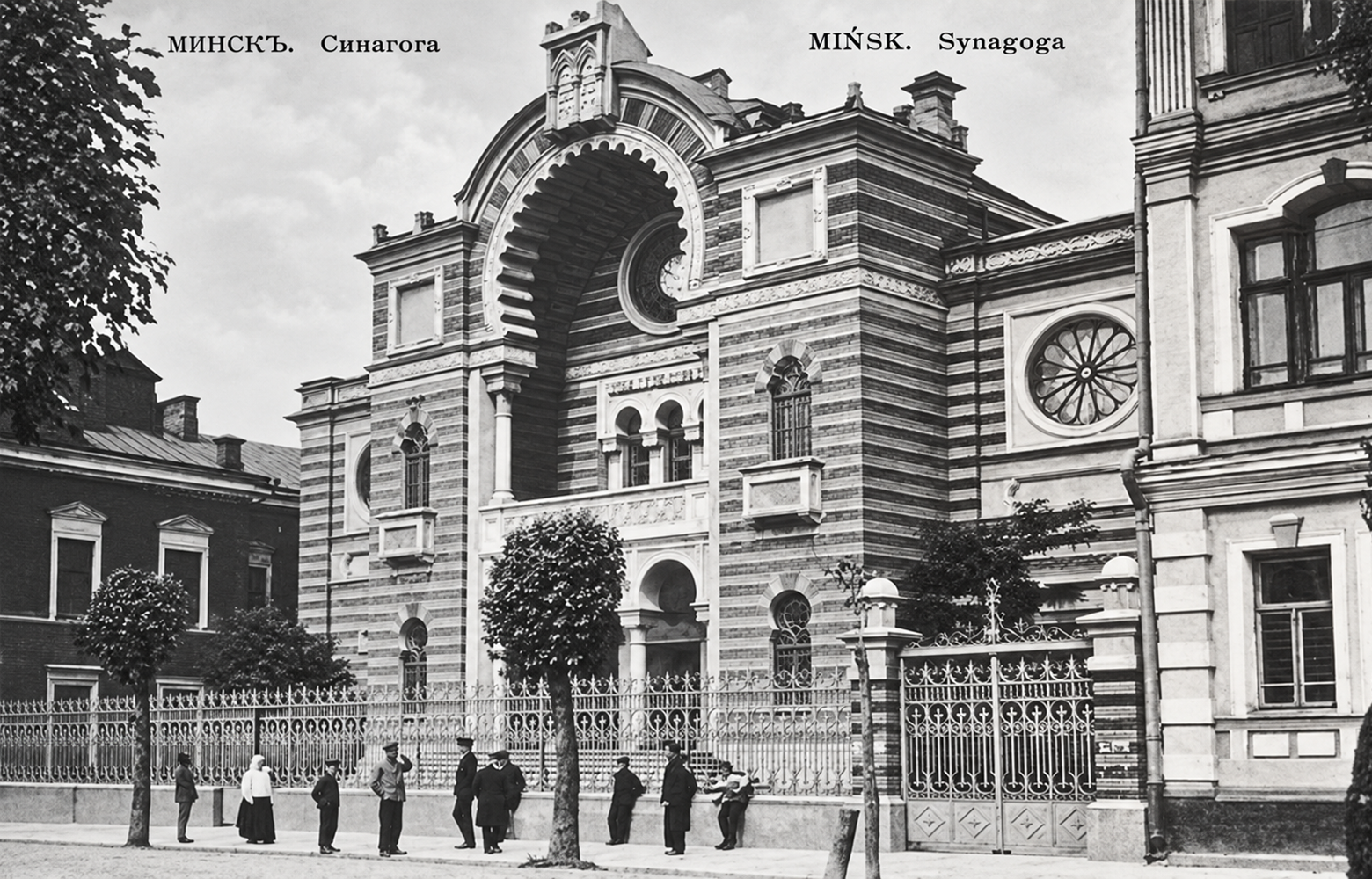
Choral Synagogue, Minsk
Source: Public Domain, Wikimedia Commons.
The Minutes from a December 13, 1923, Rabis meeting show that the Rabis was having trouble concluding a collective bargaining agreement with the Minsk Cinema Administration.7 The holdup was the deal in the Minsk Gorono transferring control of the cinemas to the Komkhoz (Minsk Public Utilities Department).
The Kultura cinema in Minsk was still operating. A writer to Zvezda complained that the pictures were running so fast that there was no time to read the intertitles. “Don’t be in such a hurry, please.” 8
There were films at the Red Profintern club (Profintern is the Professional Trade Union International) but apparently nobody cared. A letter writer pointed out that the purpose of the club was to give workers “everything possible in cultural, educational and professional relations.” The writer then complained that the club did not communicate well with factories and businesses about its events. As a result, the events were often poorly attended. The writer added that workers often slept through poorly organized lectures and that none of the films shown there were worth seeing.9
On December 20, Zvezda ran a very serious story about an alleged crime at the Kultura cinema. A 40 year old man was accused of attempting to rape a 13 year old girl during a film. The suspect was tried, but the outcome of the trial does not appear to have been published.10
Also on December 20, Zvezda ran a review of an older film showing at the Red Star. The writer called it Vel’mozha-Samodur (roughly translated as “The Tyrant Noble”). The writer mentions that the film includes Kondrati Yakovlev in its cast. The description of Yakovlev’s character as a “tyrant-lord” and the fact that Yakovlev only had 2 or 3 films to his credit by this time, leads us to believe that this was the film released as Komediantka (The Comedienne.) The also writer noted that “It would be necessary to take this picture to the clubs and show it to the children with the appropriate explanation, of course.”11
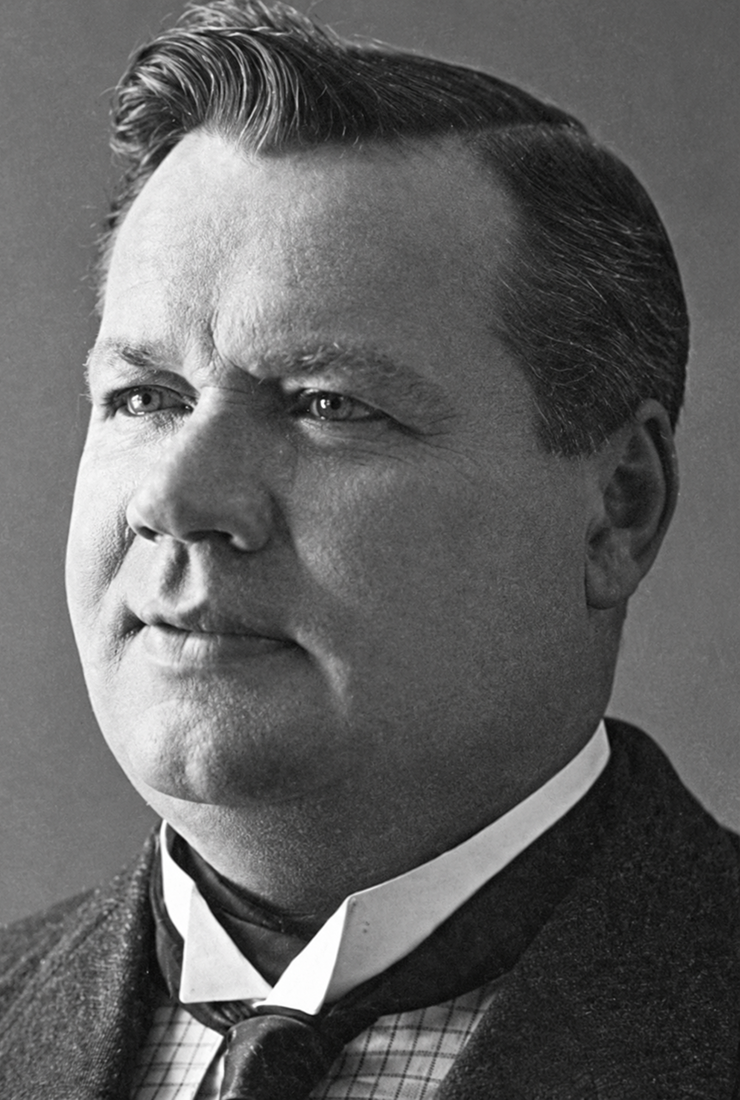
Kondrati Yakovlev, AI enhanced.
Source: https://www.kino-teatr.ru/kino/acter/m/sov/45951/bio/
The fates of two cinemas were decided by the end of the December. The former Lux, which someone had proposed to be used as a workers cinema (see here), was instead being turned into a large bakery.12
The Spartak was not closed (it was run by the Red Army although the Rabis was currently operating it). Still, the Presidium of the Rabis liquidated the Spartak Workers Collective expelled several Rabis members. Presumably, those expelled were part of the Collective.13 The Rabis leaders had already determined that the Collective was mismanaged (see here).
We do not know the actual day, but in December of 1923, leaders of the Narkompros (People’s Commissariat of Education) of each of the four Soviet Republics (Russia, Ukraine, Belarus and Transcaucasia) met and decided they would hold an all-Union film conference in 1924. The meeting ended up taking place in March 1924.14 It was at that meeting that the idea of a Belarusian state film trust, which would be known as Belgoskino, would be presented and adopted.
Also in December, Russia, the first Proletkino (Workers Cinema) feature films were released. There was Bor'ba za Ul'timatum (Struggle at the Ultimatum), which survives only in a poster and various articles…
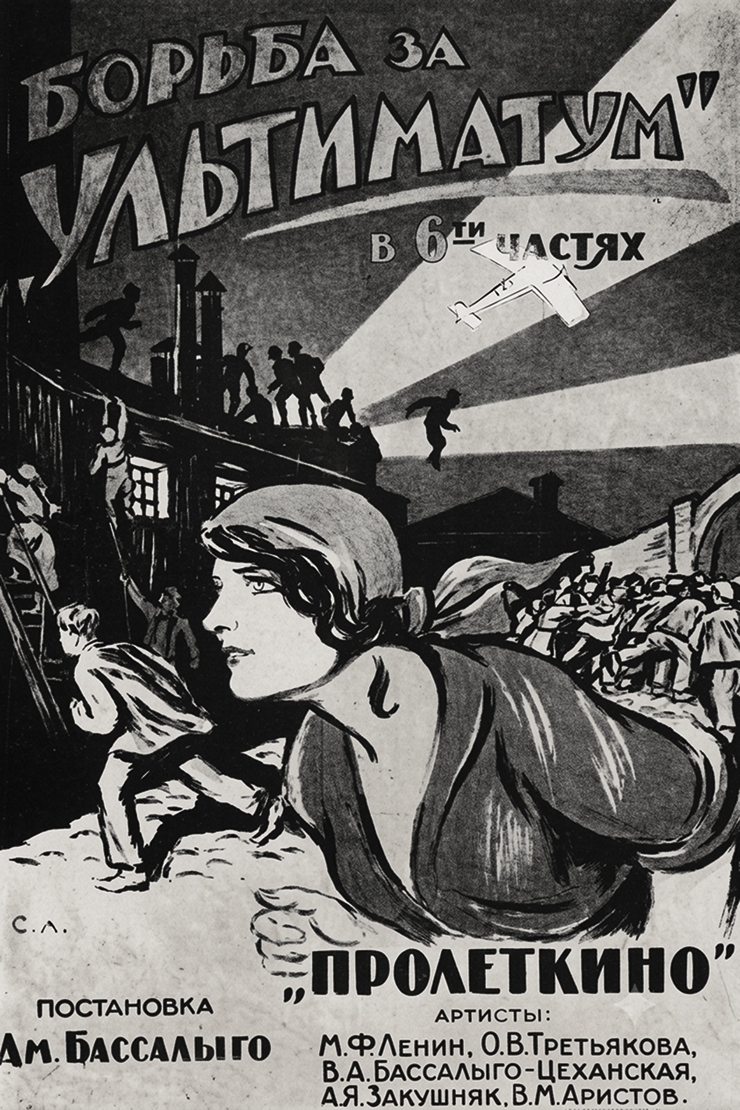
Citation for poster for Struggle at the Ultimatum Factory.
Source: https://www.kino-teatr.ru/kino/movie/sov/80078/foto/973539/
... and Kombrig Ivanov (Brigadier General Ivanov), which survives online!
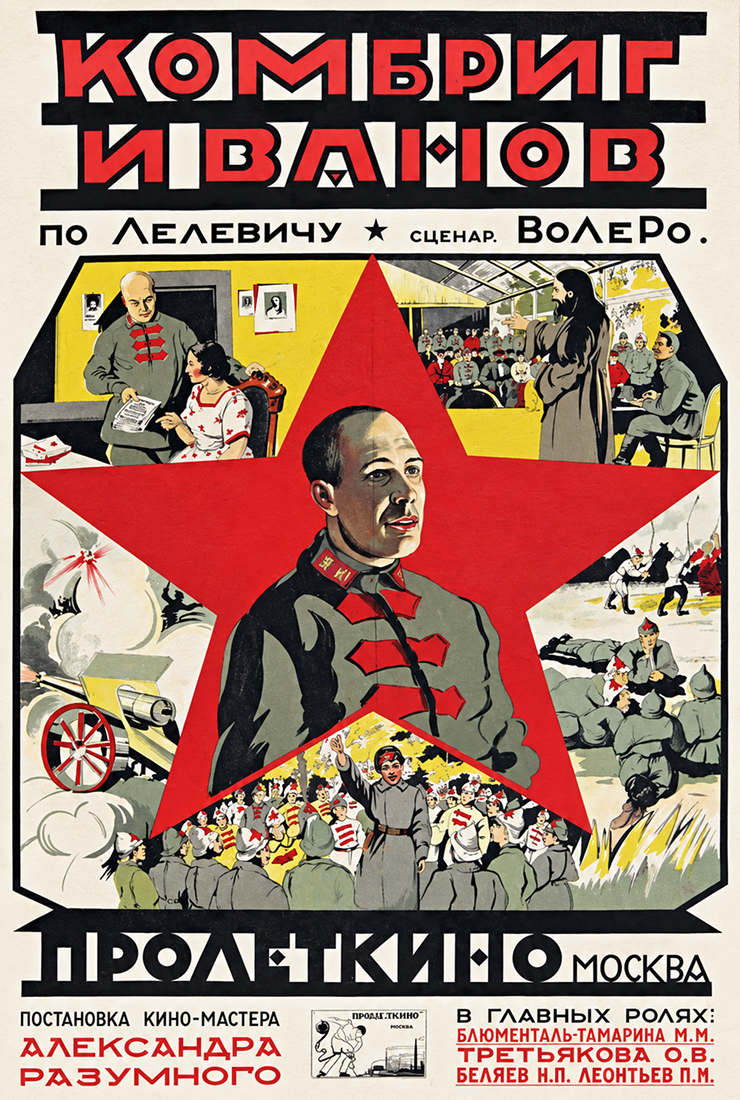
Official film poster Commander Ivanov.
Source: https://en.wikipedia.org/w/index.php?curid=53020156
Commander Ivanov.
The Russian Artfilm Co., a front for the Communist Party, advertised Kombrig Ivanov as The Miracle of Soldier Ivan.15 In most places, it was known as The Beauty and the Bolshevik. In 1924-25, screenings were announced at some 36 locations across the country, mostly in private auditoriums, such as labor halls.16
1 Vishnevsky, Ven. Khudozhestvennyye fil'my dorevolyutsionnoy Rossii [Художественные фильмы дореволюционной России; Feature Films of Pre-Revolutionary Russia]. Goskinoizdat, 1945, p. 117.
2 V Repertuarnuyu Komissiyu pri GPP [В Репертуарную Комиссию при ГПП; To the Repertory Commission at the GPP]. Date unclear, probably 3 Dec. 1923. Natsionalny arkhiv Respubliki Belarus’ NARB [Национальный архив Республики Беларусь (НАРБ); National Archive of the Republic of Belarus (NARB)]. Fond 307, Opis’ 1, Delo 15, p. 46.
3 Protokol № 97 zasedaniya B. Prezidiuma Vitgubprofsoveta [Протокол № 97 заседания Б. Президиума Витгубпрофсовета; Minutes No. 97 of the Meeting of the Bureau of the Presidium of the Vitebsk Provincial Council of Trade Unions]. 11 Dec. 1923. NARB, Fond 265, Opis’ 1, Delo 682, pp. 138-139.
4 Vypiska iz protokola Zasedaniya Prezidiuma Mingubotdela RABISA [Выписка из протокола Заседания Президиума Мингуботдела РАБИСА; Excerpt from the minutes of the meeting of the Presidium of the Minsk Provincial Branch of RABIS]. 6 Dec. 1923. NARB Fond 307, Opis’ 1, Delo 15, p. 26.
5 Bemporad, Elissa. Red Star on the Jewish Street: The Reshaping of Jewish Life in Soviet Minsk, 1917-1939. 2006. Stanford University, PhD dissertation. p. 124.
6 Dom Kul'tury [Дом Культуры; House of Culture]. Zvezda [Звезда; Star]. № 282 (1584). 4 Dec. 1923.
7 Protokol № 18 [nomer nerazborchiv] zasedaniya Pravleniya Mingubotdela RABISA [Протокол № 18 заседания Правления Мингуботдела РАБИСА; Minutes No. 18 of the meeting of the Board of the Minsk Provincial Department of RABIS]. 13 Dec. 1923. NARB Fond 307, Opis’ 2, Delo 1, p. 77.
8 Zvezda, № 293 (1595). 16 Dec. 1923.
9 V klube “Krasnyy Profintern”. Bol'she svyazi s predpriyatiyami i rabochim [В клубе “Красный Профинтерн”. Больше связи с предприятиями и рабочими; In the club “Red Profintern”. Closer ties with enterprises and workers]. Zvezda, № 295 (1597), 19 Dec. 1923.
10 Proisshestviya. Popytka iznasilovaniya [Происшествия. Попытка изнасилования.; Incidents. Attempted rape]. Zvezda, № 296 (1598), 20 Dec. 1923.
11 Kino “Krasnaya Zvezda” [Кино “Красная Звезда”; Cinema “Red Star”]. Zvezda, No. 296.
12 Khleb dlya payshchikov kooperativov [Хлеб для пайщиков кооперативов; Bread for shareholders of cooperatives]. Zvezda, № 297 (1599), 21 Dec. 1923.
13 Protokol № 36 Zasedaniya Prezidiuma Mingubotdela Rabisa [Протокол № 36 Заседания Президиума Мингуботдела Рабиса Minutes No. 36 of the Meeting of the Presidium of the Minsk City Branch of RABIS]. 24 Dec. 1923. NARB, Fond 307 Opis’ 2, Delo 2 p. 71.
14 Ryabchikova, Natalya “«Proletkino»: Ot «Goskino» Do «Sovkino»” [«Proletkino»: Ot «Goskino» Do «Sovkino»; "Proletkino": From Goskino to Sovkino] Kinozapiski no. 71 2005, pp. 260-273. www.kinozapiski.ru/ru/article/sendvalues/1215/ Accessed 27 Mar. 2026.
15 Ad. Film Daily. 7 Feb. 1924, p. 4.
16 Ad, Dayton Daily News, Dayton, Ohio 18 Dec. 1924 p. 23; “Impossibility of Holding Strikers in Line Now Apparent The News, Paterson, New Jersey 20 Oct. 1924, p. 8; “The Beauty and the Bolshevik Pays Visit to Buffalo, New York,” Daily Worker, New York, New York. 24 Oct. 1924, p. 6.; “Detroit Makes Big Showing with Films for Working Class,” Daily Worker, New York, New York, 23 Dec 1924, p. 12; showings would continue into 1925, for example, “Photoplay Depicting Life in Soviet Russia Will Be Shown Friday,” The Minneapolis Star. 10 Feb. 1925, p. 13; and an ad in The Seattle Star. 12 Oct. 1925, p. 12.