
On February 1, 1924, the main Minsk newspaper, Zvezda, let everyone know that the film Lenin’s Funeral had been released.1 At 1500 meters, depending on the projection speed, the film ran between 55 and 83 minutes.
This is not the entire film, but a clipping.
Lenin’s Funeral, 1924
That February 1 edition of Zvezda also showed that Minsk cinemas got some new/old films. One of them came under the Russian name of Afrodita [Афродита; Aphrodite], which the advertisement (for the Spartak cinema) said starred Elena Makovska.2 The film had played the previous October in Moscow.3
There is no film with the original name of Aphrodite that stars Elena Makovska, who seems mostly to have worked in Italy and Germany. We could find no film at all with the name Aphrodite that included Makovska in the cast. There was a 1918 film in Hungary entitled Aphrodité (Aphrodite), produced by Star Filmgyár és Filmkereskedelmi Rt. (Star Film Factory and Film Trading Co. Ltd).
February 5, 1924, brought more new/old films into the mix. The ads in Zvezda showed Vozdushnyye piraty (The Air Pirates) (1920 Metro Film GmbH), co-written, directed, and starring Harry Piel. It played at the Internatsional cinema.
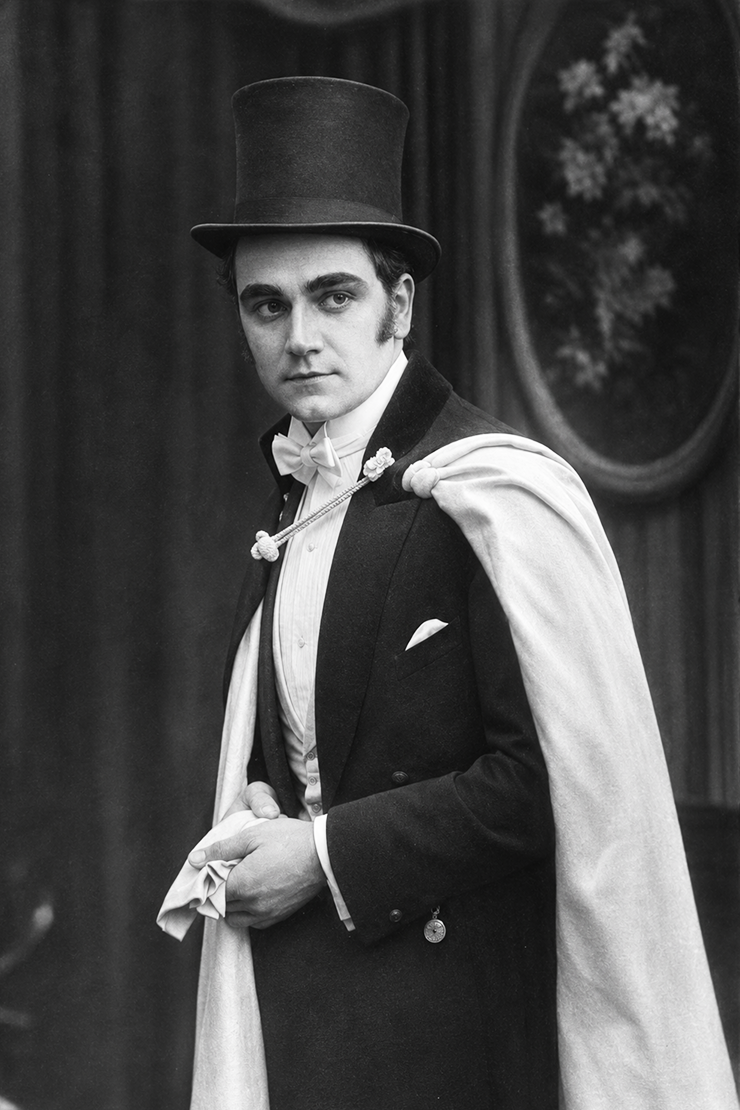
Harry Piel.
Source: Public Domain via Wikimedia Commons.

The Air Pirates (Die Luftpiraten), Italian ad.
Source: https://www.imdb.com/title/tt0442321/
The Kultura cinema had Geroy Alyaski (The Hero of Alaska). Kino I vremia. Byulletin (Cinema and Time. Bulletin) shows The Hero of Alaska as starring William Desmond and Laura La Plante. That makes it almost certainly Perils of the Yukon, a 1920 Universal release, which starred William Desmond.4
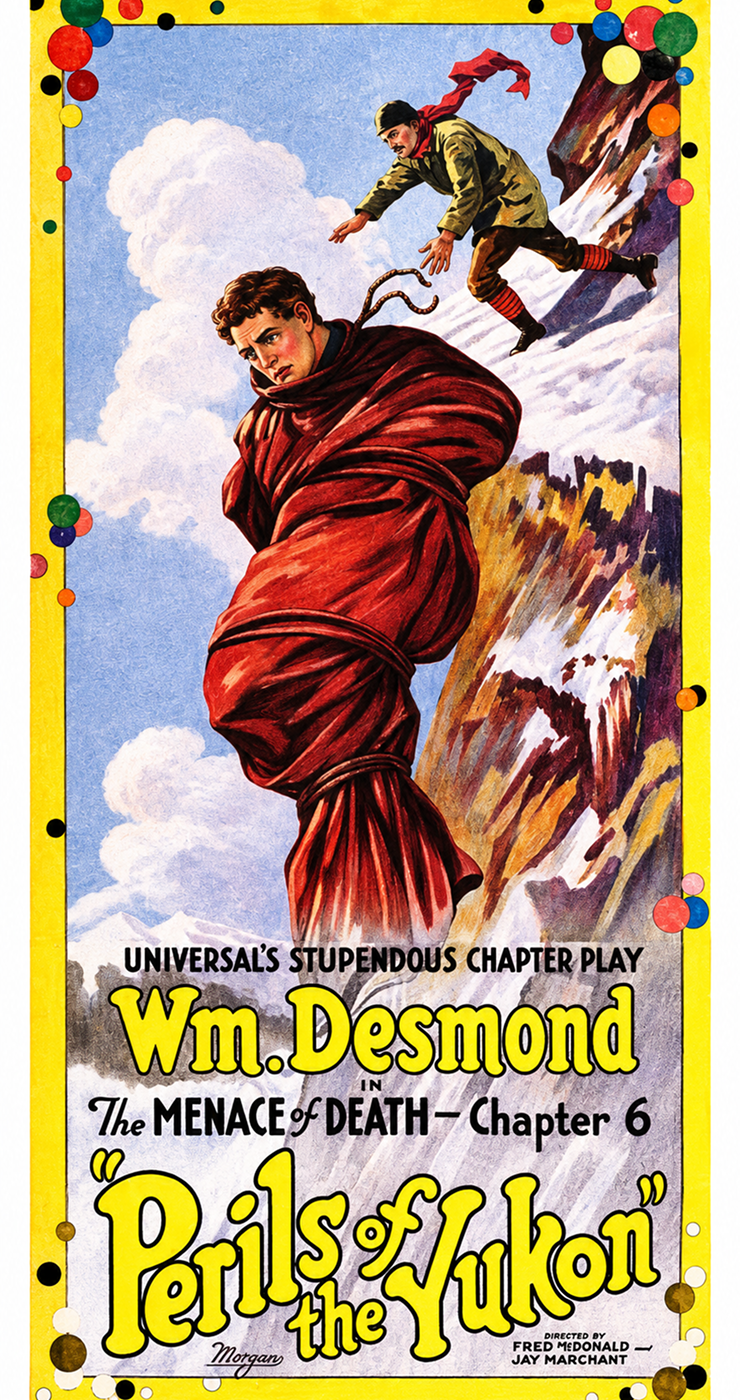
Perils of the Yukon. Universal.
Source: Public Domain via Wikimedia Commons.
And the Spartak was showing Syn Izrailya (Son of Israel). This appears to be a 1917 film starring Nikolai Rimsky and produced by Joseph Ermoliev,5 who was an important figure in pre-revolutionary Russian cinema. Kino-Teatr.ru lists the film but says only that Rimsky portrayed the character of Boris.6
The Red Star theater was showing Zhenschnina s Milliardami (A Woman with Billions). A film of that title was actually part 6 of the German film serial Die Herrin der Welt (The Mistress of the World). Each section, though, ran 70 to 90 minutes, enough to fill a large part, or all of a cinema program.7
Soviet Red Army soldiers seemed to be acting with impunity when they went to the movies. A February 8 article in Zvezda complained that a detachment of cavalry went to the House of Culture to see a film. The soldiers tied their horses to nearby trees to keep the animals in place. The horses, bored or hungry, began stripping the trees of their bark. The article ended “It’s time to take care of the people’s heritage.”8
On February 12, Son of Israel was replaced at the Spartak by Tayna Londonskogo tsirka (Mystery of the London Circus).9 This was almost certainly a re-named import, but which one? We can find no circus movies set in London and few circus movies at all.
The same set of ads showed the Red Star was screening Otvetnyy udar (This translates as Strike back, or Backstrike, but the original title was La Riposte, or The Riposte). The January 1, 1924, issue of Kino Gazeta (Cinema Newspaper) in Moscow shows this French film stars pre-revolutionary Russian film favorite Natalia Lisenko.10
La riposte, 1922
On February 14, the* Red Star* brought back Grimasy Parizha (The Grimaces of Paris), which also had Lisenko as one of its stars11 (see here).
Later that week, on February 19, the cinema ads in Zvezda showed the Spartak would screen the film on Lenin’s funeral.12 The same ads announced the return of Lukretsiya Bordzhiya (Lucretia Borgia) (for more, see here).
From February 19-26, the Red Star showed Lucretia Borgia, the Internatsional showed A Woman with Billions, the Kultura showed Hero of Alaska, and the Spartak showed Lenin’s Funeral.
On February 27, the Red Star brought in Grafinya Sarra (Countess Sarah), an Italian silent film starring Francesa Bertini. The Spartak brought in something new, Vozmezdiye (Retribution).13 There was more than one film with that name out there. There was a 1916 version by Alexander Khanzhonkov, which was possibly the Spartak film.14 More likely it was a 1923 film that was re-titled Operatsiya d-ra Ol'sena, Vozmezdiye (Dr. Olsen’s Operation: Retribution). This was a 1923 German film, originally titled merely Die Vergeltung (Retribution or Retaliation), starring Otto Gebühr.15
It was not a particularly notable month for the movies in Minsk. But big changes were in store for Belarus when the calendar turned to March.
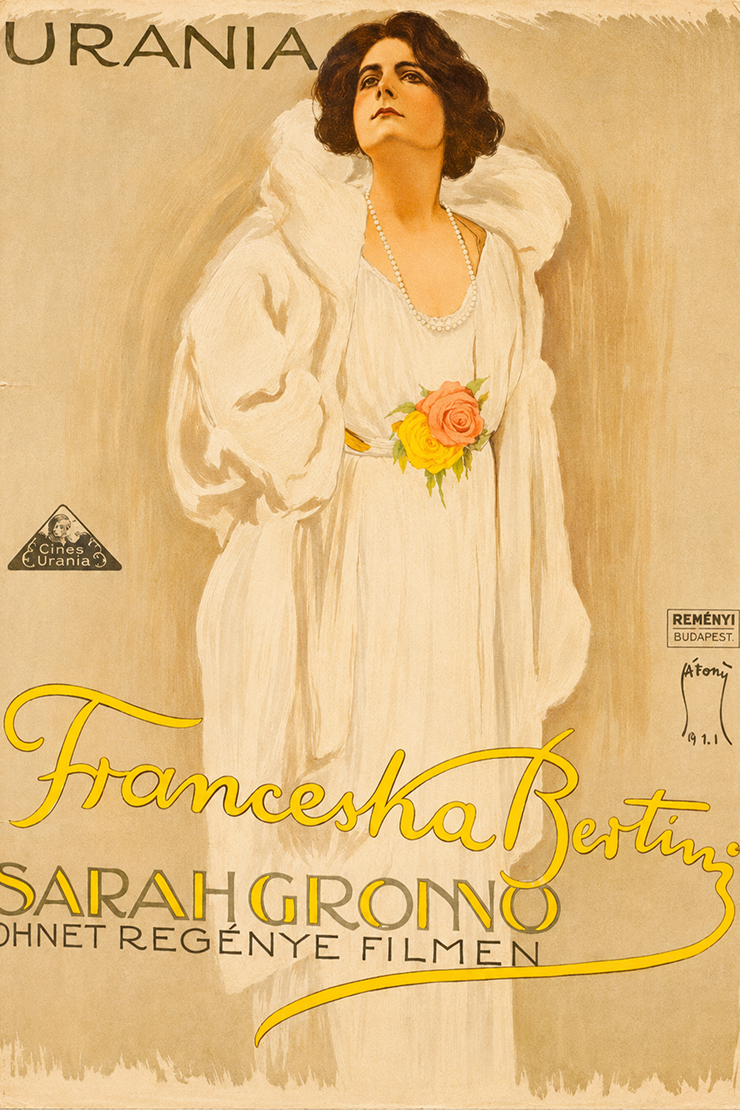
Countess Sarah poster, 1919.
Source: https://www.filmweb.pl/film/La+contessa+Sara-1919-197468/posters
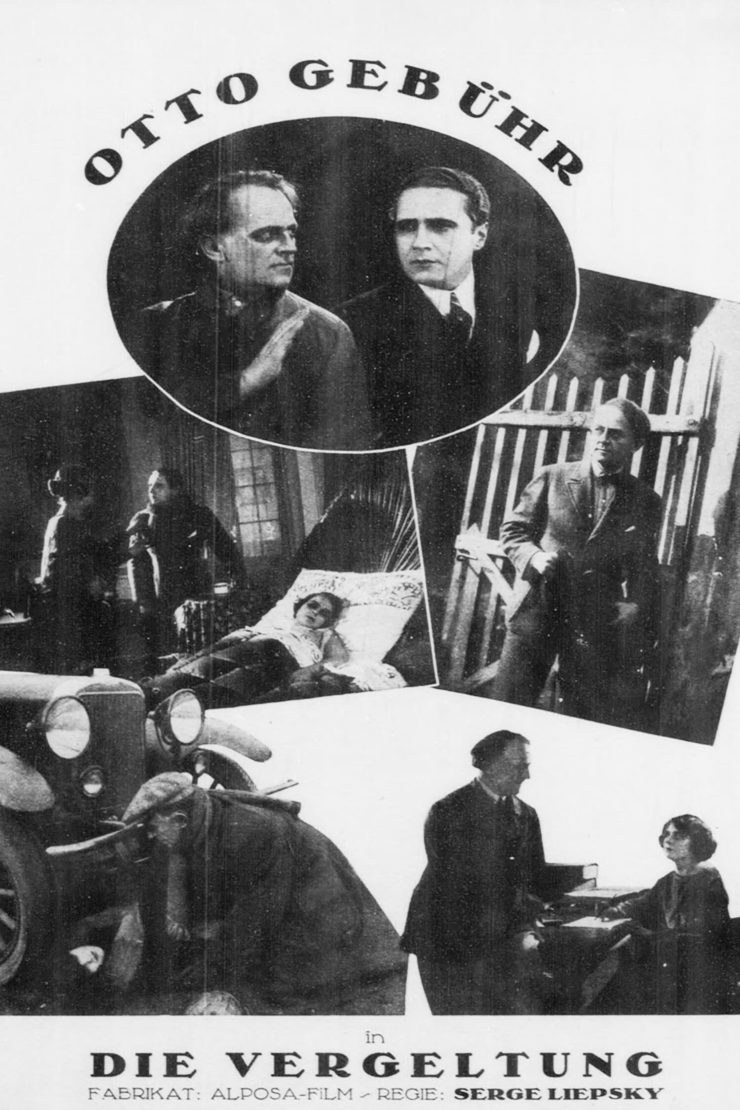
Die Vergeltung poster.
Source: https://letterboxd.com/film/die-vergeltung/releases/?fc=alwaysshow&fctype=gdpr
1 Pokhorony Lenina na ekrane [Похороны Ленина на экране; Lenin's funeral on the screen]. Zvezda [Звезда; Star], no. 26 (1633), 1 Feb. 1924.
2 Zvezda, no. 26 (1633), 1 Feb. 1924.
3 Novyye v kinoteatre [Новые в кинотеатры; New releases in movie theaters]. Kino [Кино; Сinema], 15 Nov. 1922, p. 2.
4 Kino i Vremya. Byulleten', Vypusk pervyy [Кино и Время. Бюллетень, Выпуск первый; Cinema and Time. Bulletin, Issue One]. All-Union State Film Fund of the USSR Ministry of Culture, 1960. p 231.
5 Myslavskyi, Volodymyr. Istoriia ukrainskoho kino 1896–1930: fakty i dokumenty [Історія українського кіно 1896–1930: факти і документи; History of Ukrainian Cinema 1896–1930: Facts and Documents]. Vol. 1, Dim Reklamy, 2018. p. 458.
6 Nikolay Rimskii [Николай Римский; Nikolai Rimsky]. Kino-Teatr.ru www.kino-teatr.ru/kino/acter/m/euro/46107/works/ Accessed 8 Nov. 2026.
7 Die Herrin der Welt [Mistress of the World]. Filmportal.de https://www.filmportal.de/en/search?search_api_fulltext=die+herrin+der+welt Accessed 8 Nov. 2026. Runtimes for each part appear under All Credits on each part’s record page.kinoart.ru
8 Zvezda, no. 32 (1639), 8 Feb. 1924.
9 Zvezda, no. 35 (1642), 12 Feb. 1924.
10 Programmy i libretto [Программы и либретто; Programs and librettos (plot summaries)]. Kino-Gazeta [Кино газета; Film Newspaper], no. 1 (17), 1 Jan. 1924. p. 3.
11 Zvezda, no. 37 (1644), 14 Feb. 1924.
12 Zvezda, no. 41 (1648), 19 Feb. 1924.
13 Zvezda, no. 47 (1654), 26 Feb. 1924.
14 Vishnevsky, Veniamin. Khudozhestvennyye fil'my dorevolyutsionnoy Rossii [Художественные фильмы дореволюционной России; Feature Films of Pre-revolutionary Russia]. Goskinoizdat,1945, p. 89.
15 Kino i Vremya. Byulleten', Vypusk chetvertyy [Кино и Время. Бюллетень, Выпуск четвертый; Cinema and Time. Bulletin, Issue Four]. All-Union State Film Fund of the USSR Ministry of Culture, 1965, Pp. 398, 441.