
Kinoresbel Loses The Movie Theaters
The audit from the Workers and Peasants Inspectorate (Rabkrin) and the responses from the head of Kinoresbel, Moise Dinershtein, the deputy head, Samuel Rakhlin, and the People’s Commissariat of Education were complete and submitted by the end of August 1922. The Sovnarkom (Belarusian Council of Ministers) now had to make a decision.
In the meantime, on September 10, 1922, the Minsk newspaper Zvezda reported that Kinoresbel made the Modern theater available five days a week for orphanages. They could see Spyashchaya tsaritsa [The Sleeping Tsaritsa], which was probably the Khanzhonkov-produced film, The Sleeping Princess and the Seven Bogatyrs, as well as Skazka o rybake i rybke [The Tale of the Fisherman and the Fish], and the film Dvoryanskoye gnezdo [Nest of Nobles].1
There is some remaining footage from The Tale of the Fisherman and the Fish available.
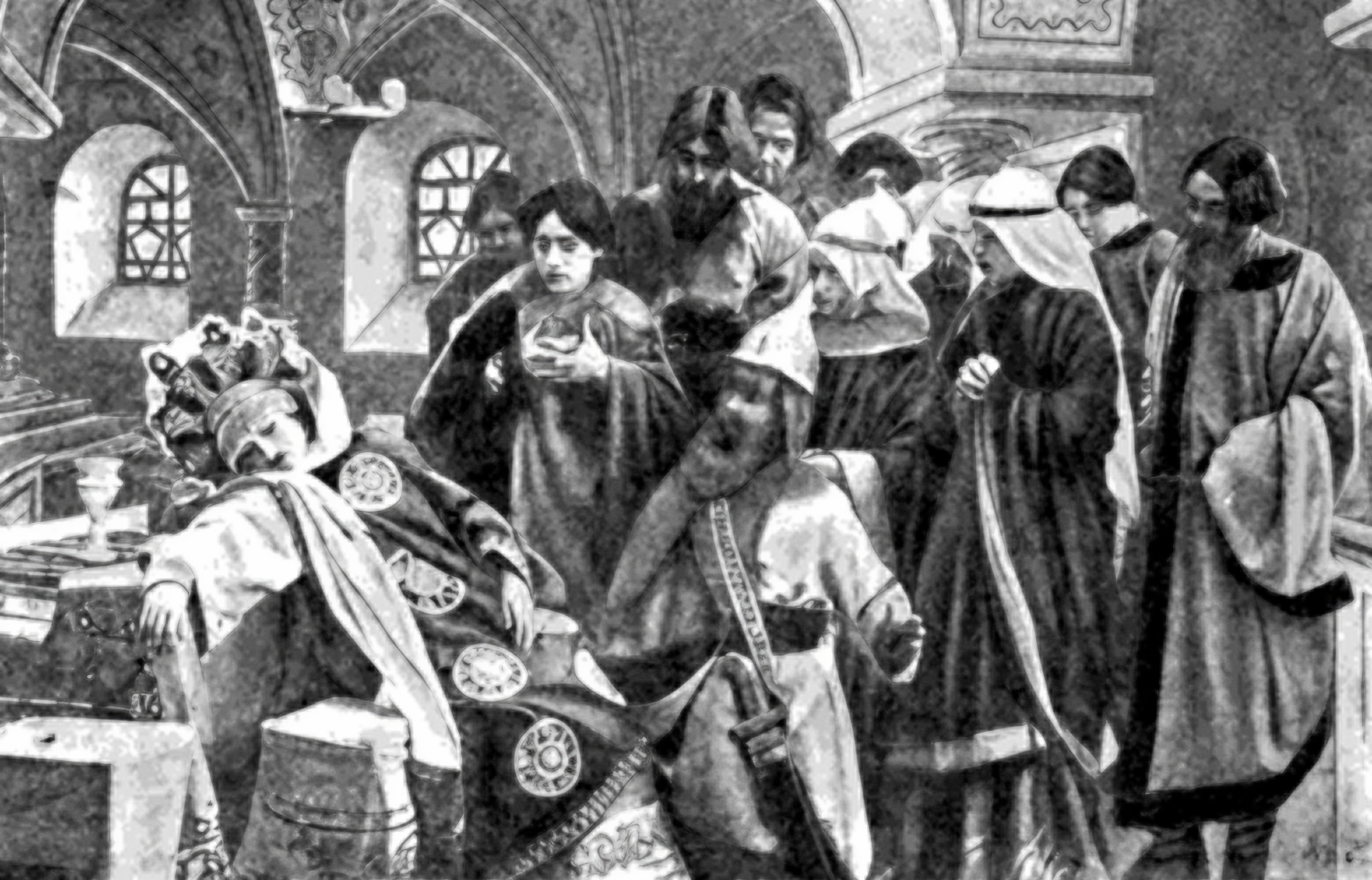
The Tale of the Dead Princess and the Seven Knights, 1914.
Source: https://znanierussia.ru/articles/Сказка_о_мёртвой_царевне_и_о_семи_богатырях
The Sleeping Princess (which had other aliases, most notably that of the Pushkin story from which it was taken, Skazka o pogibshey printsesse i semi bohatyriah [The Tale of the Dead Princess and the Seven Knights] was remade as an animated film in 1951. 2
The 1951 version of the Dead Princess and the Seven Knights
On September 10, the Minsk newspaper Zvezda also reported that the “renovation of the Giant Cinema” (still not referring to it by its new name, Red Star) was almost complete and that A.A. Shapiro was going to rent it for stage shows for the month of December.3
Authorities then put a limit on the hours that theaters and other entertainment venues could be open. On September 15, Zvezda ran a story that said the People’s Commissariat of Internal affairs was drafting a resolution that would order “theatres, cinemas, clubs and other places of entertainment” to close their doors at midnight, because they had been staying open until 3 or 4 in the morning. The new closing hours meant the “proletarian element” would not have a reason to stay out so late and be late to work.4
That same day, September 15, the Sovnarkom decided to transfer the cinemas out of the jurisdiction of Kinoresbel and to the Gorono, sometimes referred to as the Goronobraz [City Department of Public Education].5
Zvezda reported the news on September 23 adding that the Goronobraz would have jurisdiction over the cinemas by October 1.6
In November, authorities tried several cases against people who were in theater or cinema. Samuel Rakhlin, who had been removed as deputy head of Kinoresbel, was the most prominent name facing authorities.7
The others were:
Alexei Gromov, 26 years old, was the former head of the Art Department under the Main Political Education Directorate, the Glavpolitprosvet.
Hirsh Lieberman, 26 years old, was Head of the Supply Sub-Department under Gromov).
A.A. Shapiro, 40 years old, had just signed a lease for the Red Star theater.
Khaya Oksenkrug, 21 years old, was a costume designer.
Fyodor Zelenkevich, 49 years old, handled props in the theater.
Yudel Zalmanovich Minkov, 25 years old, no position given, but there was a Minkov involved in ticket collection oversight.8
Leonid Sagaidachny, at 18 years old was Deputy Head of the Department of Theater.
Semyon Dobvolybov a.k.a. Brod, was 38 years old and the Head of the Department of Theater.
Evsey Lifshitz was 30 years old and a hairdresser who handled wigs for the theater.
Abram Slepian, 30 years old, was Head of the warehouse.
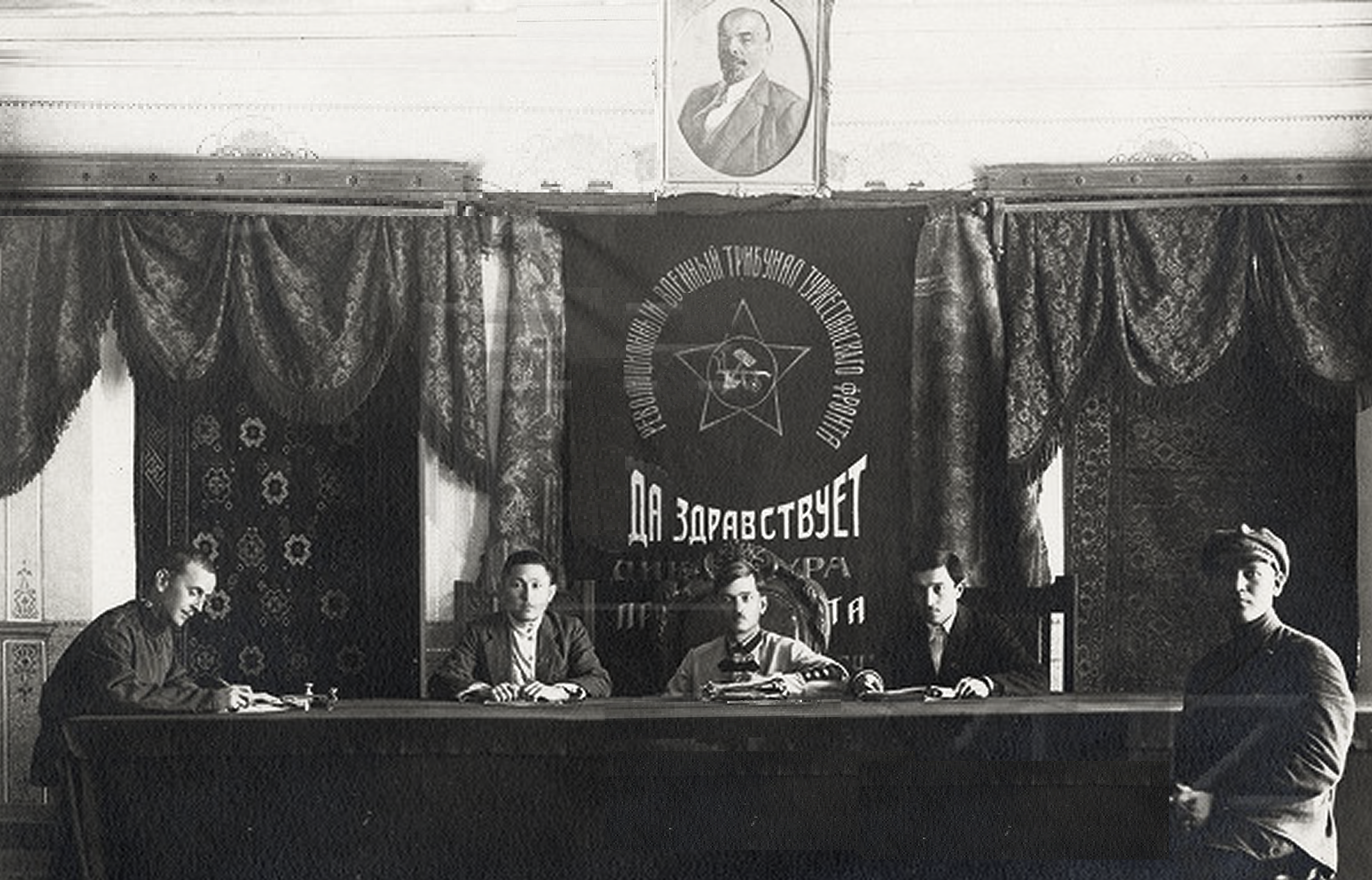
Revolutionary tribunal, 1920.
Source: https://little-histories.org/2014/04/soviet_tribunal/
All faced a Revolutionary Tribunal on Nov. 25-28, 1922. None of the charges was related to Kinoresbel. Rakhlin was found guilty of asking Gromov to release to him “the necessary amount of manufactory for suits and underwear” despite, the allegations said, having should have known the request violated an Article of the Criminal Code against personal loans.
He was quickly moved out of Kinoresbel. Gromov was guilty of making the loans. However, the Tribunal took into account the Red Army service of both Rakhlin and Gromov and did not impose punishment other than ordering compensation.9
Shapiro and Oksenkrug were sentenced to a year in prison each. Shapiro for ordering a transfer of curtains from one theater to another; Oksenkrug issued costumes without recording it. Both were given amnesty and did not serve time.10 Charges against the rest were considered unproven.11
Even as it lost the theaters, Kinoresbel ground on, trying to avoid making the same mistakes. On November 15, a man named S. Elin wrote to Kinoresbel, offering his services as a private citizen to bring films to Minsk.12 He also apparently requested to reopen the Lux cinema in Minsk, although that is not in the letter we have on record.
On November 22, Zvezda published a response: “In view of the fact that theaters are primarily cultural and educational institutions, the delivery of cinema to private hands is recognized as impossible.”13 There is no record on whether this Levin ever provided films.
1 «Kinematograf dlya detey i slushateley partshkoly» [«Кинематограф для детей и слушателей партшкол»; Cinema for children and students of party schools]. Zvezda [Звезда; Star], No. 215 (1216), 10 Sept. 1922.
2 Skazka o pogibshey printsesse i semi bohatyriah [Сказа о мертвой царене и о семь богатырях; Tale of the Dead Princess and the Seven Knights]. Kino-teatr.ru https://www.kino-teatr.ru/mult/movie/sov/84266/annot/. Accessed 23 Dec. 2025.
3 «Театральная хроника» [Theatrical Chronicle]. Zvezda No. 215 (1216), 10 Sept. 1922; Dogorov [«Договор» Contract] Undated. Natsional'nyy arkhiv Respubliki Belarus' (NARB) [Национальный архив Республики Беларусь (НАРБ); National Archives of the Republic of Belarus (NARB)]. Fond 101, Opis' 1, Delo 1740, p. 204.
4 «Vremya zakrytiya teatrov i veselykh mest» [«Время закрытия театров и увеселительных мест»; Closing Time for theaters and places of entertainment]. Zvezda, No. 219 (1220), 15 Sept. 1922.
5 Protokol no. 25 [«Протокол no. 25»; Protocol no. 25], 15 Sep. 1922. NARB. Fond. 15, Opis' 1, Delo 28, pp. 73-73b. They both essentially meant Department of Public Education.
6 «Kinematografy» [Кинематографы; Cinemas]. Zvezda, No. 226 (1227), 23 Sept. 1922.
7 Rakhlin was not on the revised list of cinema staff management. Shtat [«Штат»; Staff], 17 Nov. 1922. NARB. Fond 42, Opis' 1, Delo 116, p. 121.
8 Prikaz no. 35 [Приказ no. 35; Order Nn. 35], 4 Nov. 1921. NARB. Fond 42, Opis' 1, Delo 1052, p.25.
9 «Sotsialisticheskaya Sovetskaya Respublika Belorussiya, Revolyutsionnyy tribunal Respubliki, Protokol Sudebnogo Zasedaniya» [«Социалистическая Советская Республика Белоруссия, Революционный трибунал Республики, Протокол Судебного Заседания»; Socialist Soviet Republic of Byelorussia, Revolutionary Tribunal of the Republic, record of the court session]. 25-28 Nov. 1922. NARB. Fond 101, Opis' 1 Delo 174, pp. 247-251.
10 Socialist Soviet Republic of Byelorussia, Revolutionary Tribunal of the Republic, record of the court session
11 Socialist Soviet Republic of Byelorussia, Revolutionary Tribunal of the Republic, record of the court session
12 «Zayavleniye» [«Заявление»; Statement], 12 Nov. 1922. NARB. Fond 6, Opis' 1, Delo 124, p. 105.
13 «Otkaz o sdache kino» [«Отказ о сдаче кино»; Refusal to Hand Over the Cinema]. Zvezda, No. 61 (1062), 12 Mar. 1922.