
Rough Beginnings for Kinoresbel
1922
Here, we will look more closely at Kinoresbel and the circumstances surrounding its creation, and the fighting that followed it to its demise.
The apparent desperation of the Photo-Kino Department shows in its signing of a two-year contract to rent out the Artistic theater in Bobruisk. The Department turned to a doubtful pre-revolutionary figure, Marcus Mnushkin. He had once run the Eden in that city, but had to give it up because he stopped paying “anyone.” (Click here to see when) Yet, in the new contract, he promises to pay 25 gold roubles a month in rental.1 Kinoresbel would be stuck with this contract which, given Mnushkin’s previous troubles, did not sound like a sound investment.
To recap: According to archival documents, the idea to create KinoResBel arose in February 1922,2 but the Commissariat of Education (Narkompros), did not take up the idea until March.3 The same memo gives no date that Kinoresbel was actually approved. It merely says, once it was approved, everyone got to work.4
In the meantime, at the beginning of March the Photo-Kino Department, signed a contract to obtain film. The Department turned to another prerevolutionary figure, Mark Aronov in Polotsk. He was to provide three “programs” (presumably several films) every six days. The films would run at the Red Star (formerly the Giant), International (formerly the Eden), and Culture (formerly the Modern).5 (to see more about Aronov, click here.) Kinoresbel would be stuck with this contract, too.
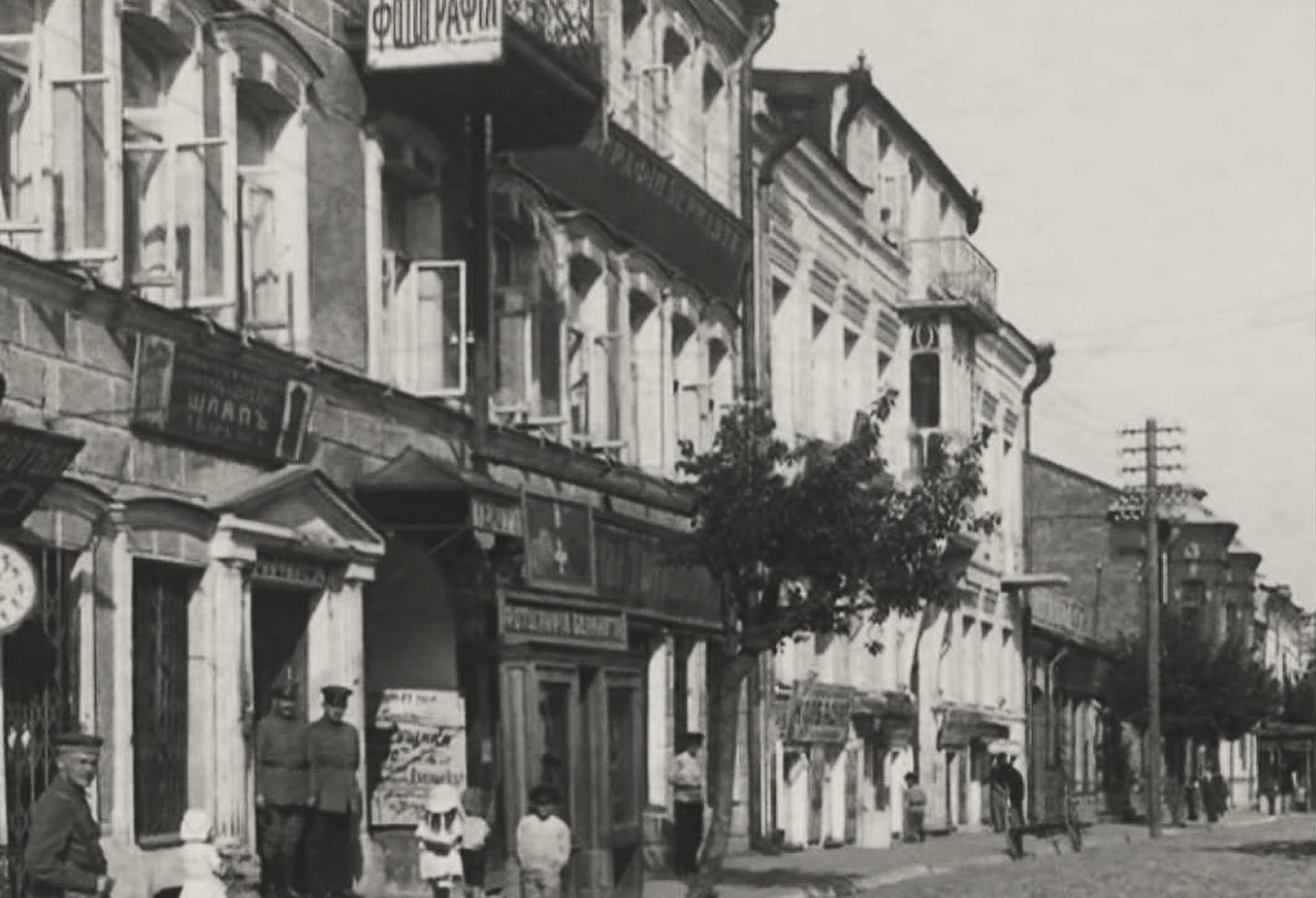
Polotsk, 1918.
Source: https://gorod214.by/new/6518
In the meantime, critics at Zveyzda made it a point to keep criticizing everything they could.
On March 7, a writer using the name TSON, lambasted Glavpolitprosvet (short for Glavny Politiko-Prosvetitelny Komitet the Main Political and Educational Committee of the People's Commissariat of Education (Narkompros)). TSON wrote of a ceremonial session on February 23 convened by the Minsk Soviet in honor of the Red Army. Glavpolitprosvet, said TSON, staged “a truly revolutionary play dedicated to our valiant army. It’s title? The Gypsy Baron.”6 The operetta was written by Johann Straus II and tells the story of a Hungarian nobleman returning from exile to claim his ruined estate. It was considered one of Strauss’s greater works, but TSON was agitated by such lines as “...Nighttime adventures promise us pleasures — Paris, Paris, Paris…”
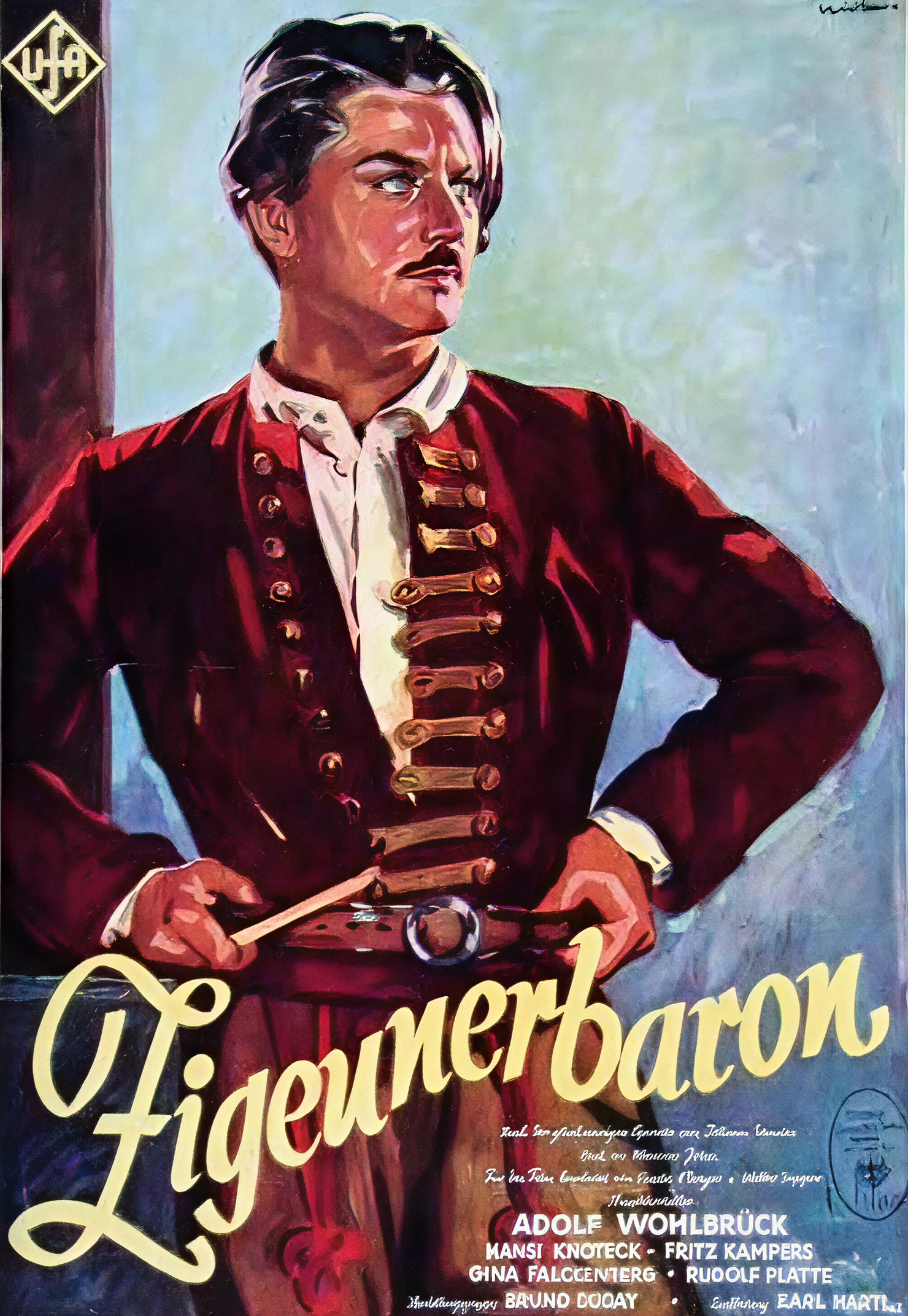
Poster for The Gypsy Baron, 1935
Source: https://mabumbe.com/movies/titles/91093/the-gypsy-baron
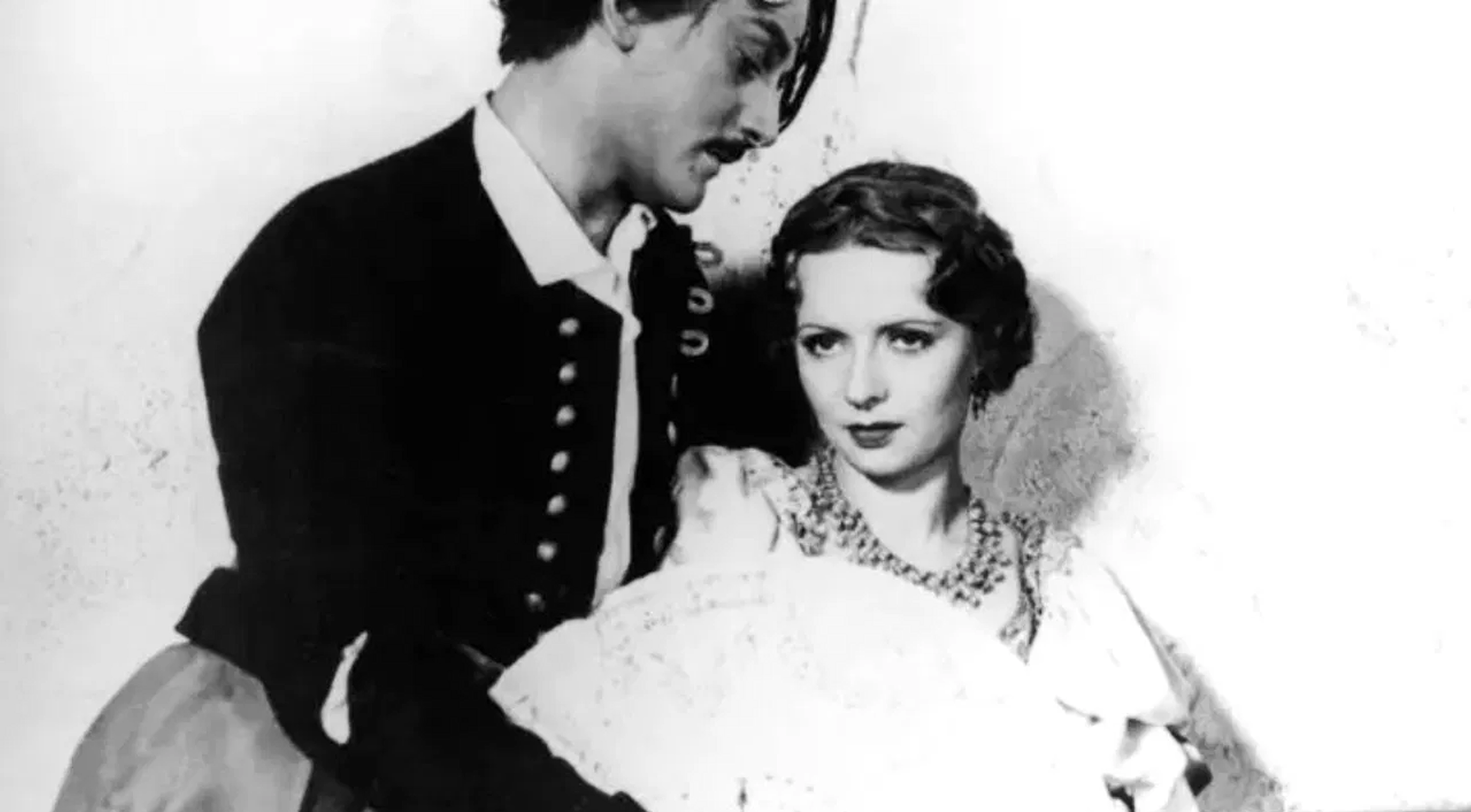
Still from a 1935 German film production of The Gypsy Baron.
Source: https://mabumbe.com/movies/titles/91093/the-gypsy-baron
But TSON did not stop there. He also wrote:
Even the program titles speak for themselves:
Sins of Lust, Secrets of New York (adventures of Nat Pinkerton), The Wife (by Artsybashev).
These films harmonize beautifully with the names of the cinemas themselves: Red Star, Culture, Spartacus. Naturally, the content of these films matches their titles.
TSON, “The diligent culture planter”7
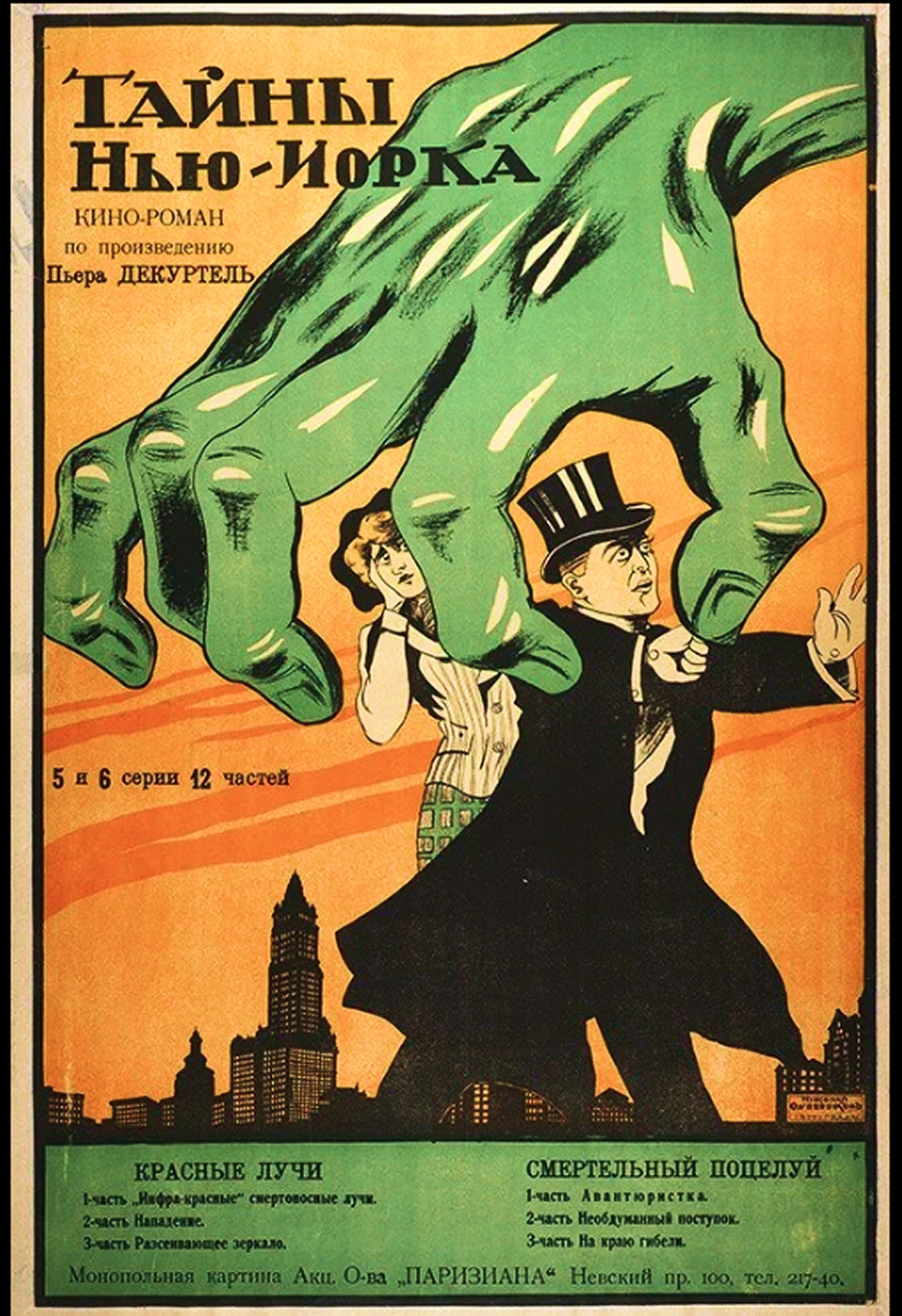
Poster for The Mysteries of New York
Source: https://www.kinopoisk.ru/film/236870/?utm_referrer=organic.kinopoisk.ru
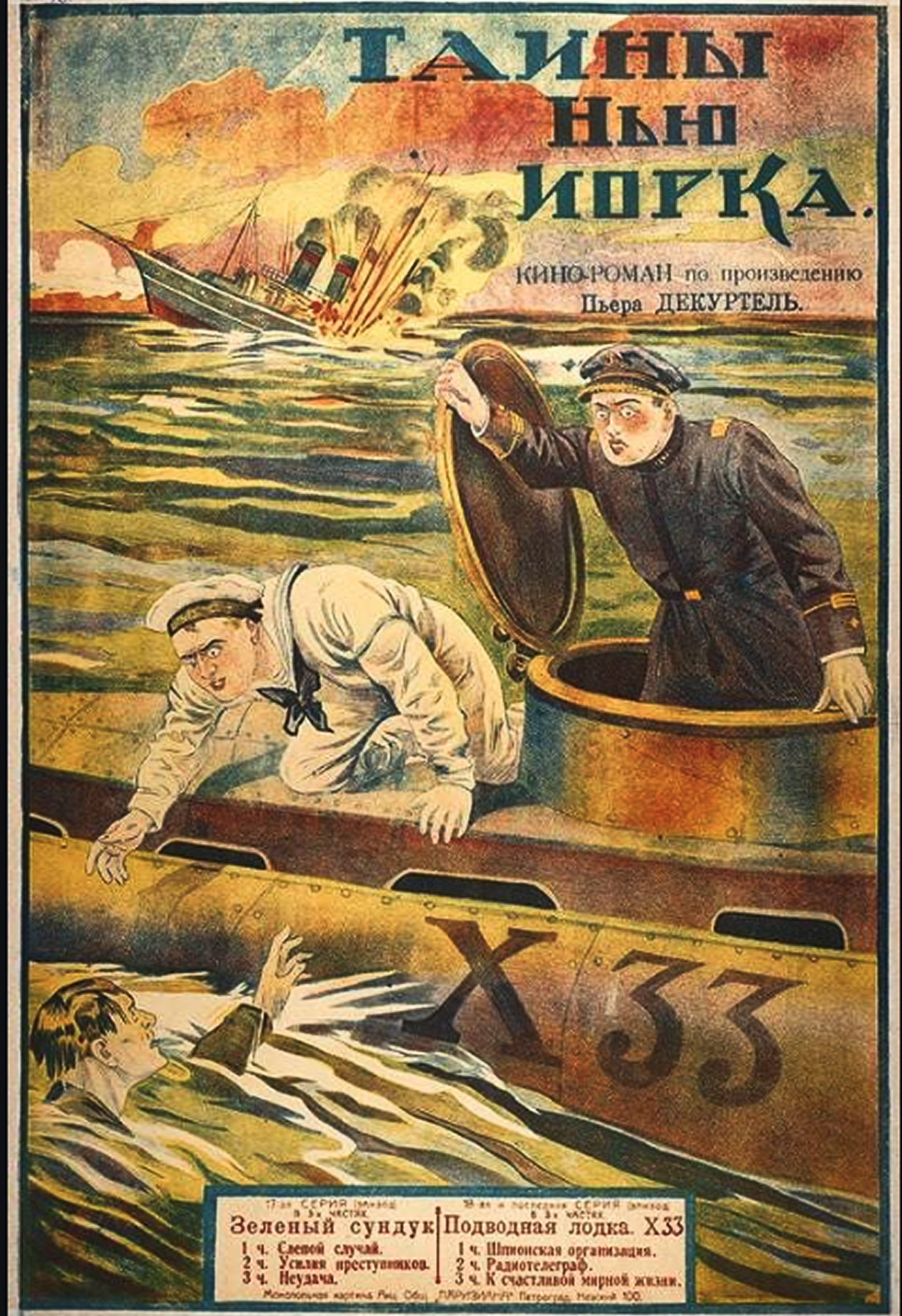
Poster for The Mysteries of New York
Source: https://www.lavanguardia.com/peliculas-series/peliculas/the-new-exploits-of-elaine-730634
We have already spoken of the Secrets of New York, which was a Pinkerton (detective) style movie, but did not feature Pinkerton as a character. We have not found anything about Sins of Lust, which is probably the renaming of another film, whose true name is lost to us.
In a March 12 response, Deputy Chair A. Rozenshein wrote that Glavpolitprosvet did not stage Gypsy Baron. The theater, he said, was under “the exclusive jurisdiction of the Academic Center.8
Rozenshein then ducks the cinema criticism. “Despite the author’s assertion that “it goes without saying that the content of these films matches their titles,” we would advise him to actually familiarize himself with the content of the films he criticizes solely based on their “titles.”9
Rozenshein blamed PUZAP (an acronym for Politicheskoe Upravlenie Zapadnogo Fronta—the Political Directorate of the Western Front of the Red Army during the Russian Civil War and the Soviet-Polish War (1919–1921)) for the showing of Artsybashev’s The Wife. The Spartak cinema, he notes, was not under the jurisdiction of Glavpolitprosvet.10 We have not found any film called Wife with credit to Artsybashev for the script. There was a 1915 Polish film called Wife, but Artsybashev’s name is not attached to any of the material reporting on it.).11
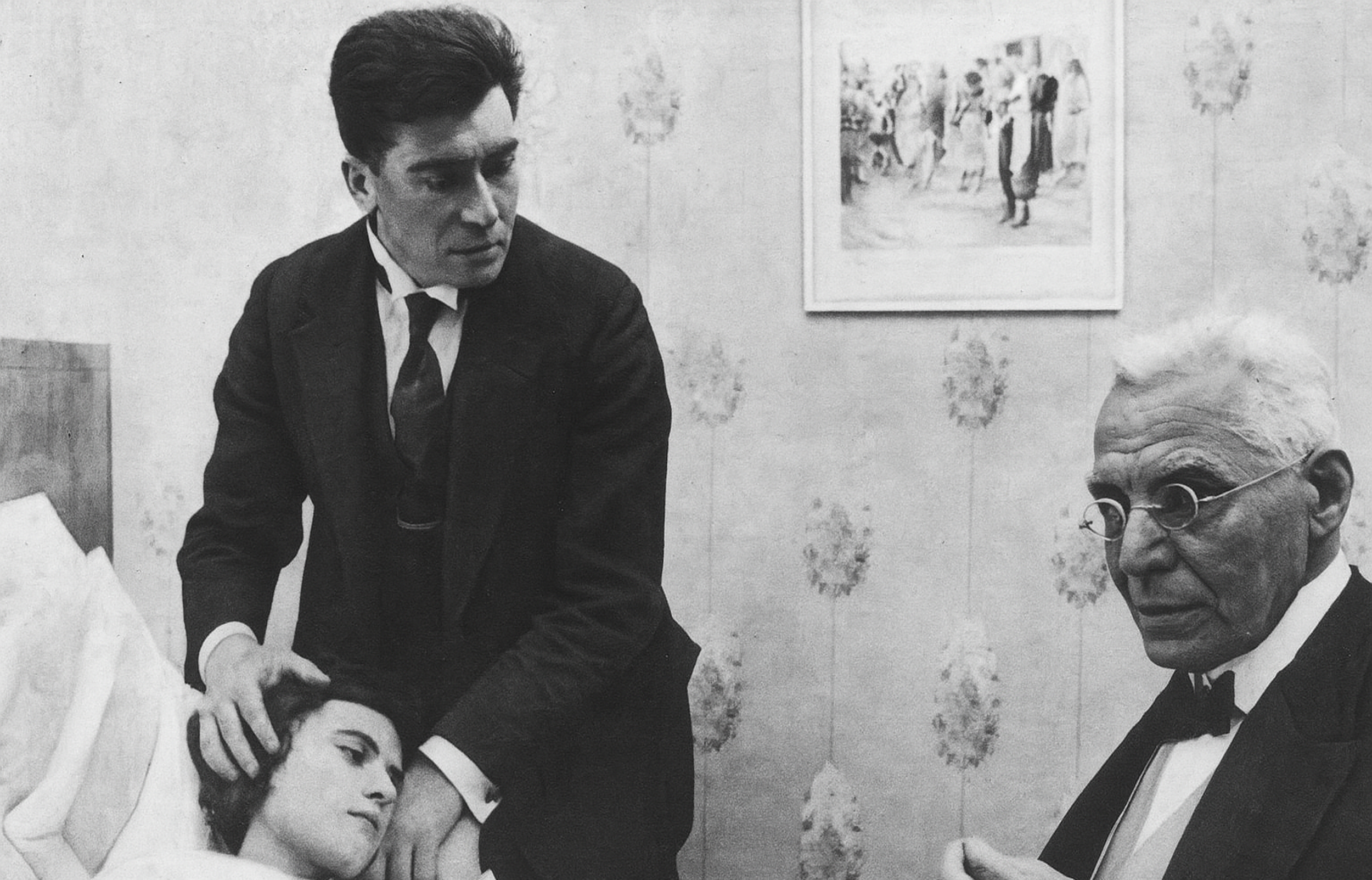
Still from the 1915 Polish film The Wife.
Source: https://www-kino--teatr-ru.translate.goog/kino/movie/euro/128841/foto/?_x_tr_sl=auto&_x_tr_tl=en&_x_tr_hl=en&_x_tr_pto=wapp
While we could not confirm that Artsybashev wrote a film Wife, we have good evidence that he wrote one called Husband. Historian Semeon Ginzburg wrote that The Husband was produced “according to the play by M. Artsybashev.12 Historian V.P. Mikahailov wrote that the film Husband was produced but not allowed to be shown.13 Film historian Veniamin Vishnevsky writes in his book Feature Films of Russia, that there was a film called Wife (Response to Artsybashev), shot in Baku in 1916. He notes it was the first film "shot and performed in Baku."14
In Zveyezda, Yu. Bykin took a shot at the use of money and organization in the Belarusian government.
The Central Bureau (CB) should retain the Cinema Department as a revenue-generating division, include its remaining clubs in profit reports, fund and execute all agitation campaigns, devote more attention to Party Soviet Schools, and revise all theater contracts in favor of Politprosvet.15
Yu. Bykin
1 Договор, 19 января 1922/Rental Agreement, 19 January 1922 Национальный архив Республики Беларусь (НАРБ)/National Archives of Belarus (NARB). Фонд/Collection 42, опис/inventory 1, дело/file 1057, документ/document 7-7b.
2 В коллегию/To the Collegium, Проект организации Кинопрокатной конторы возник у нас еще в феврале “The idea of organizing a film distribution office first arose back in February.” NARB LA 42 133 документы/documents 20-22. The memo says the idea arose in February and was presented to the Narkompros Collegium in March 1922.
3 Положение о Белорусской прокатной Кино-Конторе [Киноресбел]/Regulations on the Belarusian Film Distribution Office [Kinoresbel] Национальный архив Республики Беларусь (НАРБ) / National Archives of the Republic of Belarus (NARB). Фонд/Collection 42. 42 опис/inventory 1. дело/file 133 документ/document 12.
4 Национальный архив Республики Беларусь (НАРБ) / National Archives of the Republic of Belarus (NARB). Фонд/Collection 42. 42 опис/inventory 1. дело/file 133 документ/document 37-38.
5 Договор, 7 марта 1922/Rental Agreement, 7 March 1922 Национальный архив Республики Беларусь (НАРБ)/National Archives of Belarus (NARB). Фонд/Collection 42, опис/inventory 1, дело/file 157, документ/document 9-9b.
6 ЦОН /TSON “Заботливый культуронасаждатель”/“The diligent culture planter”. Звезда/Zvyezda, 56 (1057), 07 March 1922.
7 Ibid.
8 “Письмо В Редакцию/Letter to the Editor”. Звезда/Zvyezda, 61 (1062), 12 March 1922.
9 Idid.
10 Ibid.
11 Жена/The Wife Кино-театру https://www-kino--teatr-ru.translate.goog/kino/movie/euro/128841/annot/?_x_tr_sl=auto&_x_tr_tl=en&_x_tr_hl=en&_x_tr_pto=wapp; жена/The wife Кинопоиск https://www.kinopoisk.ru/film/177800/
12 Гинзбург С./Ginzburg, S. Кинематография дореволюционной России/Cinematography of Pre-Revolutionary Russia. Издательство Искусство/Art Publishing House 1963, p. 230.
13 Михайлов, В.П./ Mikhailov, V.P. Рассказы О Кинематографе Старом Москвы/Stories about the cinema of old Moscow. Материк/Mainland, 2003 стр./p. 244.
14 Вишневский, Вен./Vishnevsky, Ven. Художественные Фильмы Дореволюционной России/Feature Films of Pre-Revolutionary Russia Госкиноиздат/ State Film Publishing House 1945 стр/p. 94
15 Я. Быкин/Yu. Bykin. Белорусский компромисс на новых рельсах/ Belarus's compromise on new tracks. Звезда/Zvyezda, 58 (1059), 9 March 1922.