
Kinoresbel Takes the Stage
1922
The Genoa Conference, which began April 10, 1922, was set up for the victorious countries in World War I to meet and discuss the post-war economic reconstruction of Europe. The Russian Soviet Federal Socialist Republic (RSFSR) and Weimar Germany were also invited. According to historian Dmitri Romanowski, shortly before the conference, Belarus and the other socialist republics signed a protocol which would allow the RSFSR to represent its interests.1 Germany and the Soviet Socialist Republic of Belarus began developing trade relations even before Germany officially recognized Belarus in November 1922.2
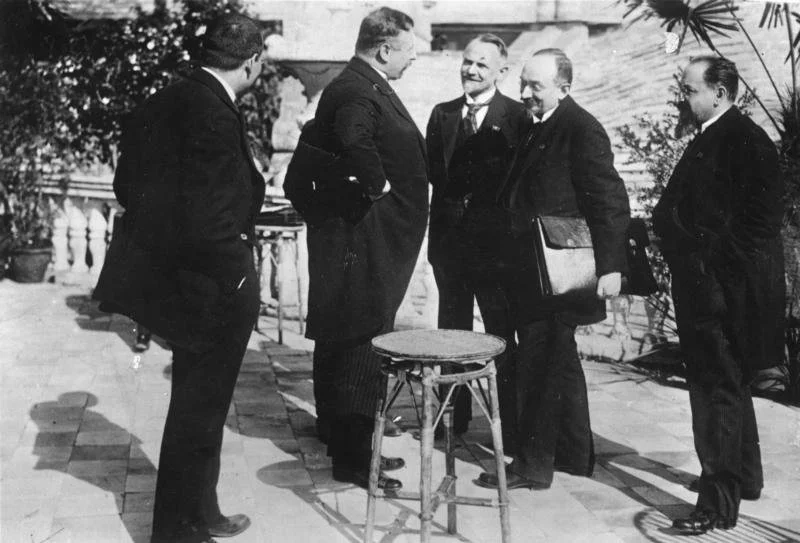
German Chancellor Joseph Wirth with the Soviet delegation, Leonid Krasin, Georgy Chicherin and Adolph Joffe, 1922.
Source: Bundesarchiv, Bild 183-R14433 / CC-BY-SA 3
An article in Zvezda on May 10, 1922, reports that Anton Balitsky, then the Deputy Commissar of Education (Narkompros), reported on the “cinematographic industry” to the Economic Conference. He said:
Anton Balitsky
This complaint about smugglers and the dubious quality of films would be repeated several times once Kinoresbel was up and running.
The Zvezda article also said a film distribution office would be set up under Narkompros. It would obtain films from the RSFSR and “abroad,” with specific mention of Poland and Germany.4
Three days later, on May 13, 1922, Zvezda announced the creation of Kinoresbel as the new cinematic organization for the country and that Moise Dinershtein was the manager.5
We found a copy of Moscow’s Кино-Фот/Kino-Fot magazine, which has a list of what films they were showing in that city in 1922. Some of these films may have made their way to Minsk.
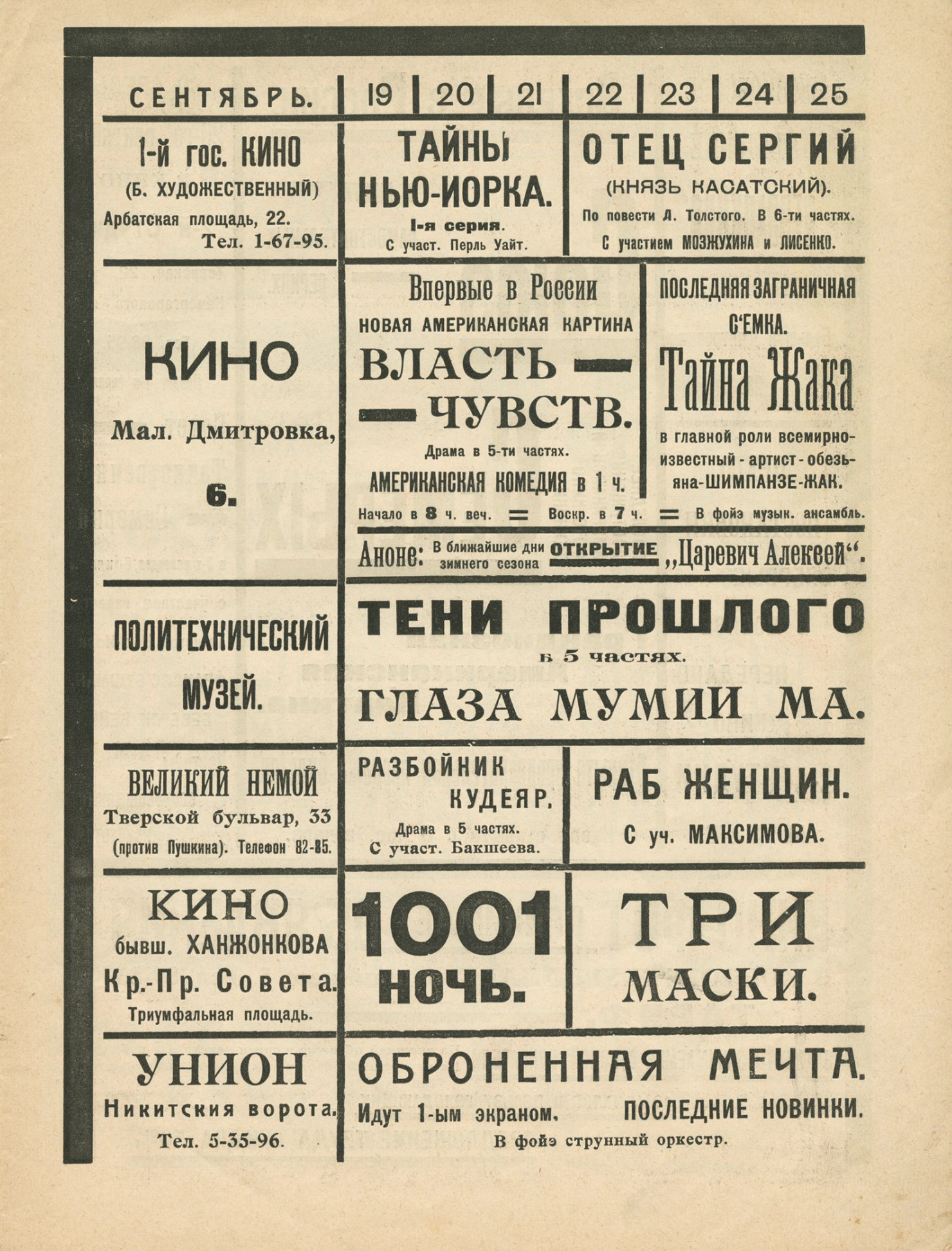
Кино-Фот/Kino-Fot (updated).
Source: https://collections.library.yale.edu/catalog/16188780
We already know that Belarusians were able to see Тайны Нью-Иорка/Mysteries of New York (to see more about Mysteries of New York being shown in Belarus, click here.) and Отец Сергий/Father Sergius (For more about Father Sergius being shown in Belarus, click here).
Кино-Фот/Kino-Fot tells us that Moscovites had the opportunity to see Власть Чувств/The Power of Emotion, although we have not been able to discover anything about this film. Kino-Fot also says it was shown with a one-reel Американская комедия/American Comedy.
There was also Тайна Жака/Jacque’s Mystery, which would seem to be French, although we have not been able to discover a film of that name. Тени Прошлого/Shadows of the Past and Глаза Мумии/Eyes of the Mummy were both German films.
Разбойник Кудеяр/The Robber Kudyear was a Russian film, with Peter Bakseev, but there do not seem to be any images of it.6 Раб Женщини/Slave of a Woman (1917) was another Russian film for which there are no images.7 There are few films that would fit the title 1001 Ночь/1001 Nights, but the German film Sumurun, also known as One Arabian Night, might fit the bill. Три Маски/Three Masks was French. We could not find a match for Оброненная Мечта/The Lost Dream.
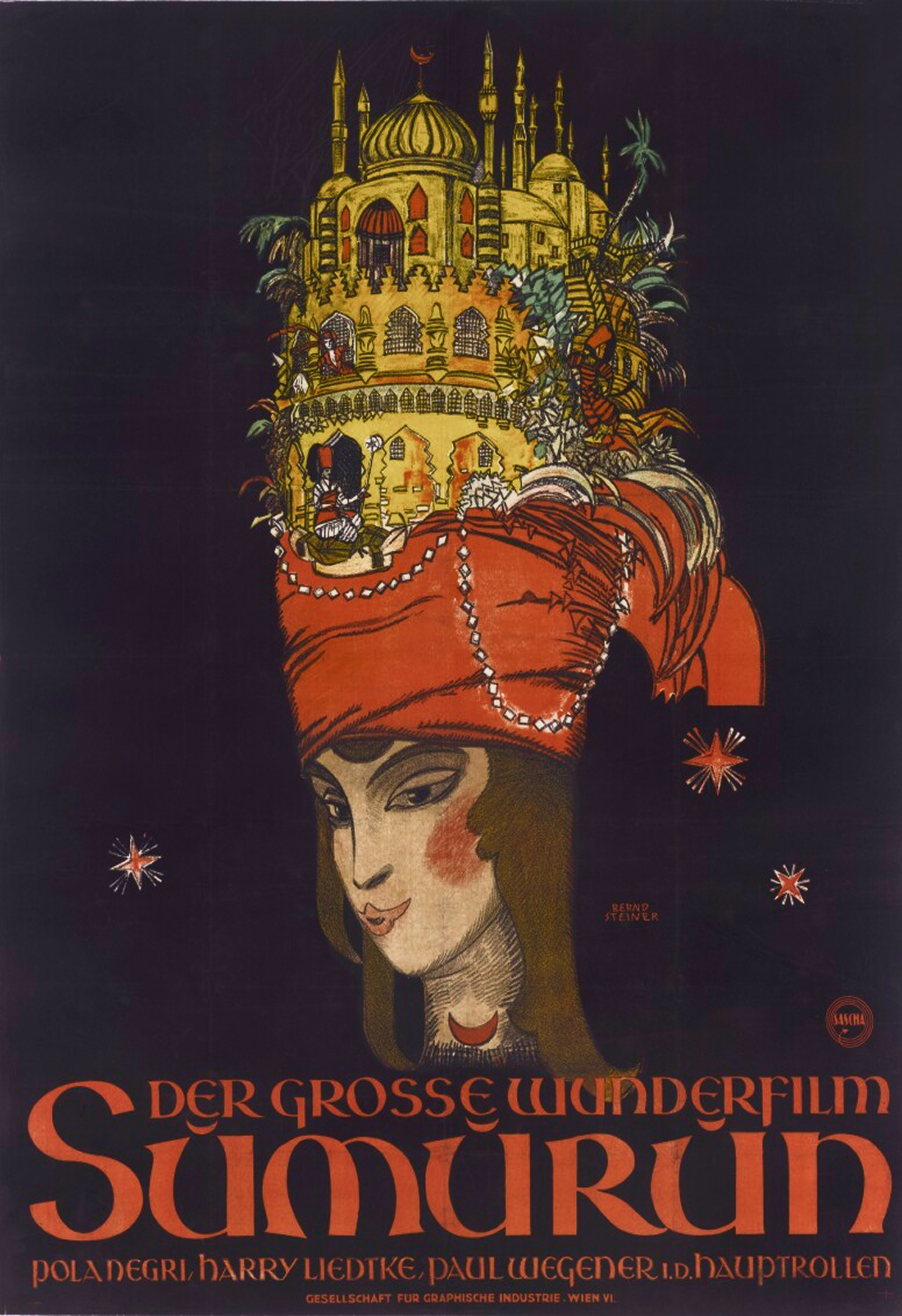
Poster for Sumurun
Source: https://www.sothebys.com/en/buy/_vintage-bernd-steiner-sumurun-movie-poster
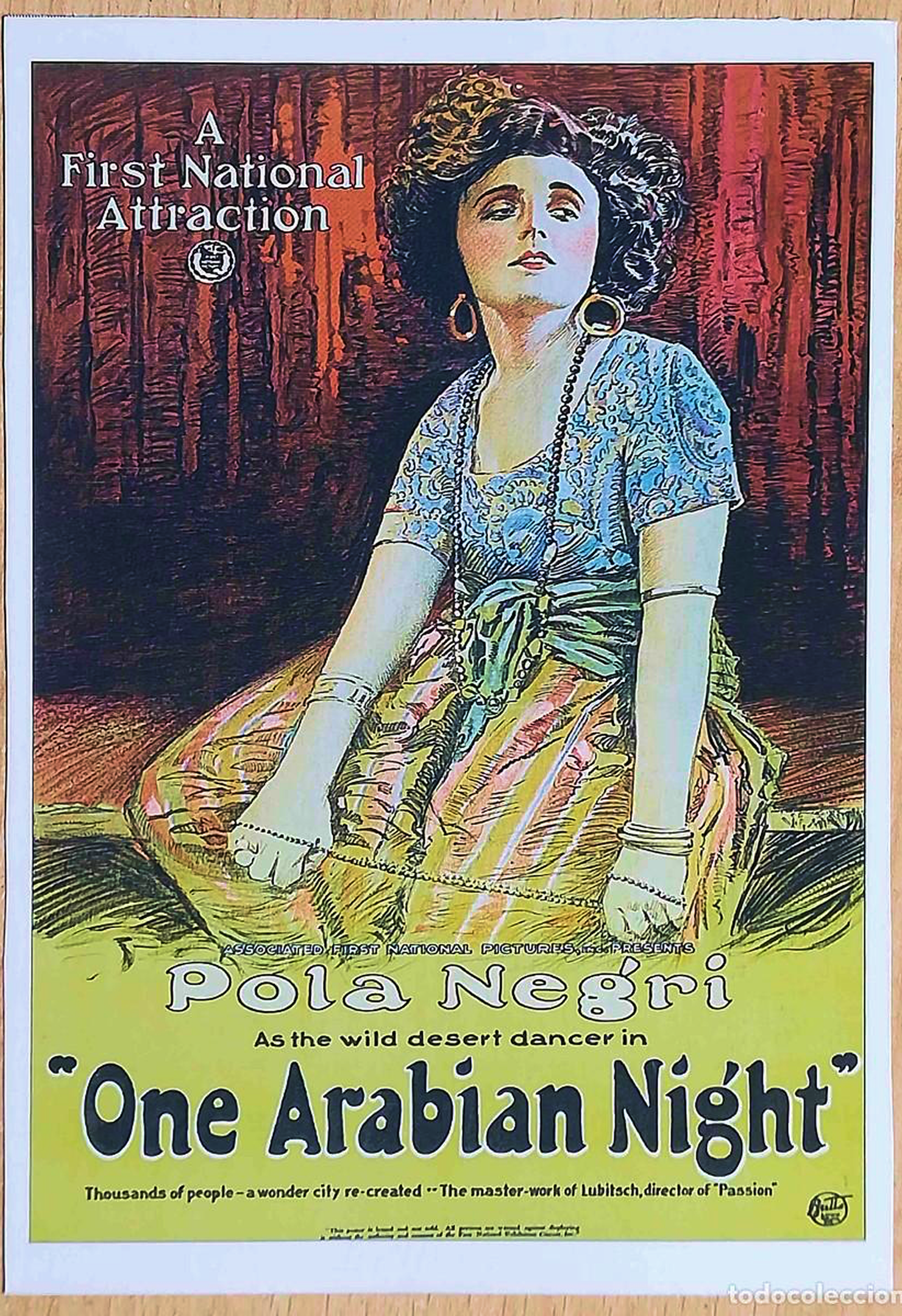
Poster for One Arabian Night/Sumurun
Source: https://en.todocoleccion.net/cinema-photos-postcards/sumurun-una-noche-arabia-ernst-lubitsch-1920-pola-negri-programa-mano-revista-accion~x421074954
On May 14, 1922, Zvezda reported that Minsk cinemas had “generated 700 million rubles in net income since January.”8 It is not clear how accuate that number is. If the number is correct, it would seem to be a boost to Lenin's New Economic Policy, which implied that the Photo-Kino Department would have had to pay for itself.
Balitsky, the Deputy in Narkompros, for all of his talk in May about the creation of Kinoresbel, seemed to want to curtail the new organization's activities. In June 1922, he opposed the transfer of theaters to Kinoresbel jurisdiction but was overruled.9 He apparently wanted Kinoresbel to have jurisdiction only over obtaining films, but not to have the ability to control the theaters.
On May 17, a Zvezda article announced that the Photo-Cinema Department had established a direct connection with the film distribution offices of the RSFSR. The article said that this “will make it possible to receive films of choice, and not to stage films of dubious quality. Because of the latter, the attendance of cinemas decreased.”10 The article also said that Narkompros would give “free of charge to all clubs for temporary use films for the arrangement of screenings.” It added that 30 films had already been given to 30 clubs.11
Returning to the films listed by Kino-Fot.
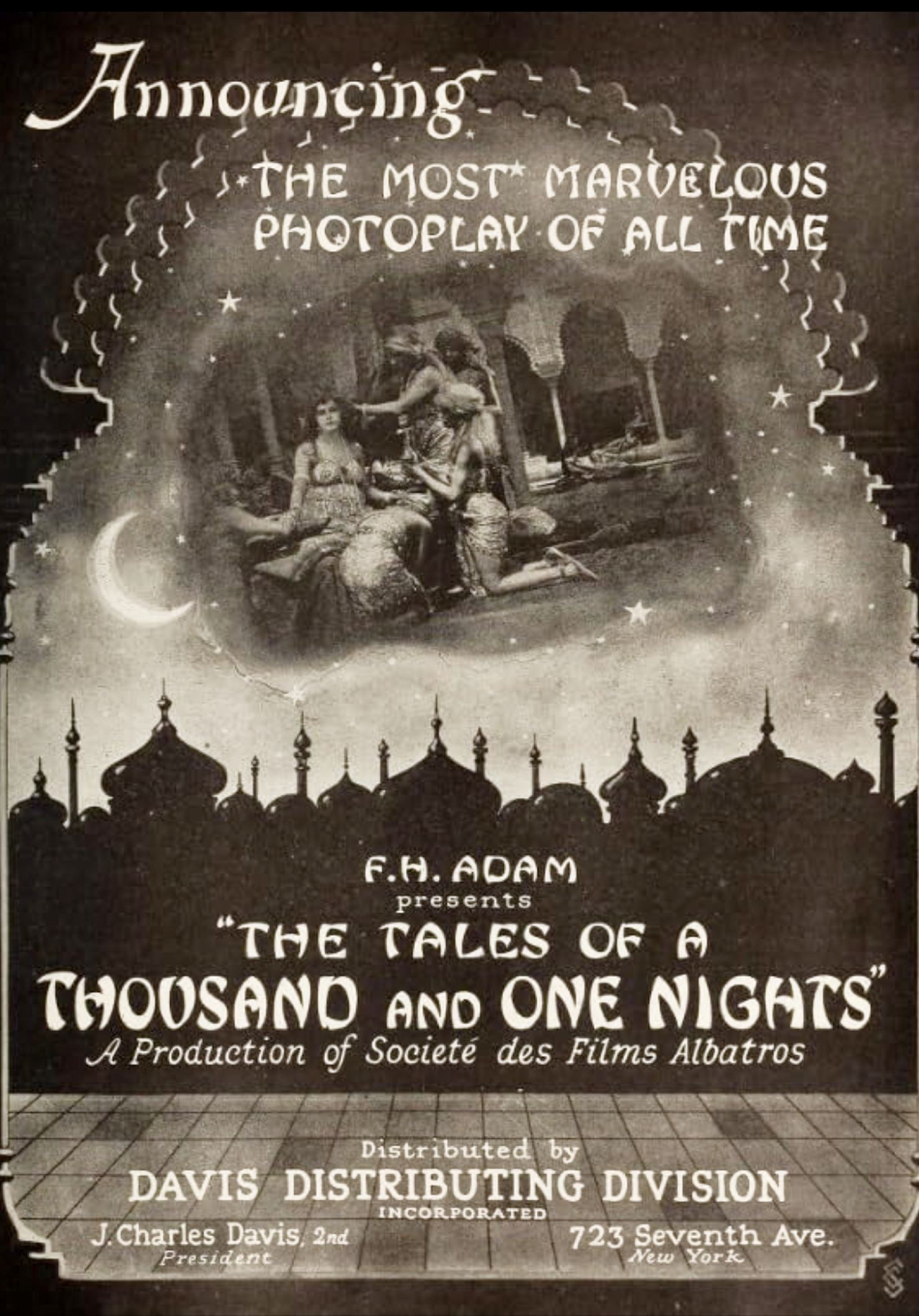
Poster for 1001 nights.
Source: https://www.imdb.com/title/tt0154358/?ref_=mv_close
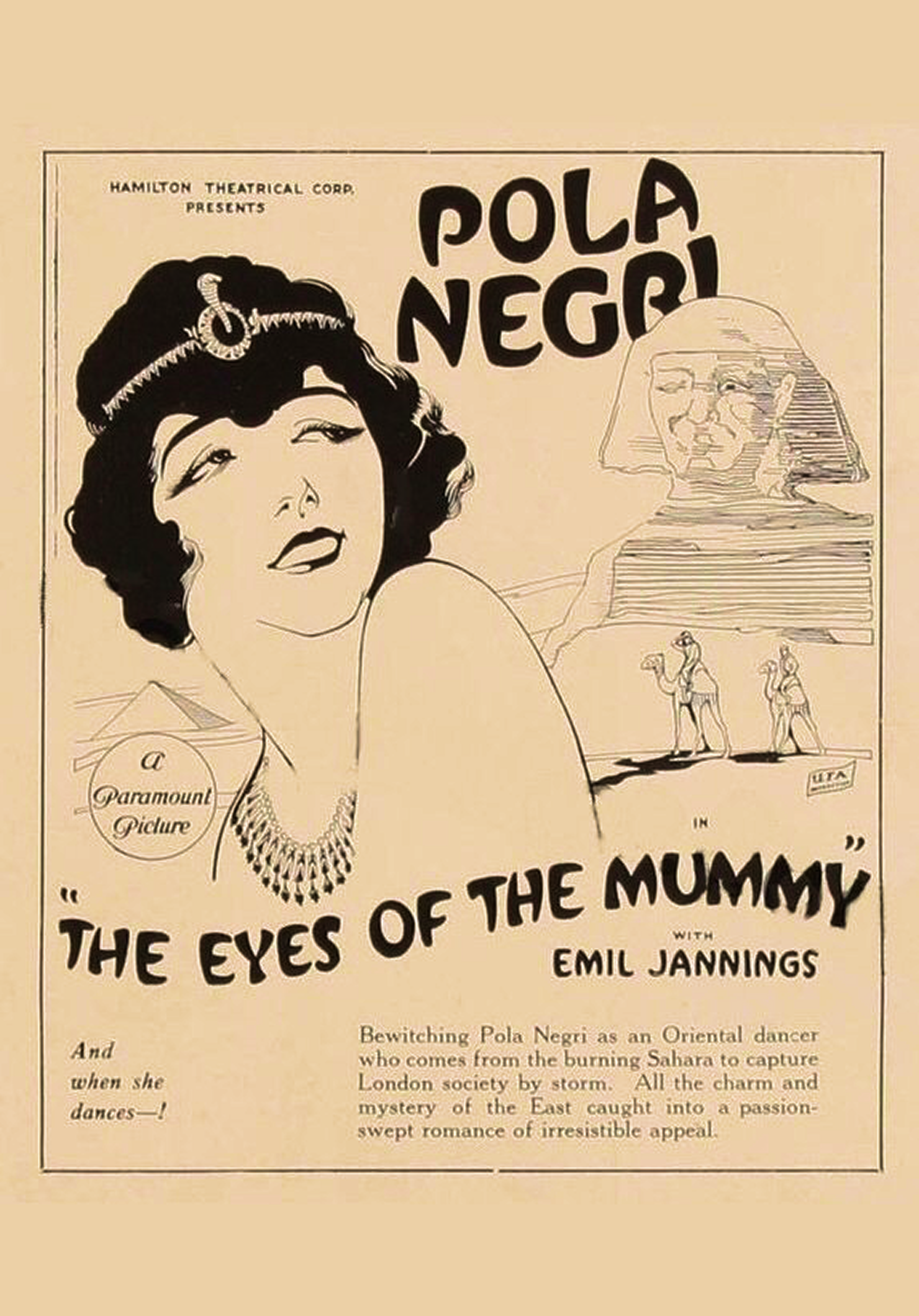
Poster for The Eyes of the Mummy.
Source: https://www.themoviedb.org/movie/28197-die-augen-der-mumie-ma/images/posters
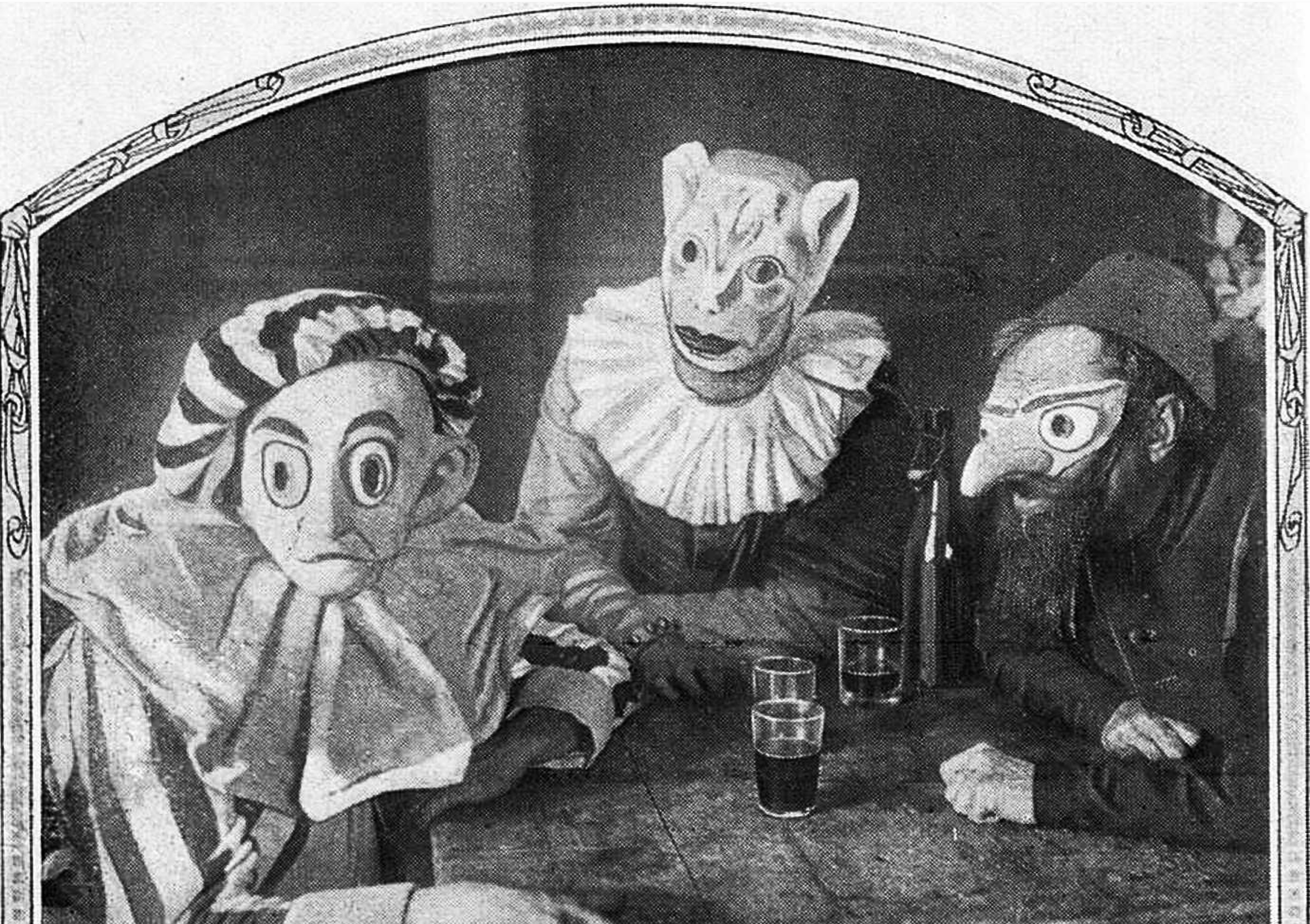
Still from The Three Masks, 1921.
Source: https://www.alostfilm.com/2014/04/the-three-masks-first-french-talking.html
Zvezda then reported that the Modern (the paper did not call it the International, its new name) would be closed for summer. The equipment was moved to “the track.” 12
Cinema news for May ended with the announcement in Zvezda that “The Film Section has received a new batch of excellent films for screening at local theaters.” Sadly, that same announcement gave no names.13
On June 1, 1922, Kinoresbel would officially open for business.
1 Знешняя палітыка Беларусі: Зборнiк дакументаў і матэрыялаў, vol. 1, Minsk, 1997, p. 243, cited in Romanowski, Dmitri. Belarus und Weimar-Deutschland wirtschaftliche, wissenschaftlich-technische und kulturelle Beziehungen/Belarus and Weimar Germany: Economic, Scientific-Technical and Cultural Relations, Dissertation Publishing House, 2015, p. 69.
2 Romanowski, p. 70.
3 Кинематографическое дело (Cinematographic Business), Звезда (Zvezda) (Star), 10 мая 1922/10 May 1922.
4 Ibid.
5 "Киноресбел" ("Kinoresbel") Звезда (Zveyezda), 13 мая 1922/13 May 1922.
6 https://www.kino-teatr.ru/search/182593811/896792/
7 https://www.kino-teatr.ru/kino/movie/empire/12517/annot/
8 "Доходность кинематографов" ("Cinema Income") Звезда (Zvezda) (Star) 1922 14/Май/May
9 Недатированный/Undated. В Горисполком/To the City Executive Committee/No. 6257. Национальный архив Республики Беларусь (НАРБ)/National Archives of Belarus (NARB) Фонд/Collection 42 опис/inventory 1 дело/file 133 документ/document 6.
11 "Улучшение кинематографического дела" ("Improving Cinematography") Звезда (Zvezda) (Star)/ 17 May 1922.
11 "Кино-фильмы для клубов" ("Cinema films for clubs") Звезда (Zvezda) (Star) 10 May 1922.
12 "Закрытие 'Модерна'" ("The 'Modern' is closing") Звезда (Zvezda) (Star) 21 May 1922.
13 "Новые Кино-фильмы" ("New movies") Звезда (Zvezda) (Star) 28 May 1922.