
August and September, 1923
An Old Friend, Re-Editing, and Little Red Devils
The second half of August 1923 exposed more problems for Minsk cinemas. For some time, the Rabis (The Art Workers Trade Union) had been using Mondays to screen films as fundraisers for its Mutual Aid Fund.1 (The cinema workers had Monday, not Sunday, as their official day off).2
In order to maximize the amount for the Mutual Aid Fund, the Rabis asked the Glavlit (the Main Directorate for Literary and Publishing Affairs) to waive the usual “stamp duty and chancery fees” for this August screening.3 In a second letter, the Rabis asked the Goskino representative in Minsk for the August film to be provided “free of charge.” (Goskino was the main state film organization, set in Moscow, which was supposed to control distribution of films through the USSR.) We cannot read the name of the film on the document.4 The screenings for raising funds was a long time practice, probably stretching back years. It is highly probable that the Rabis sent such request letters to Goskino (or its predecessors) for every screening. However, we have uncovered only a few letters in the archival documents. The response to these letters was probably positive as we know that the Rabis kept sending them.
On August 29, there was a report of a fire at the Red Star (formerly the Giant) cinema.5 But we have been unable to find out anything else about it.
As the calendar turned to September 1923, there was little in the local Minsk news that we can find that directly related to cinema. An old friend popped up, in sad circumstances, in a September 6 article of the Minsk newspaper, Zvezda. The article listed tax defaulters and included the name Abram Lifshitz, who had once run the Giant cinema in Minsk, before it became the Red Star. He had been also head of the Government Photo-Kino Department when Belarus first became a Soviet Republic. Lifshitz lost that job on allegations of corruption. (See here) The September 6 Zvezda article reported that the court excused Lifshitz’s failure to pay taxes as he had been a victim of “banditry.”6
We cannot find records of what the cinemas in Minsk were showing in September 1923. But we can find records for Moscow, and perhaps a few of the films listed for Moscow made it down to Belarus. Famed Polish actress Pola Negri was still a popular star. There was a 1923 film originally released in Germany under the title Die Flamme, then in English-speaking markets under the name Montmartre,7 and finally in the Soviet Union as Lallo.8 We know some of the Soviet history of Lallo because the Russian state publisher Kinopechat put out a series of booklets on movie stars. The booklet on Pola Negri described a movie plot with a character named Lallo.9
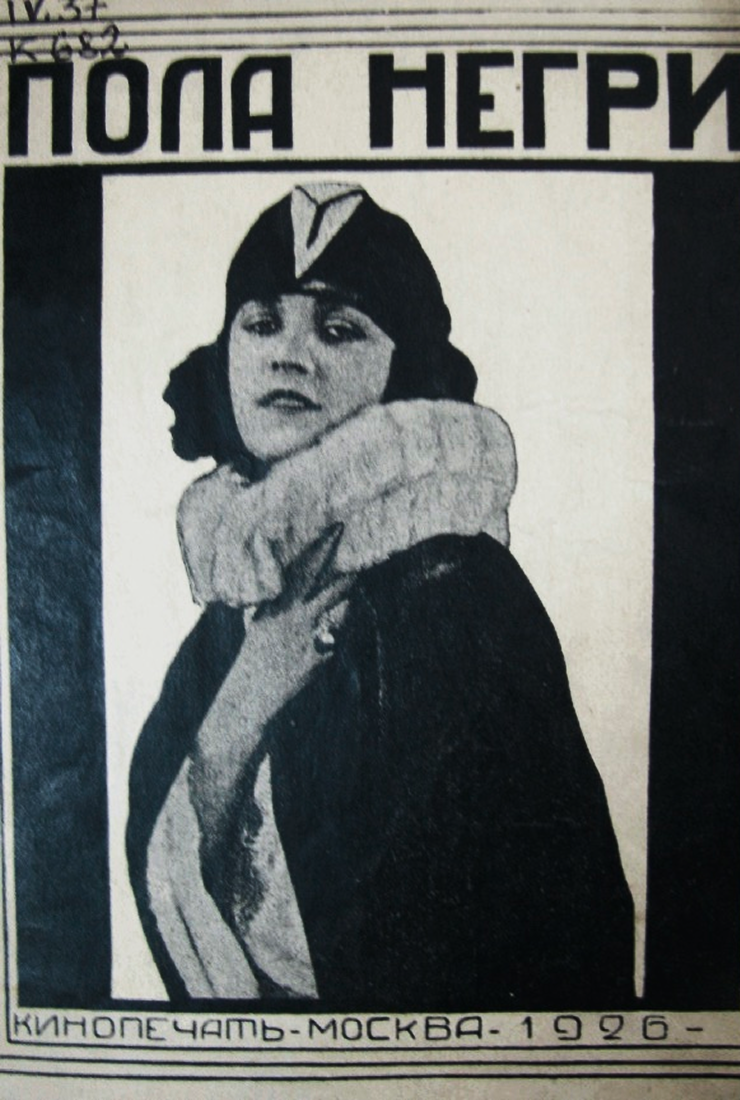
Pola Negri
Source: Kinopechat.
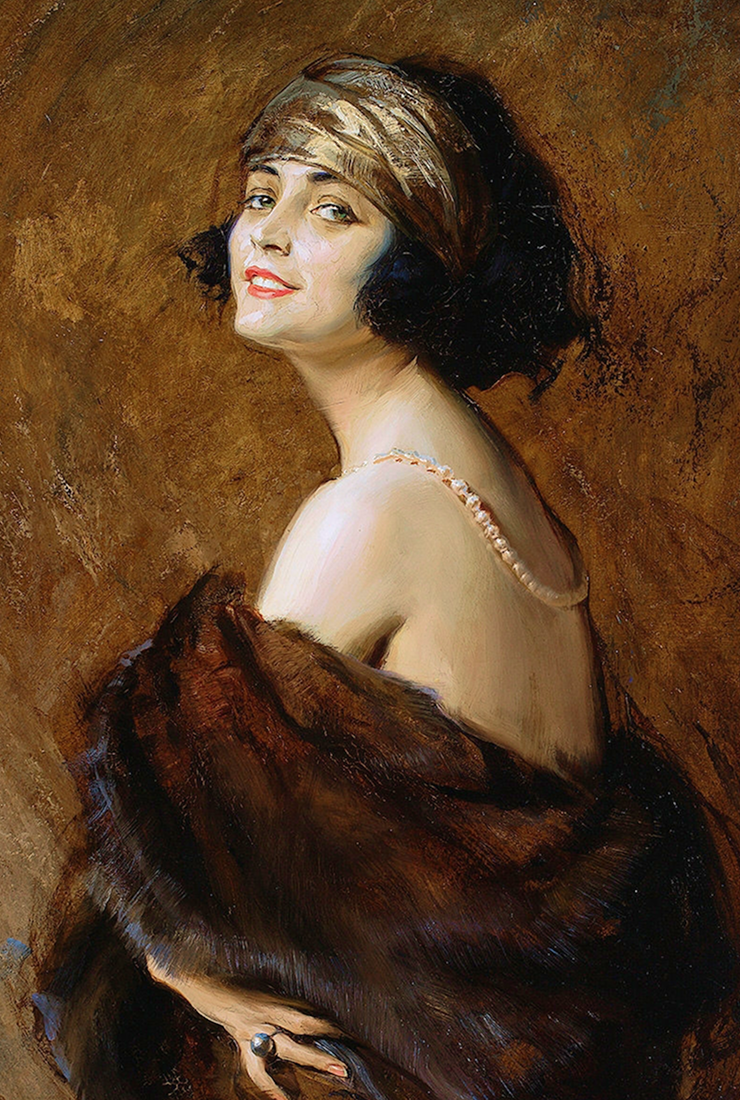
Tadeusz Styka, Portrait of Pola Negri, before 1930.
Source: https://niezlasztuka.net/o-sztuce/tadeusz-styka-portret-poli-negri/
The plot described in the booklet matches the known plot of Die Flamme. But now, instead of Yvette, the main character was named Lallo. We know that Soviet censors often took imported movies and re-cut them to make the story more appropriate for Soviet ideology, and that often included re-naming characters. Lallo is no longer around, but a reconstruction of Die Flamme is.
Die Flamme, 1923.
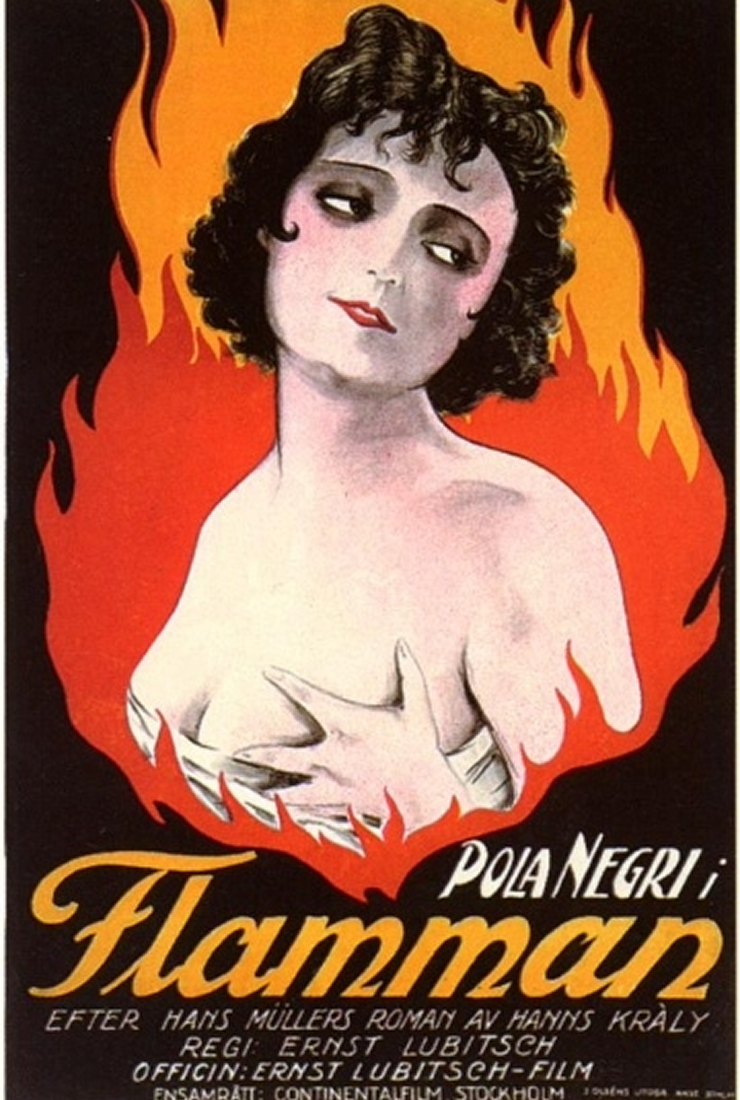
Film poster for Die Flamme.
Source: Public Domain, Wikimedia Commons
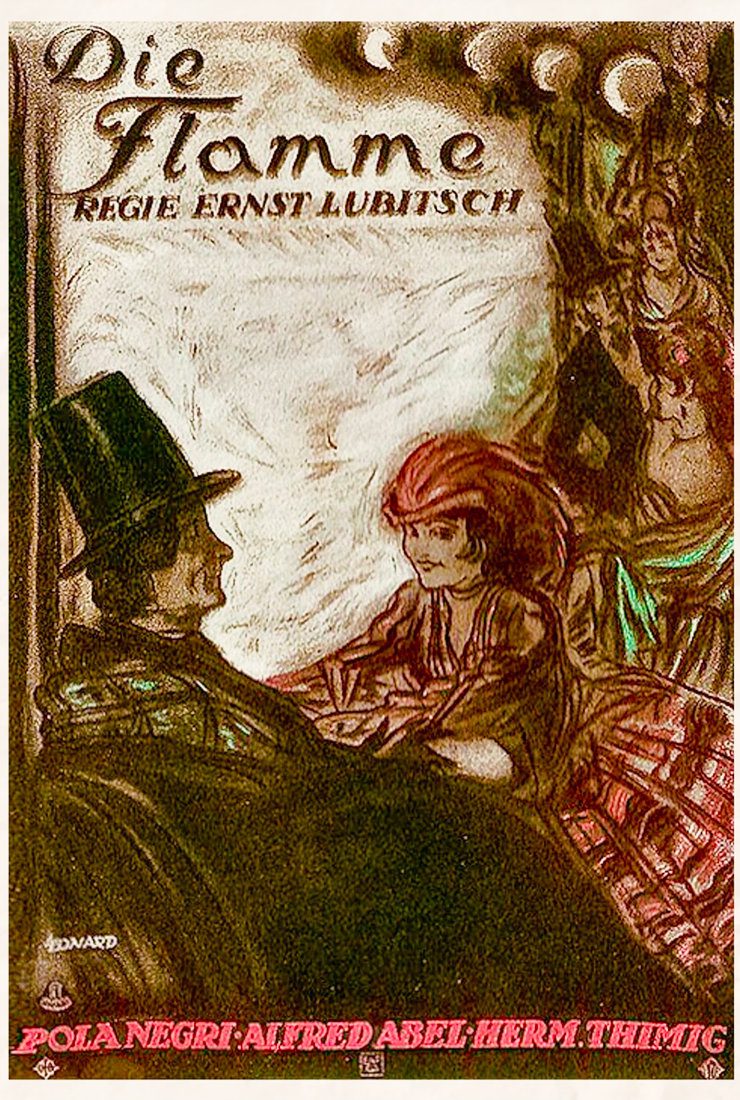
Film poster for Die Flamme.
Source: https://www.imdb.com/title/tt0014046/
The Soviet practice of peremontazh (re-editing) is described by film historian Yuri Tsivian as “the reworking of a film to suit a country other than that of its origin…This term also embraced…re-titling, altering the main title, changing character names, and adding new scenes to pre-existing footage.”10
The beginning of September 1923 also marked an important date for the future of Belarusian cinema. Historian Natalya Ryabchikova writes that on September 4, 1923, in Moscow, a film commission was set up in Russia under the Workers’ and Peasants’ Inspection, to be headed by V. Mantsev. One of the original purposes of what became known as the Mantsev Commission was to inspect Goskino. Authorities could already see that Goskino was not doing its job of resurrecting the Soviet film industry. The Mantsev Commission was to report in October 1923 with recommendations on the organization of the state film industry. It would not make that report until 1924.
Also in September 1923 the Minsk Gorono (City Department of Public Education) gave up running the cinemas. On September 15, Zvezda carried a story that said the Gorono transferred operation of the cinemas to the Minsk Komkhoz (City Department of Municipal Services).11 This came after Bragin, who was head of the Cinema Administration Department of the Gorono, told the Rabis in July that Minsk cinema profitability was up 45%. (See here).
For at least three Mondays in September, the Rabis requested tax and duty exemptions from various government authorities so it could show films for fundraisers for the Mutual Aid Society.12
At the end of September, one of the Soviet Union’s great early films premiered. Sources differ on the exact day, but on either September 25 or 26, 1923, Krasnyye d'yavolyatakh (Red Devils, often referred to as Little Red Devils) premiered in Tiflis, in the modern country of Georgia. It came to Moscow on November 30.13 We don't know when it got to the regular cinemas in Belrus, only that it played for a Rabis funderaiser in Minsk at the beginning of the next year.
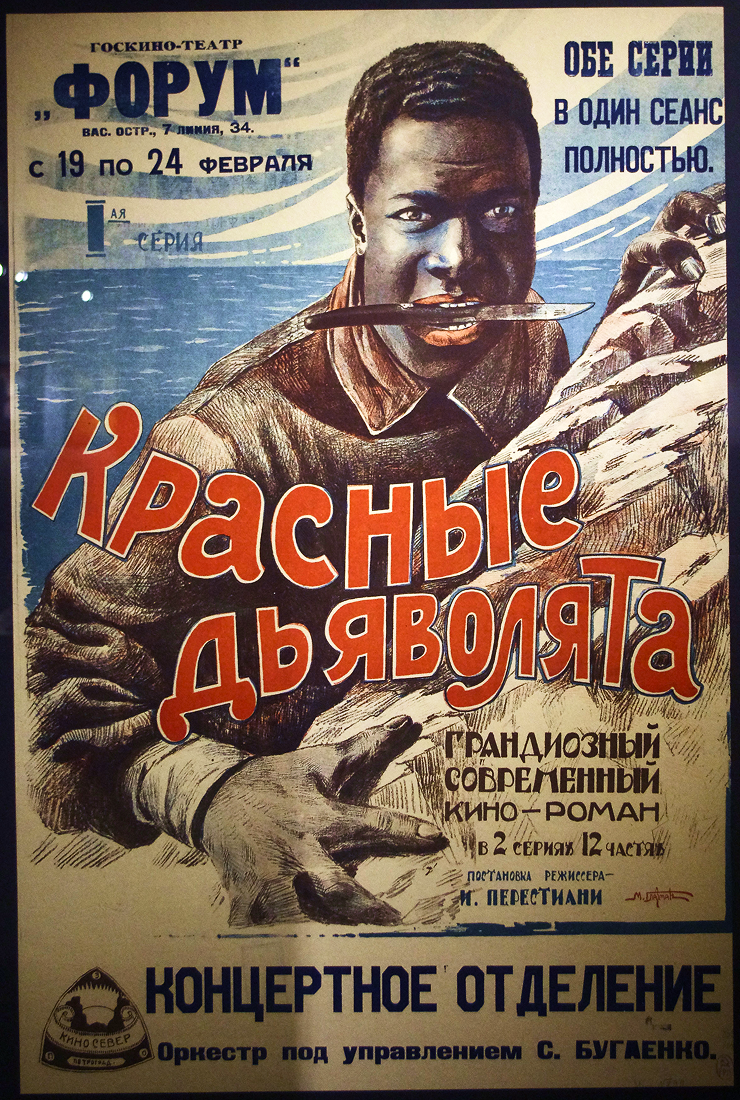
Film poster for Red Devils by Michael Abramovich Glazman (1870–1942).
Source: Public Domain, Wikimedia Commons.
One note on the poster. The performer there is Kador Ben-Salim. He would appear in a future Belgoskino film Vozvrashchenie Neytana Bekkera (The Return of Nathan Becker).
1 Protokol № 12 Zasedaniya Pravleniya Mingubotdela RABIS [Протокол № 12 Заседания Правления Мингуботдела РАБИС; Minutes No. 12 of the Meeting of the Board of the Mingubotdel of the RABIS] 17 Sept. 1923. Natsionalny arkhiv Respubliki Belarus' (NARB) [Национальный архив Республики Беларусь; National Archive of the Republic of Belarus NARB], Fond 307, Opis’ 2, Delo 1, p. 63.
2 Protokol № 22 Zasedaniya Pravleniya Mingubotdela profsoyuza RABIS [Протокол № 22 Заседания Правления Мингуботдела профсоюза РАБИС; Minutes No. 22 of the Meeting of the Board of the Mingubotdel of the RABIS Trade Union] 22 Oct. 1922. NARB, Fond 307, Opis’ 2, Delo 1, p. 30.
3 V Glavpolit - Prosvet / Repertuarnuyu komissiyu [В Главполит - Просвет / Репертуарную комиссию; To Glavpolit - Prosvet / Repertoire Commission] 13 Aug. 1923. NARB, Fond 307, Opis’ 1, Delo 15, p. 298.
4 Upolnomochennomu Goskíno T. Panesu [Уполномоченному Госкино Т. Панесу ; To the authorized representative of the State Committee for Goskino, Mr. Panes] 13 Aug. 1923. NARB, Fond 307, Opis’ 1, Delo 15, p. 304.
5 Protokol no. 22 Zasedaniya Prezidiuma Mingubotdela RABIS [Протокол no. 22 Заседания Президиума Мингуботдела РАБИС; Minutes No. 22 of the Meeting of the Presidium of the Minsk City Department of RABIS], 29 Aug. 1923. NARB, Fond 307, Opis’ 2, Delo 2, pp. 57.
6 Bykhovsky, E. “Sud. Zlostnyye neplatel'shchiki naloga.” [Суд. Злостные неплательщики налога; Court: Chronic Tax Defaulters]. Zvezda [Звезда; Star], 208 (1510) 6 Sep. 1923.
7 “Negri Picture Poor Stuff,” Exhibitor’s Trade Review, 3 May 1923, p. 33.
8 Advertisement. Pravda [Правда; Truth], no. 216, 25 Sep. 1923, p. 4.
9 Korloevich, Vladimir. Pola Negri [Пола Негри; Pola Negri]. Kinopechat, Moscow 1926, pp. 14-15.
10 Tsivian, Yuri “The wise and wicked game: re-editing and Soviet film culture of the 1920s”. Film History, Vol. 8, 1996, pp. 327-343.
11 Kino-upravleniye [Кино-управление; Film Administration] Zvezda [Звезда; Star] No. 216 15 Sep. 1923 p. 5.
12 V Narkomfinbel [В Наркомфинбел; To the People's Commissariat of Finance and National Economy] 3 Sept. 1923. NARB, Fond 307, Opis’ 1, Delo 15, p. 238; V Glavlit [В Главлит; To Glavlit (Chief Directorate for Literature and Publishing Affairs] 17 Sept. 1923. NARB, Fond 307, Opis’ 1, Delo 15, p. 202; V Glavlit [В Главлит; To the Chief Directorate for Literature and Publishing Affairs] 24 Sept. 1923. NARB, Fond 307, Opis’ 1, Delo 15, p. 184.
13 Krasnyye d'yavolyata [Красные дьяволята; Red Devils] Kino-teatr www.kino-teatr.ru/kino/movie/sov/10236/annot/ Accessed 3 Sep. 2026.