
July and August, 1923
The RABIS Brags, Americans Come to Town
In July 1923, the Gorono (City Department of Education) prematurely celebrated the state of the cinemas in Minsk. The minutes of a meeting on July 9, 1923, show Comrade Bragin, head of the Cinema Administration of the Gorono, bragging about the state of the cinema. He said the reason that the Giant, Eden, and Modern movie theaters (The Communist names were Red Star, Internatsional, and Kultura) had been unprofitable was because of bad films delivered through a Kinoresbel contract. (Kinoresbel oversaw the cinemas for a few months in 1922 before the Gorono took over in October of that year.) We know that the Photo-Kino Department, which preceded Kinoresbel, had entered into several contracts (see here and here but we have not seen a Kinoresbel contract.
Kinoresbel was not really in business long enough to enter into many agreements. Bragin reported that with a revised contract that Minsk cinema profitability had increased 45% compared to the previous December. He added that if “we” had not reduced costs, the cinemas would probably have been closed. He noted that “the relationship with the union (the Rabis, presumably) is also good.” At the end of the meeting, it was resolved “to consider the activities of the Cinema Department fully satisfactory and to state the close and healthy ties with the union.”1 By September, it would be clear that Bragin’s boast was an empty one.
The Soviet Government Cinema Organization Goskino, formed in Moscow at the end of 1922, was importing foreign movies to fill Soviet screens because there was not enough domestic product. One of the films, L’Enfant du Carnaval (Child of the Carnival) (1921), starred the famed Russian film actor Ivan Mozzhukhin (often spelled Mouskoujine). The film was made in France2 because Mozzhukhin had left after the Bolshevik Revolution and settled there. Did this Mozzhukhin vehicle make it to Belarus? We know it was shown in Moscow in February 1923.
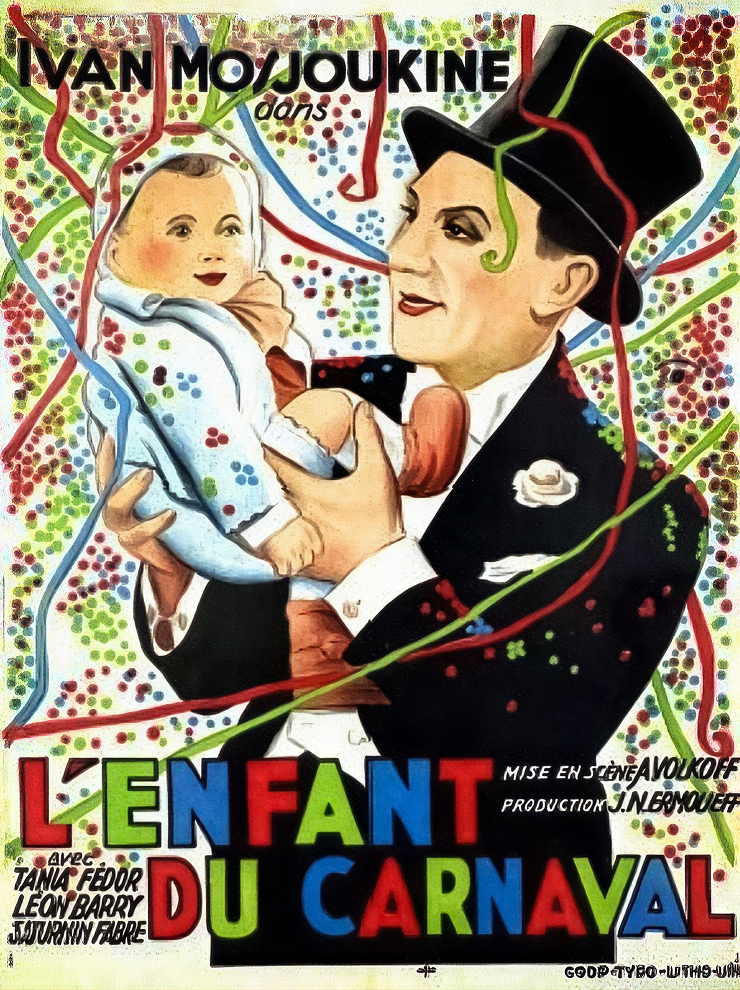
Film poster for L’Enfant du Carnaval (Child of the Carnival).
Source: https://zavodfoto.livejournal.com/904804.html
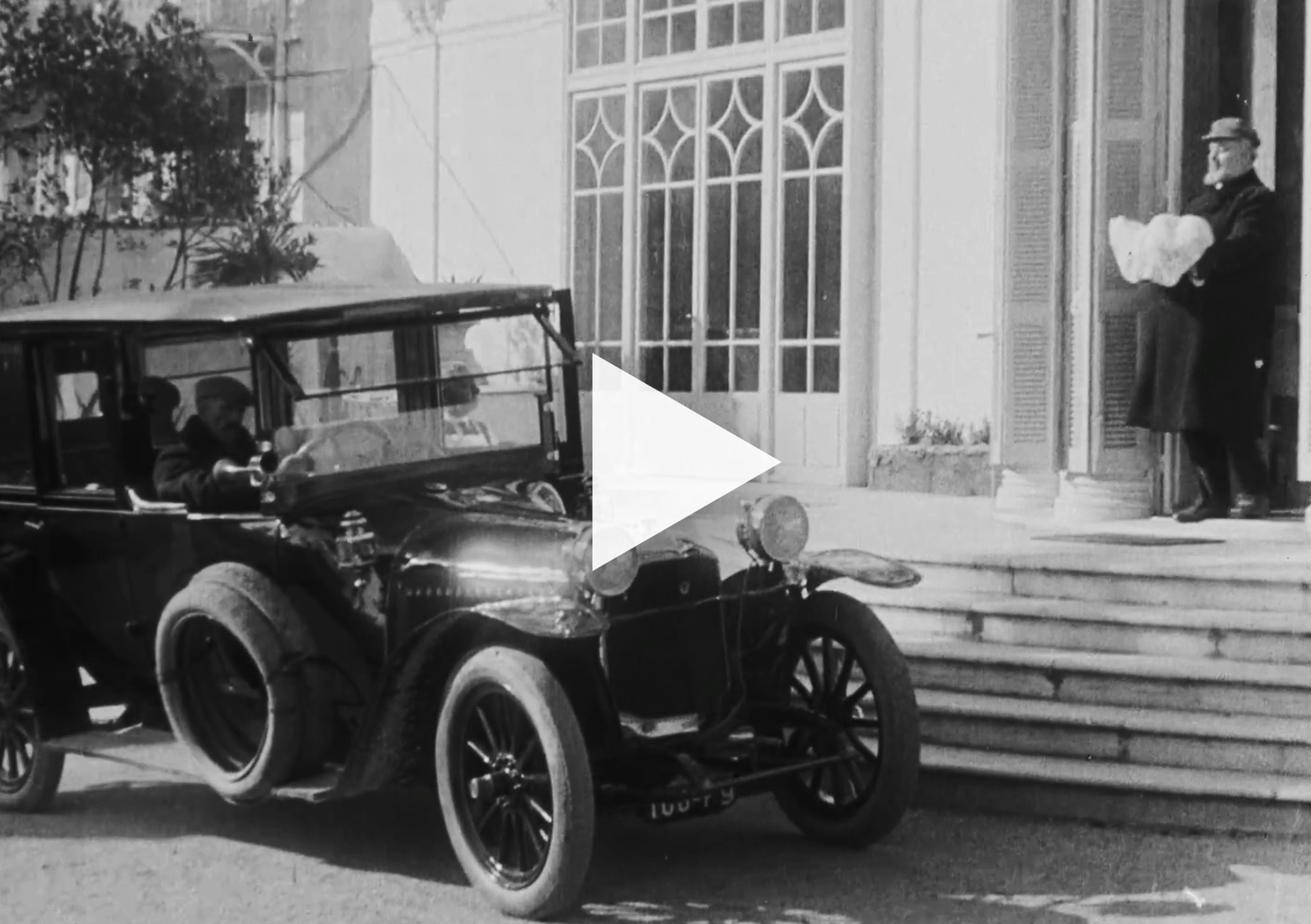
L’Enfant du Carnaval (Child of the Carnival) movie.
In November of that year, another Mozzhukhin film, Le Brasier Ardent (The Blazing Inferno) (1923), was also shown in Moscow under the title Grimasy Parizha (The Grimaces of Paris).3
Le Brasier Ardent (The Grimaces of Paris), 1923.
The beginning of August in Minsk looked quite exciting for a short time. The local newspaper, Zvezda, ran an article on August 10 about American filmmakers in town. The short article said that Americans came to take motion pictures of the Spartacus squad.4 The Spartacus squad was made up of young children who were part of the Soviet Union’s Young Pioneer movement, which had been established on May 19, 1922, by the Second All Russian Komsomol Congress (ARKC). In October of the same year, the Fifth ARKC merged all pioneer detachments into the children’s organization called “Spartacus Young Pioneers.”5
It is doubtful that the major American newsreel organizations were involved with the filming of the Spartacus Young Pioneers. Other than reporting on the Soviet famine of 1921, we have not been able to find any records of commercial American newsreels shot anywhere in the postwar republics that came into being after the 1917 Bolshevik Revolution. There is a good chance the filmmakers belonged to the American organization, Friends of Soviet Russia, which did shoot film in the USSR. The picture below is of William F. Kruse, an American closely associated with early Soviet cinema. This picture was taken at an agricultural exposition, not in Minsk.
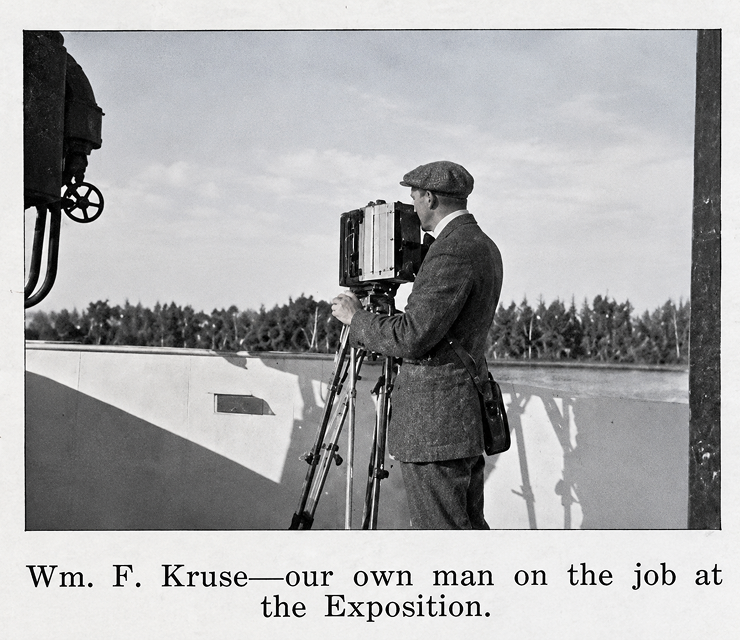
Soviet Russia Pictorial Nov. 1923, p. 255.
We have used ChatGPT to enhance the picture to make it sharper.
In August 1923, in Russia, all private film firms were liquidated and the state film organization Goskino was declared to have a state monopoly of film production and distribution. At the same time, according to film historian Jay Leyda, the Russ filmmaking collective was merged with Mezhrabpom (The International Workers Aid organization, which had branched into making and distributing films. See here).6 Another source says that the two began a partnership in 1923 and official formed Mezhrabpom-Rus in 1924.7 We provide this information to indicate how quickly the cinema business was changing and centralizing in Soviet Russia. These changes would later affect the other Soviet republics.

Mezhrabpom-Rus logo.
Source: https://ru.wikipedia.org/wiki/Межрабпом-Русь
Also in August, the Minsk Rabis (Union of Art Trade Workers) had had enough of the Lotto Club, which had taken over the premises of the former Grotesk cinema. The Rabis began pushing to terminate its agreement with the Lotto Club management because employees were not getting paid. See here and here.
By August 12, the Kultura (Modern) movie theater had re-opened.9
1 Protokol no.9 Zasedaniya chlenov Pravleniya Mingubotdela Soyuza RABIS [Протокол no. 9 Заседания членов Правления Мингуботдела Союза РАБИС; Minutes No. 9 of the Meeting of Board Members of the Mingubotdel of the RABIS Union] 9 Jul. 1923. Natsionalny arkhiv Respubliki Belarus’ NARB [Национальный архив Республики Беларусь (НАРБ); National Archive of the Republic of Belarus (NARB)], Fond 307, Opis’ 2, Delo 1, pp. 59-59b.
2 Ditya karnavala [Дитя карнавала; Child of the Carnival], Izvestiya [Известия; News), 7 Feb. 1923, No. 27 (1864) p. 5.
3 Grimasy Parizha [Гримасы Парижа; Grimaces of Paris], Rabochaya Moskva [Рабочая Москва; Working Class Moscow], 21 Nov. 1923, no. 261 (533), p. 8.
4 We will be shown in cinemas, Zvezda, No. 185 (1487), 10 Aug 1923.
5 Goryacheva, Svetlana. 19 maya — Den' pionerov, ili “Yunyye pionery imeni Spartaka” [19 мая — День пионеров, или «Юные пионеры имени Спартака»; May 19 – Pioneer Day, or “Young Pioneers named after Spartak”]. Volgodonskaya Pravda [Волгодонская правда] https://v-pravda.ru/2023/05/19/19-maya-den-pionerii-ili-junye-pionery-imeni-spartaka 19 May 2023.
6 Leyda, Jay. Kino: A History of the Russian and Soviet Film. George Allen & Unwin, p. 167.
7 Wilson, Booth. “From the Moscow art theater to Mezhrapom-Rus’: Stanislavskii and the archaeology of the director in Russian silent cinema". Studies in Russian and Soviet Cinema, Vol. 11, Iss. 2, 4 May 2017, p. 118-113. See footnotes 1 and 5.
8 Protokol no.17 Zasedaniya Prezidiuma Mingubotdela Rabisa [Протокол no.17 Заседания Президиума Мингуботдела Рабиса; Minutes No. 17 Meetings of the Presidium of the Minsk City Branch of Rabis]. 3 Aug. 1923, NARB, Fond 307, Opis’ 2, Delo 2, pp. 52.
9 Protokol №18 Zasedaniya Prezidiuma Mingubotdela RABIS [Протокол №18 Заседания Президиума Мингуботдела РАБИС; Minutes No. 18 of the Meeting of the Presidium of the Minsk City Department of RABIS], 12 Aug. 1923, NARB Fond 307, Opis’ 2, Delo 2, pp. 53.