
October, 1923
Rural Cinema and Einstein
As October of 1923 began, the Minsk-based Zvezda newspaper published an article related to what was known in the Soviet Union as “cinefication.” The term generally meant the expansion of cinema across the union, and it called for more cinemas in the countryside. Zvezda reported the “Film Administration of Belarus” (a new term for us) intended to organize “3 village cinemas.” The cost? 32,000 gold rubles.1
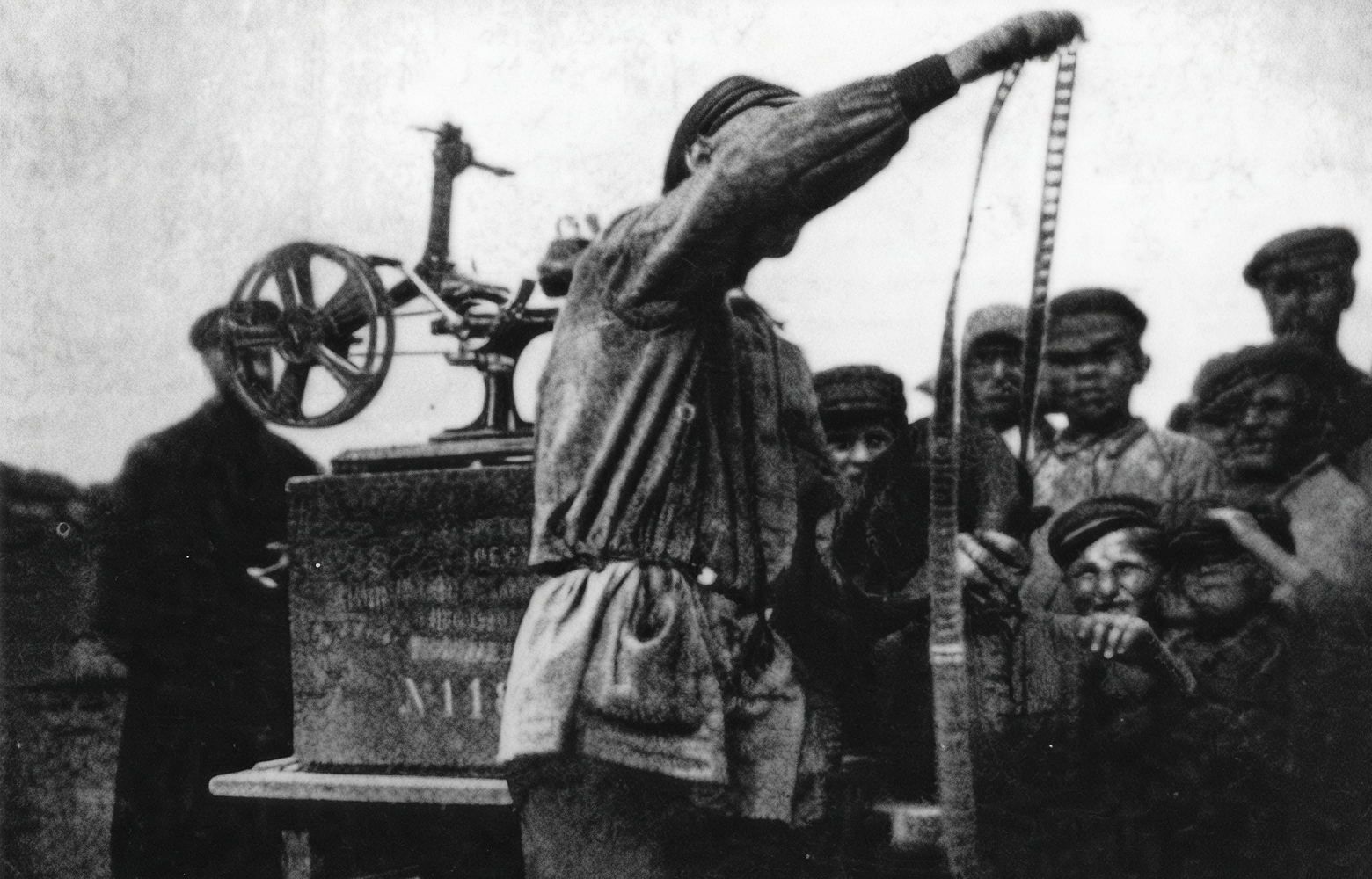
Demonstration of a village film projector with self-powered generator.
From Film und Volk, November 1928.
Source: Image from Kepley, Vance “’Cinefication’: Soviet Film Exhibition in the 1920s.² www.jstor.org/stable/3814971
On October 7 came the announcement that the Red Star cinema in Minsk was going to show the German film Teoriya otnositel'nosti (The Theory of Relativity).3 The film would be shown at the Giant (not using the Communist name, Red Star) on October 14 and 15.4 The original German title was Die Grundlagen der Einsteinschen Relativitäts-Theorie (The Fundamentals of Einstein’s Theory of Relativity, 1922). The original Einstein film ran three hours and called for a live lecture. The Red Star would provide 3 lecturers, because, as the article said, “of course, a proper explanation is required.”
The original film is considered lost. However, American filmmakers Max and Dave Fleischer (the people who brought you Betty Boop), adapted and repurposed footage from the film and made a short silent film. That is still with us.
Dave Fleischer, Out of the Inkwell Films / Red Seal Pictures, 1923.
A letter to Zvezda, signed by someone named G. Alevich, did not take kindly to anything to do with how the Einstein film was presented in Minsk. He excoriated both cinema management and audiences in Minsk. Alevich accused management of bringing the film in “like contraband” on Sunday, holding it over on Monday (when cinemas were normally closed), and dumping it on Tuesday.
He writes that the Giant (he also used the pre-revolutionary name of the movie theater) did not even run wide advertising the way it does for movie like Madam Rekam'ye (Madame Récamier.) Alevich said that this was because cinema was mostly attended “by philistines, greedy for pictures of the old, dying cinema — counts, princes, duels, and dizzying stunts.” He also criticized the cultural departments of the trade unions for apparently not thinking that “the greatest achievement in the modern world” (Einstein’s development of the theory of relativity) should be shown to workers, Red Army soldiers, or students.
The letter/editorial ended “the Gorono (Minsk City Department of Public Education) is handing the cinemas over to Komkhoz (the Minsk City Department of Utilities). And the Komkhoz will presumably file cinemas under the heading of revenue-generating enterprises, right alongside the bathhouse and the sanitation convoy... And ideological leadership will presumably remain, as before, in the hands of the old cinema specialists, for whom "The Theory of Relativity" is just a necessary little concession to a "hungering" Glavpolitprosvet...(Main Department of Political Education)
Should it be this way? Let those whose job it is to know, answer that.5
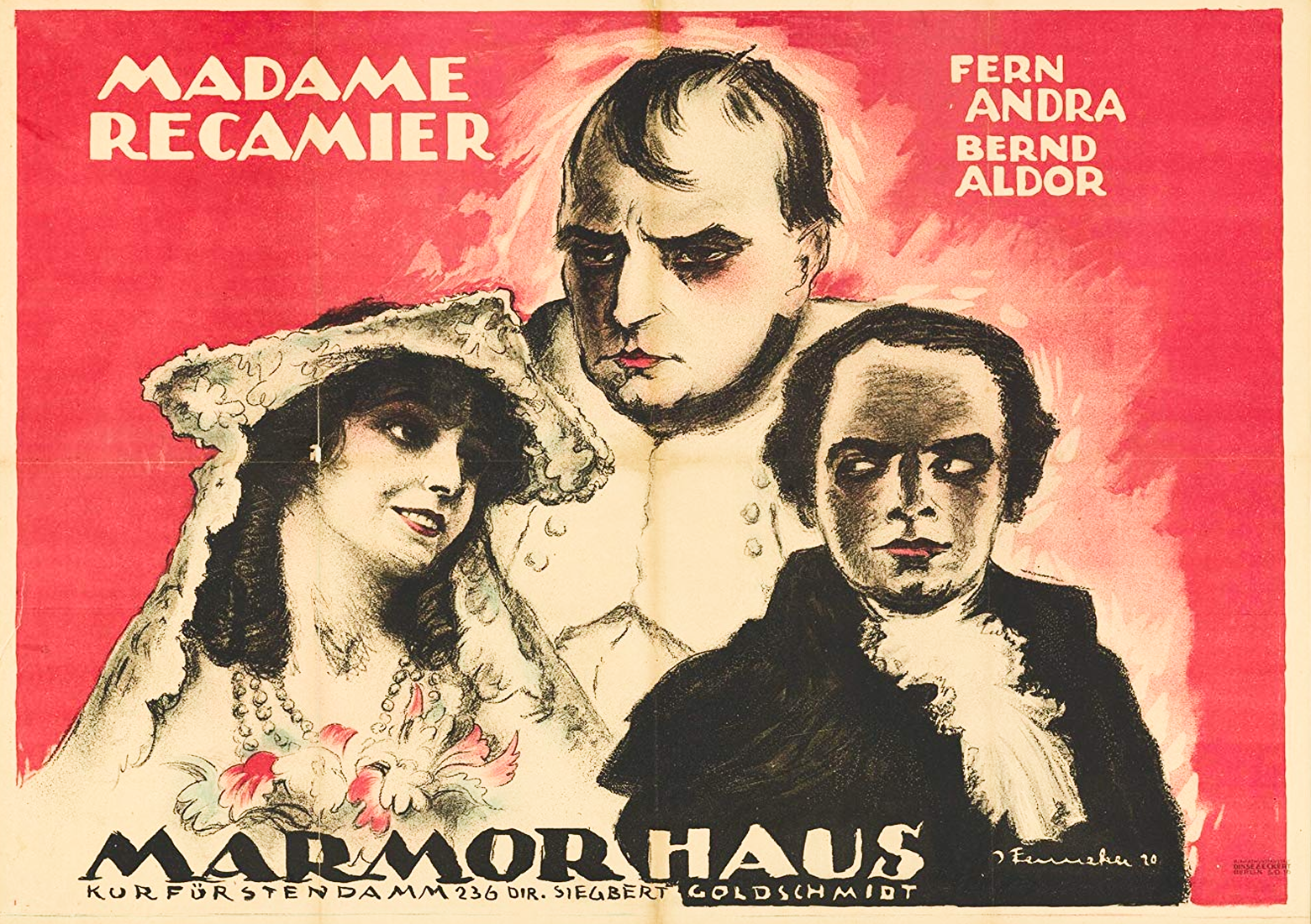
Film poster for Madam Rekam'ye, by Josef Fenneker.
Source: https://en.wikipedia.org/w/index.php?curid=59770244
It would not take an Einstein to figure out the Minsk cinemas were in serious financial trouble. Bragin, who was head of the Cinema Administration Department of the Minsk Gorono (City Department of Public Education), confessed in an October 22, 1923, meeting that the financial state of affairs for the cinemas was precarious, and there would probably have to be layoffs. By this time, the cinemas were already in the hands of the Komkhoz (City Department of Public Utilities). The Mingubrabis (The Minsk Provincial Section of the Art Workers Trade Union) made plans to negotiate with the Komkhoz6, although just what they would negotiate was not clear. Just a few days later, at a meeting to discuss the supplementary tax on cinemas for the benefit of the Red Cross, a Comrade Kasatkin pointed out another problem when he said that Spartak cinema workers were “barely eking out an existence.”7
October started with a call for cinemas in the village and ended with a call for a workers movie theater. Someone with the name of I. Altman wrote to Zvezda, noting that not all workers can afford to go to the cinema, even though they always talk about the latest films. He suggested following Moscow’s path and creating a workers’ cinema which would charge reduced fees. He suggested the former Lux movie theater in Minsk to be used for the workers.8
This came even as the Rabis (The Art Workers Trade Union) was still asking to be able to show films at little or no cost for Monday screenings as fund raisers for their Mutual Aid Society. (See here). The latest request was same October 15.9
On October 30, Zvezda published a story about celebrations of the Bolshevik Revolution. The story said the regular repertoire of all cinemas and live theaters would be suspended in favor of Soviet films, such as 5 Years of October Power. There would be free admission for soldiers. The State Theater would host state plays in Belarusian.10
But the month ended on a dismal note, at least as far as the film title was concerned. The Spartak cinema, nearing its own end, showed a film with the Russian title, Ikh gibel’ (Their Demise). It was the 1915 pacifist American film, Civilization, directed by Thomas Ince.
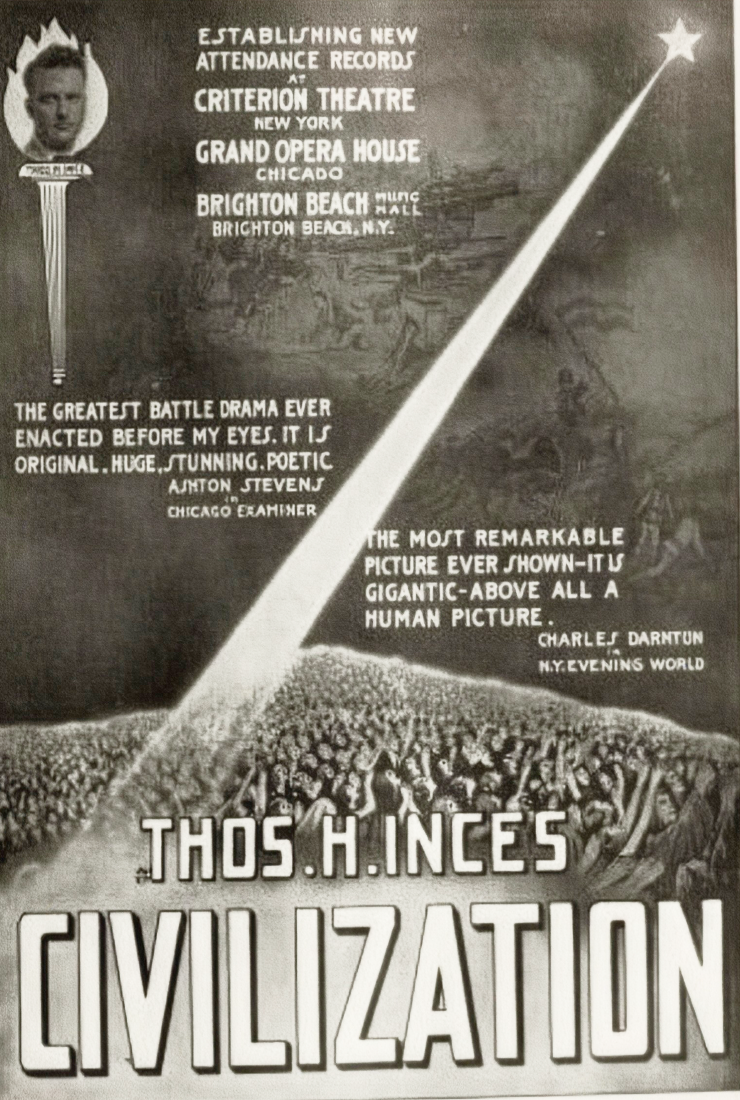
Film poster for Civilization.
Source: https://www.imdb.com/title/tt0006517/mediaviewer/rm4013815553/
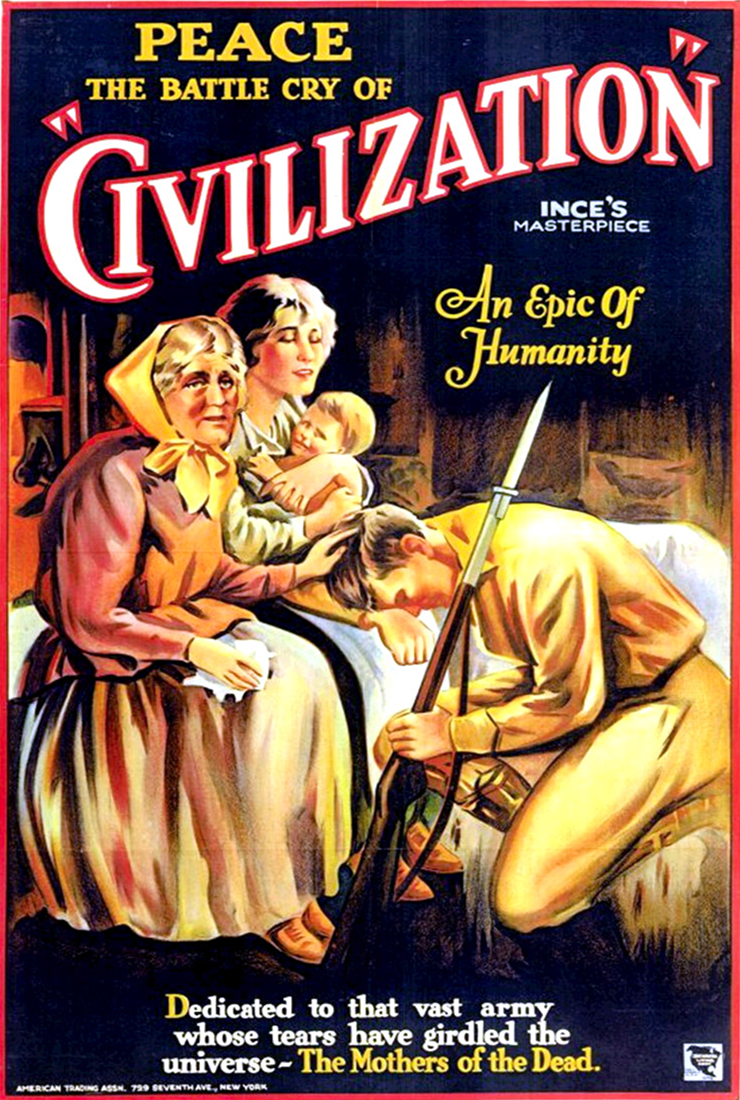
Film poster for Civilization.
Source: http://www.impawards.com/1916/civilization.html
Civilization, 1916.
The Glavlitbel (the Belarusian Main Administration for Literary and Publishing Affairs), which was the censorship board, published a program in which the print praises the film. A handwritten annotation on the back says. ”The picture breathes... There cannot be peace in a vile and cruel world, until the Red Star of Communism is raised over the entire Earth.”11
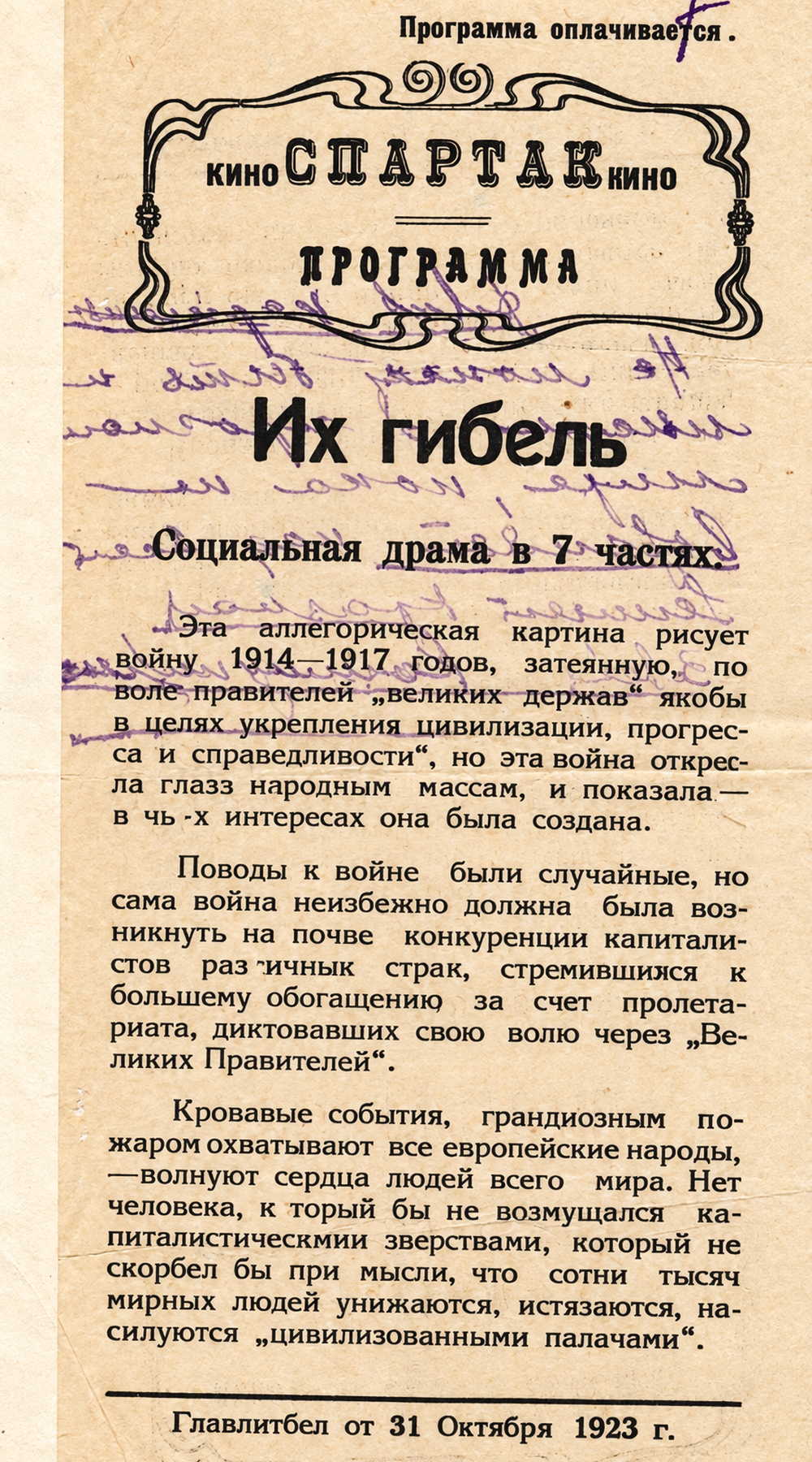
Glavlitbel program.
Source: NARB.
1 “Kino dlya derevni” [Кино для деревни; Cinema for the Villages]. Zvezda [Звезда; Star], No. 231 (1533), 3 Oct. 1923.
2 Kepley, Vance “’Cinefication’: Soviet Film Exhibition in the 1920s”. Film History, Vol. 6, No. 2, (Summer, 1994), pp. 262-277. www.jstor.org/stable/3814971/
3 “Teoriya otnositel'nosti Eynshteyna — na ekrane” [Теория относительности Эйнштейна — на экране; Einstein's theory of relativity — on screen]. Zvezda, No. 235 (1537), 7 Oct. 1923.
4 Demonstratsiya kartiny “Teoriya otnositel'nosti”. [Демонстрация картины «Теория относительности»; Showing the film “The Theory of Relativity”]. Zvezda, No. 240 (1542), 13 Oct. 1923.
5 Alevich, I. “Teoriya otnositel'nosti” dybom [«Теория относительности» дыбом; The "Theory of Relativity" on its head]. Zvezda, No. 245 (1547), 19 Oct. 1923.
6 Protokol no. 15 Zasedaniya Pravleniya Mingubrabisa [Протокол no. 15 Заседания Правления Мингубрабиса; Minutes no. 15 Meetings of the Mingubrabis Board]. Natsionalny arkhiv Respubliki Belarus' (NARB) [Национальный архив Республики Беларусь; National Archive of the Republic of Belarus, NARB]. 22 Oct. 1923, Fond 307, Opis’ 2, Delo 1, pp. 68-68b.
7 Protokol [Протокол; Minutes]. 26 Oct. and 1 Nov. 1923. NARB, Fond 307, Opis’ 2, Delo 1, pp. 74-74b.
8 Altman, A. “O rabochem kinematografe” [О рабочем кинематографe; On a Workers’ Cinema]. Zvezda, No. 248 (1550), 23 Oct. 1923.
9 Protokol № 28 Zasedaniya Prezidiuma Mingubrabisa [Протокол № 28 Заседания Президиумa Мингубрабиса; Minutes No. 28 of the Meeting of the Presidium of Mingubrabis]. NARB, Fond 307, Opis’ 2, Delo 2, pp. 63.
10 K Oktyabr'skim torzhestvam [К Октябрьским торжествам; For the October celebrations]. Zvezda, No. 254 (1556), 30 Oct. 1923.
11 Ikh gibel’ [Их гибель; Their Demise], 31 Oct. 1923. NARB, Fond 93, Opis’ 1, Delo 1119, pp. 7-7b.