
In Vitebsk, a Struggle for the Silver Screen
The end of 1922 is a good time to take a look at nearby Vitebsk. We have focused on Minsk so far because it was the largest city in the Belarusian Socialist Soviet Republic. The city of Vitebsk was “returned” to Russia at the start of the civil war/border wars in 1919, and then again "returned" to Belarus in 1924. The situation in Vitebsk has perhaps more in contrast than in similarity to Minsk in its post-revolution attempt to restore the cinema business.
Moise Dinershtein, the former head of Kinoresbel, in a departing note grouped Vitebsk in the Western District for film distribution (see here). The challenges Vitebsk faced and how it dealt with them may help us better understand the arguably greater difficulties Minsk faced.
The man we want to discuss here is Abram Galkin, who would move from his various positions restoring the cinema business in Vitebsk to be the head of Belgoskino, the state film trust, when it was created at the end of 1924. Watching how Galkin worked, and the challenges he faced, may help illustrate why he was chosen to be the head of Belgoskino when it was created.
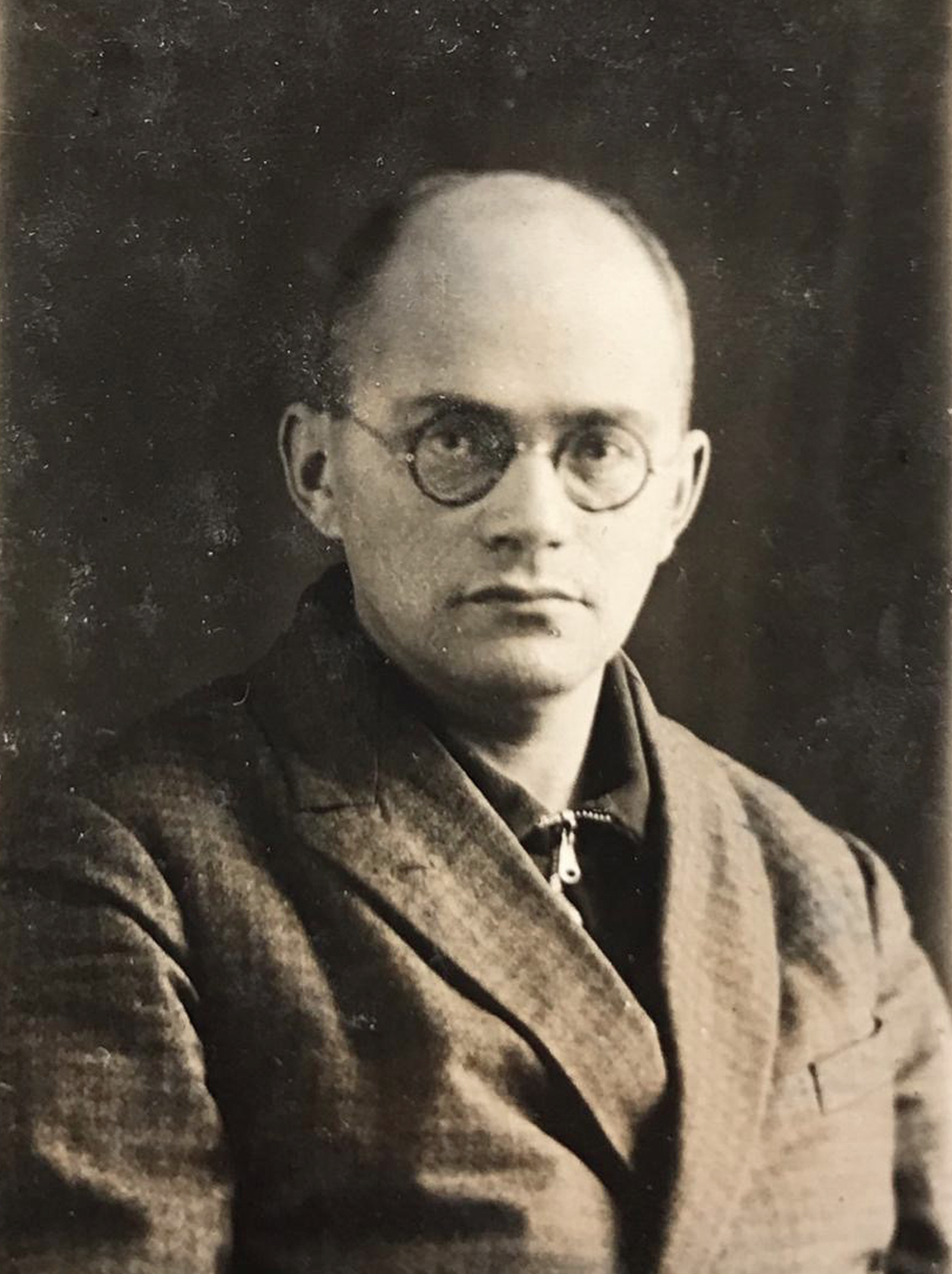
Abram Galkin.
Source: Fair Use.
Galkin was born in Vitebsk in 1889. Galkin had been a member of the Jewish Socialist Bund, but in 1920, he joined the Communist Party. In 1919, he had proposed that the Vitebsk Gubono [Department of Public Education] take charge of the film industry. He was also Chairman of the Pravleniye Khudozhestvennykh Predpriyatiy [Board of Artistic Enterprises] and headed its Cinema Department. The Board which was part of the Gubono (1919-1923); then Head of the Art Department in the Ugono [City Department of Public Education] (1923-?); and the first acting head of the Vitebsk Proletkino when it was formed in 1923.1 2 Galkin was involved in battles over cinemas came out, apparently, with enough of a favorable image to be named head of the new Belarusian film trust (Belgoskino) in 1924.
The Battle Over the Odeon Cinema
In November 1922, the Vitebsk Board of Artistic Enterprises provided to the Vitebsk Gubpolitprosvet [the Provincial Department of Political Education] a report of its history over the past year.3 The report said that in September 1921, Vitebsk had three cinemas: Khudozhestvenny [The Artistic], Illuziya [Illusion] and the Rekord [Record]. (Record at one point was renamed Spartak.4 ) It also noted a fourth cinema, Odeon [also referred to as Ampir or Empire5 ].
The Odeon was under control of the Kul'totdela Vitebskogo Uchkprofsozha [Cultural Department of the Railway Workers Union] and operated as the Propaganda Center for the Oryol-Vitebsk Railway Workers Propaganda Center (Oryol is a city in Russia.) The propaganda center ended operations by the end of 1921. At that time, the cinema was “returned” to the Gubono. The Railway Union immediately asked for it back.6 On January 3, 1922, the Gubernsky Ispolnitelny Komitet, or Gubispolkom [Provincial Executive Committee], the highest state authority in the area, proposed that the cinema be given back to the Railway Union.7 That proposed ruling was only the beginning of six months of fighting.
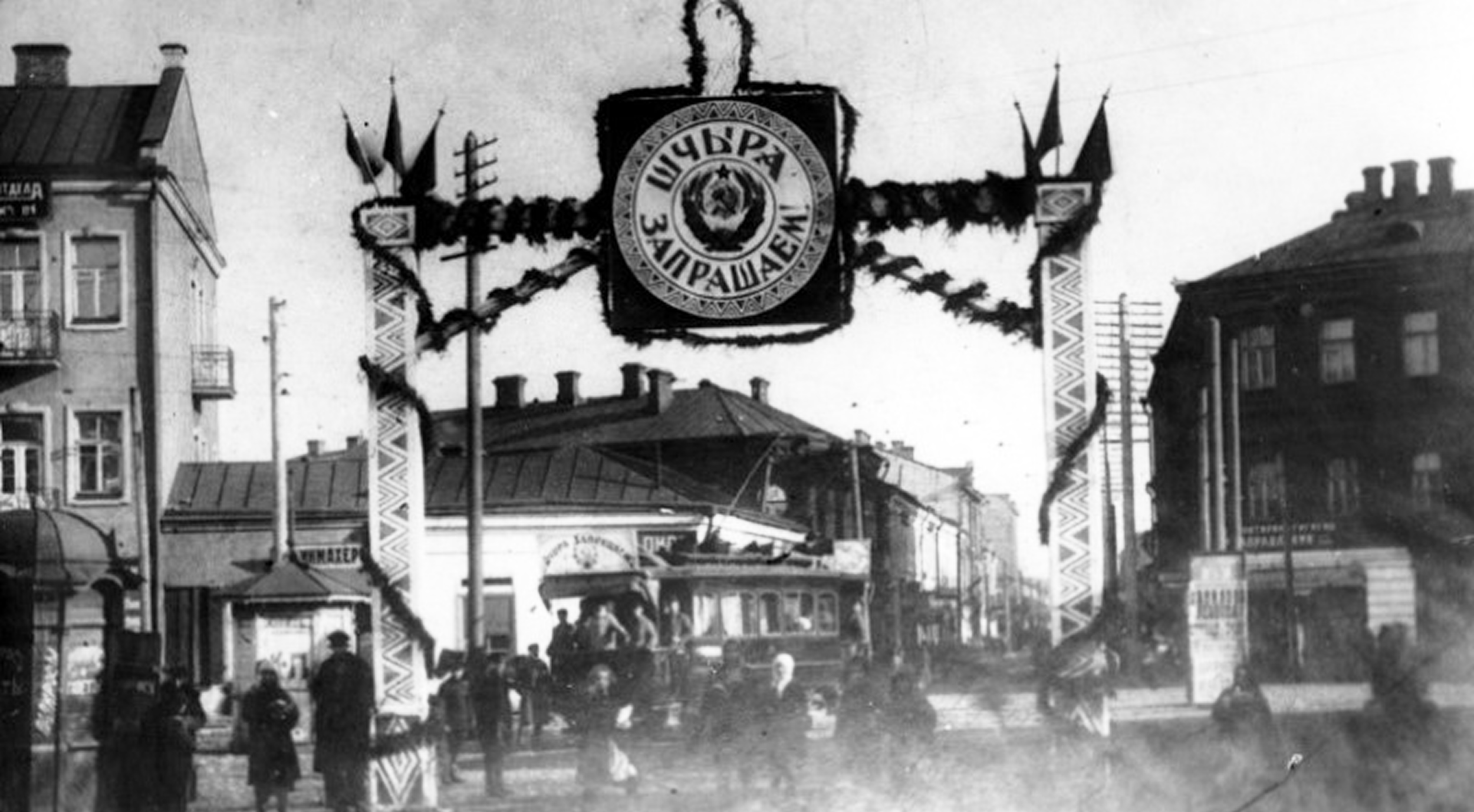
Vitebsk, Vokzalnaya Street, now Kirova, 1925.
Source: Photo from the Soviet Encyclopedia https://vkurier.news/6-faktov-iz-zhizni-prostitutok-v-vitebske-v-1920-e-gody/
On February 9, 1922, Moscow weighed in. The Glavpolitprosvet [The Main Department of Political Education] of the Rossiyskaya Sovetskaya Federativnaya Sotsialisticheskaya Respublika [Russian Soviet Federative Socialist Republic] agreed with the ruling that the Railway Union have the Odeon.8 That same day, February 9, the Vitebsk Kantselyariya Gubernskogo Komiteta, a.k.a. the Kantsgubkom [Chancellery of the Provincial Committee] shockingly disregarded the notice from Moscow and gave control of the Odeon to the Vitebsk Board of Artistic Enterprises, which meant Galkin would oversee it. Among the reasons the Kantsgubkom provided were that the railway organizations “are included in the general supply network of the (Vitebsk) Gubpolitprosvet and that the financial situation of the Gubpolitprosvet was a “disaster.” The Railway Union did not give up.9
The ongoing fight did not deter the Vitebsk Gubpolitprosvet from monitoring what went into the cinemas. Sometime before March 1922, Galkin approved the showing of the film Zhizn' yevreyev v Palestine [Jewish Life in Palestine, also known as The Life of Jews in Palestine]. He then found out that, even though he was nominally in charge of cinema, he still had to get approval before he showed anything. On March 3, 1922, the Gubpolitprosvet ordered Galkin and the Board of Artistic Enterprises to withdraw the film from circulation – permanently.10
Life of the Jews of Palestine, 1913
Even with the break for the dispute over what could be shown, the bitter fight over the Odeon continued. At the end of July 1922, Moscow Narkompros [People’s Commissariat of Education] stepped in and made it clear that control of the Odeon would be awarded to the Local Committee of the Railway Workers Union.11 This time, it was the Vitebsk Gubpolitprosvet which appealed.
In recounting the history of the situation, the Vitebsk Gubpolitprosvet wrote that the Railway Union cut off electricity to the Odeon after it was transferred to the Gubono. The Vitebsk Board of Artistic Enterprises, headed by Galkin, then had to arrange for electricity. The Odeon was unusable for five weeks, during which time the Board still bore the costs of maintaining the theater, including paying staff. In fact, the theater was not back in use until May.
The Railway Union had claimed it should keep possession of the Odeon because it was located “on the railway” and that the railway had equipped it, at its own expense.12 Galkin had claimed the Vitebsk Board of Artistic Enterprises had spent considerable sums maintaining the building.13
But Moscow had spoken and the Railway Union had won. However, the Vitebsk Gubpolitprosvet was able to extract some important concessions. They Union would have to deduct 10% of its monthly gross proceeds to give to the Gubpolitprosvet, as it would have done had the Board of Artistic Enterprises taken it over. The Union would have to reimburse the Board of Artistic Enterprises for its costs in equipping the Odeon, the Gubpolitprosvet would retain control over ideological leadership of activities in the cinema.14 It seems, then, that the Gubpolitprosvet got most of what it wanted.
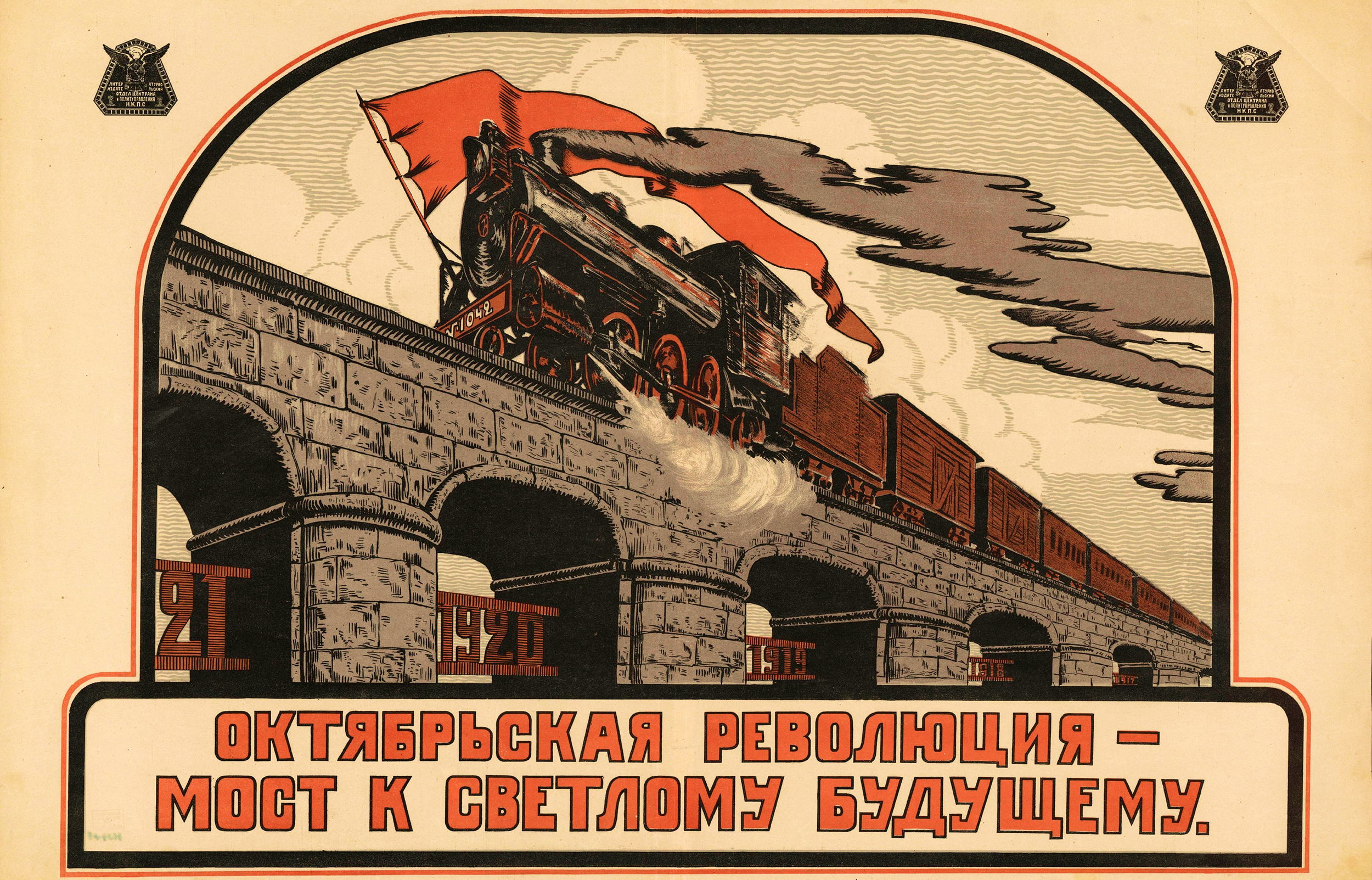
Unknown artist. The October Revolution towards a brighter future.
Source: https://commons.wikimedia.org/w/index.php?curid=70089890
1 Abram Il'ich Galkin [Абрам Ильич Галькин], Vremennik Zubrovskogo Instituta [«Временник Зубровского Института»; Bulletin of the Zubrovsky Institute], no. 2(29), Moscow: Ministry of Culture of the Russian Federation, Russian Institute of Art History, 2020), 230.
2 «Otchet po Pravleniyu Khudozhestvennykh Predpriiatii za operatsionnyi period s oktiabria mesiatsa 1921 g. po 1 sentiabria 1922 g.» [«Отчёт по Правлению Художественных Предприятий за операционный период с октября месяца 1921 г. по 1 сентября 1922 г.»; Report of the Administration of Artistic Enterprises for the Operational Period from October 1921 to 1 September 1922], 21 Oct. 1922. GAVt, Fond 1319, Opis' 1, Delo 4, p. 504.
3 «Otchet po Pravleniyu Khudozhestvennykh Predpriiatii za operatsionnyi period s oktiabria mesiatsa 1921 g. po 1 sentiabria 1922 g.»
4 Tat'iana Kotovich, "Kul'tovyy kinoteatr «Spartak» v Vitebske: istoriya i lichnosti, 1920-ye gody" [«Культовый кинотеатр «Спартак» в Витебске: история и личности, 1920-е годы»; "The Iconic Spartak Cinema in Vitebsk: History and Personalities, 1920s"], in Dialog iskusstv i art-paradigm: Stat'i. Ocherki. Materialy [«Диалог искусств и арт-парадигм: Статьи. Очерки. Материалы»; Dialog of Arts and Art Paradigms: Articles, Essays, and Materials] Saratov: Research Council of the Saratov State Conservatory named after L.V. Sobinov, 2020), 121.
5 V Konfliktnuiu Komissiiu Gubotdela Truda [«В Конфликтную Комиссию Губотдела Труда»; To the Conflict Commission of the Provincial Department of Labor], 6 Mar. 1923. GAVt, Fond 95, Opis' 1, Delo 327, p. 2.
6 Protokol Zasedaniya Prezidiuma Gubispolkoma [«Протокол Заседания Президиума Губисполкома»; Minutes of the Meeting of the Presidium of the Gubernia Executive Committee], 3 Jan. 1922. GAVt, Fond 1319, Opis' 1, Delo 1, Doc. 57b.
7 Protokol Protokol Zasedaniya Prezidiuma Gubispolkoma.
8 Vitebsk Gubpolitprosvet [«Витебский Губполитпросвет»; Vitebsk Provincial Political Education Committee], 9 Feb. 1922. GAVt, Fond 1319, Opis' 1, Delo 1, p. 64.
9Postanovlenie Sekretariata Vitgubkoma RKP(b) [«Постановление Секретариата Витгубкома Р.К.П.»; Resolution of the Secretariat of the Vitebsk Gubernia Committee of the Russian Communist Party (Bolsheviks)], 9 Feb. 1922. GAVt, Fond 1319, Opis' 1, Delo 4, p. 380.
10 Protokol Zasedaniya Kollegii Vitgubpolitprosveta [«Протокол Заседания Коллегии Витгубполитпросвета»; Minutes of the Meeting of the Collegium of the Vitebsk Provincial Department of Political Education], 3 Mar. 1922. GAVt, Fond 1319, Opis' 1, Delo 4, p. 284b.
11 V Pravlenie Khudozhestvennykh Predpriiatii [«В Правление Художественных Предприятий»; To the Administration of Artistic Enterprises], 29 Jul. 1922. GAVt, Fond 1319, Opis' 1, Delo 4, pp. 368–368b.
12 Rossiiskaia Kommunisticheskaia Partiia (Bol'shevikov), Vitebskii Gubernskii Komitet — Prezidiumu Gubispolkoma [«Российская Коммунистическая Партия (Большевиков), Витебский Губернский Комитет — Президиуму Губисполкома»; Russian Communist Party (Bolsheviks), Vitebsk Gubernia Committee — To the Presidium of the Gubernia Executive Committee], 21 Jul. 1922. GAVt, Fond 1319, Opis' 1, Delo 4, p. 377–377b.
13 V Gubkom RKP(b) — Kopiia v Prezidium Vitgubispolkoma [«В Губком РКП(б) — Копия в Президиум Витгубисполкома»; To the Gubernia Committee of the Russian Communist Party (Bolsheviks) — Copy to the Presidium of the Vitebsk Gubernia Executive Committee], 22 Jul. 1922. GAVt, Fond 1319, Opis' 1, Delo 4, p. 371; p. 376 (copy).
14 V Pravlenie Khudozhestvennykh Predpriiatii [«В Правление Художественных Предприятий»; To the Administration of Artistic Enterprises], 29 Jul. 1922. GAVt, Fond 1319, Opis' 1, Delo 4, pp. 368–368b.