
June Arrives in Minsk
The Cinemas Disappear From the Newspaper
Minsk readers perusing the newspaper Zvezda on Friday, June 1, would have noticed that only two cinemas were advertising: the Red Star and the Internationsal. The Red Star was showing the German film Noch' v Marokko (A Night in Morocco), with Ellen Richter, and the Internatsional was screening the Italian film, Emir Geroy Tsirka (Emir, Hero of the Circus).1 By the next day, Saturday, June 2, those two cinemas stopped advertising, at least in Zvezda, through the end of the year. The other cinemas had already stopped.
It appears that the Minsk cinemas may have continued to operate even if they did not advertise. A July 4 report of the Mingubotdela Soyuza RABIS (the Minsk Provincial Department of the Art Workers Trade Union) said that the Kultura (referring to it by its old name, the Modern) was temporarily closed due to the prohibition on showing detective movies.2 On July 5, the “Cinema Administration” of the Gorono (the Minsk City Department of Public Education, which was now overseeing cinema in Minsk) offered the three “functioning” Minsk cinemas to VUFKU (The All Ukrainian Photo-Cinema Administration).
The offer gives us some good insight into the state of cinema in the Belarusian Soviet Socialist Republic at the time. The offer mentioned only the Red Star cinema by name.
It also mentioned the price of admission:
- Box – 80 rubles,
- Orchestra seats – 20 rubles,
- First Section – 17 rubles,
- Second Section – 15 rubles.
The Kultura was closed for renovation and the Spartak was functioning as the Lotto Club (see here). The offer indicated that there were two cinemas in the city of Bobruisk and that in district towns and small towns there were “private cinemas.”
The Gorono added that its films were supplied by Goskino, Sevzapkino, Fakel, and Grust and some private distribution offices.3 Goskino and Sevzapkino were government organizations. According to film historian Kristin Thompson, Fakel was a private company formed under the Lenin’s New Economic Policy.4
We could not find any information on Grust.
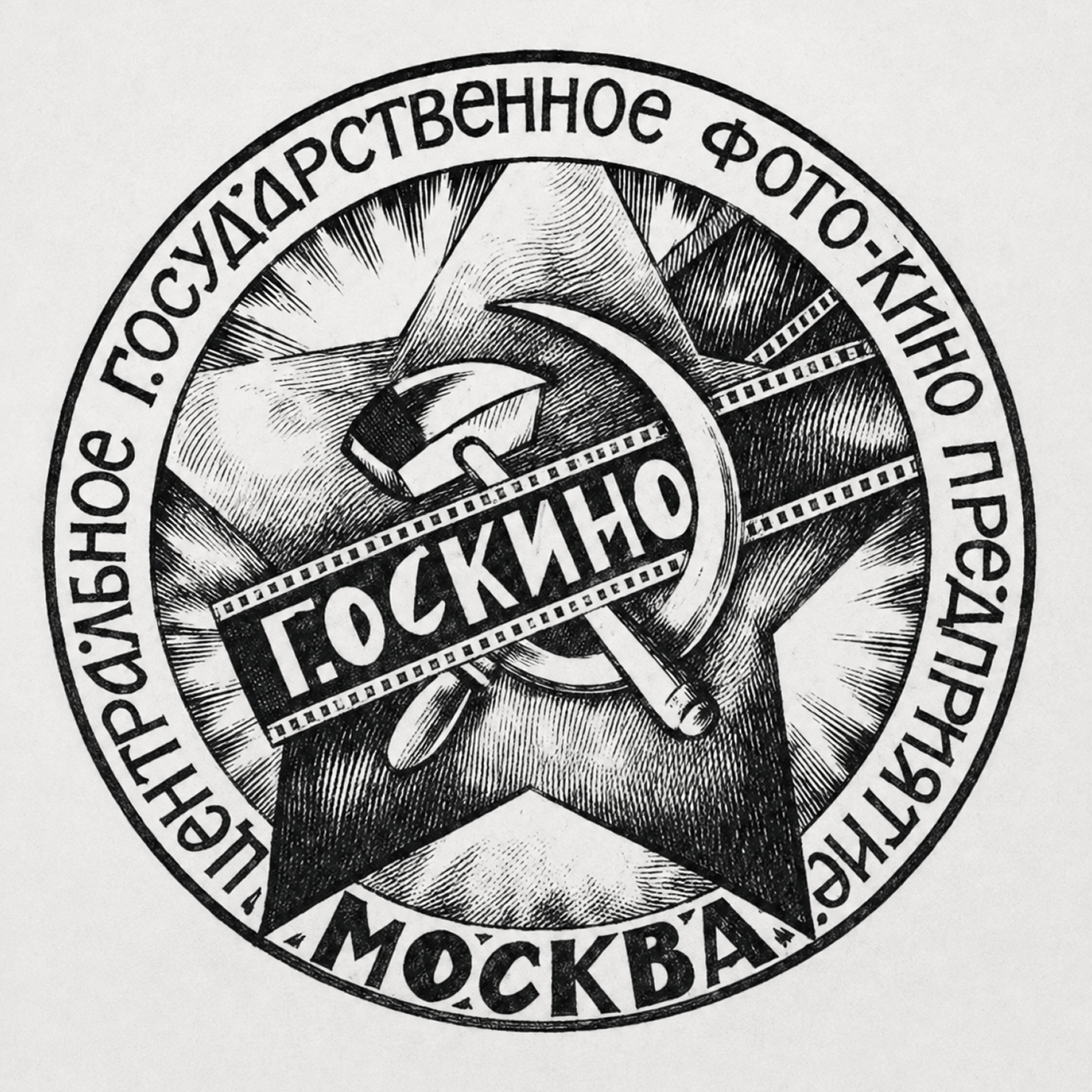
All of Goskino’s promotional materials featured this logo. AI enhanced.
Source: https://a-kuryatkov.livejournal.com/116389.html
The cinemas that got better films charged more. American film historian Vance Kepley, Jr. and his wife, Betty, described the situation with Soviet cinemas and ticket prices:
While workers complained about run-down accommodations and poor musical accompaniment in the screening halls of the workers' clubs, Russians willing to pay higher admission prices at commercial theaters saw a greater variety of films in the best cinemas available.5
Vance Kepley, Jr. and Betty Kepley
If, as according to the message it sent to VUFKU, Minsk was truly getting films from Goskino, etc., then the city would have had a great deal to choose from. Records show that one of the films that came into Moscow at this time starred the now sadly-forgotten actress, Billie Rhodes.6 To be fair, we don’t know whether this movie, titled, Zhertva lyubvi (Victim of Love), came to Belarus.
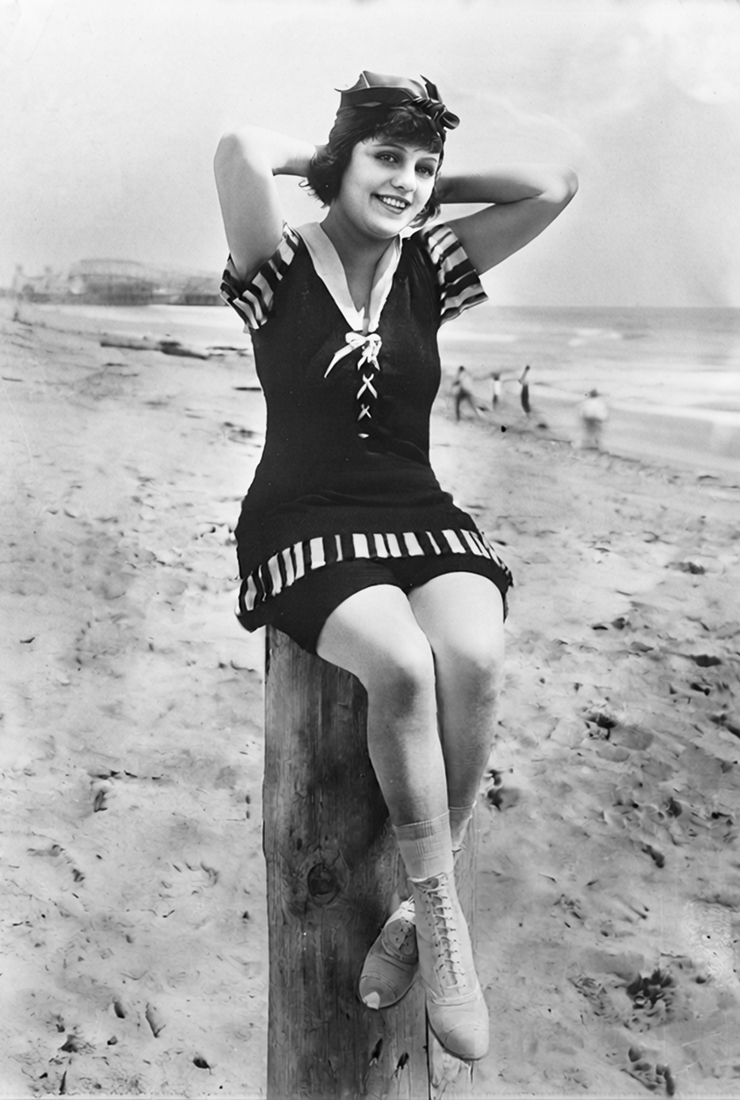
Billie Rhodes, 1917.
Source: University of Washington, Public domain, via Wikimedia Commons. Face enhanced by Gemini.
For Southern Californians, that’s Santa Monica Pier in the background.
Here is Billie in one of her films that still exists, Operating on Cupid.
As above, the Soviet cinemas that got better films also made more money. But that meant that they also paid higher taxes. Looking at documents from Feb. 1923, it appears that Narodnyi komissariat finansov BSSR or Narkomfin BSSR (People's Commissariat of Finance of the Byelorussian SSR) was taxing cinemas at the rate of 30% of “the gross collection.”7.
Film historian Peter Kenez writes that the Soviet government almost killed the goose that laid the golden cinematic egg. He was writing specifically about Moscow but the Minsk situation was probably similar. Kenez writes that high rental charges and taxes made movie-going almost “impossibly expensive…As a result, attendance started to fall and theatres that had just opened were forced to close.”8.
The Prezidiuma Tsentral'nogo ispolnitel'nogo komiteta Belorusskoy Sotsialisticheskoy Sovetskoy Respubliki (Belarusian Presidium of the Central Executive Committee) took a look at cinema in the Republic and realized that the movies were in trouble. On June 21, 1923, the Presidium decided to reduce the taxes on cinemas to 15%, at least “until the revision of local taxes for the new fiscal year.”9 When the Gorono sent its telegram to VUFKU on July 5 (see above), it indicated the cut to 15% was already in effect.10
The end of the communication to VUFKU carried a very interesting note. It offered a copy of the Ernst Lubitsch film Madam Dyubarri (Madame Du Barry), 1919. This is notable in that it claims to be the only copy in the USSR. Newspaper advertisements show it running in Moscow in the early part of 1924.11 The movie was released in the U.S. (and apparently in Canada) as Passion.12
It also appears that the Red Army in Minsk got to see it. A Zvezda article on July 27 says the troops were shown “Madam Debra.”13 We think it was probably the Ernst Lubitsch film.
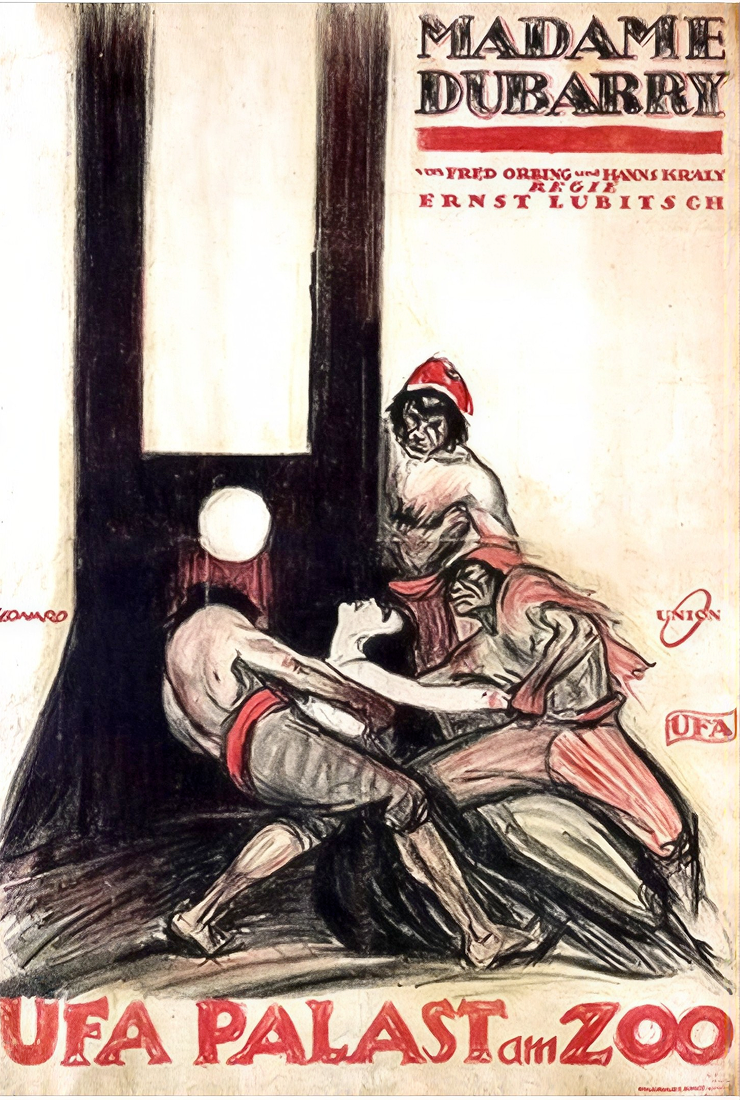
Film poster for Madam Dubarry.
Source: https://www.filmposter-archiv.de/filmplakat.php?id=1513
1 Noch' v Marokko [Ночь в Марокко; A Night in Morocco] and Emir geroy tsirka [Эмир герой цирка; Emir, Hero of the Circus]. Zvezda [Звезда; Star], 124 (1427), 31 May 1923.
2 Protokol №13 Zasedaniya Prezidiuma Mingubotdela Soyuza RABIS [Протокол №13 Заседания Президиума Мингуботдела Союза РАБИС; Minutes No. 13 of the Meeting of the Presidium of the Minsk City Department of the RABIS Union], 04 Jul 1923. Natsionalny arkhiv Respubliki Belarus’ NARB [Национальный архив Республики Беларусь (НАРБ); National Archive of the Republic of Belarus (NARB)], Fond 307, Opis’ 2, Delo 2, p. 47
3 Vo Vseukrainskom Foto-Kino Upravleniye [Во Всеукраинском Фото-Кино Управление; To the All-Ukrainian Photo-Cinema Administration], 5 Jul 1923. Gosudarstvennyi arkhiv Minskoi oblasti GAMn [Государственный архив Минской области; State Archive of Minsk Region GAMn]. Fond 322, Opis’ 1, Delo 170, p. 433.
4 Thompson, Kristin. "Government Policies and Practical Necessities in the Soviet Cinema of the 1920s." The Red Screen: Politics, Society, Art in Soviet Cinema, edited by Anna Lawton, Routledge, 1992, p. 30.
5 Kepley, Vance Jr. and Kepley, Betty. “Foreign Films on Soviet Screens, 1922-1931.” Quarterly Review of Film Studies Vol. 4, No. 41979, pp.429-442.
6 Kino i Vremya Byulleten' Vypusk pervyy [Кино и Время Бюллетень Выпуск первый; Cinema and Time Bulletin: Issue One]. Edited by T. Zapasnik et al., Ministry of Culture 1960, p. 217.
7 “Protokol zasedaniya Sektsii Narobraza Minskogo Gorsoveta” [Протокол заседания Секции Наробраза Минского Горсовета; Minutes of the meeting of the Public Education Section of the Minsk City Council], 26 Feb 1923, GAMn, Fond 6, Opis’ 1, Delo 23, p. 8b.
8 Kenez, Peter. Cinema and Soviet Society from the Revolution to the Death of Stalin. New ed., I.B. Tauris, 2001, p. 36.
9 “Protokol №16 Zasedaniya prezidiuma Tsentral'nogo ispolnitel'nogo komiteta Belorusskoy Sotsialisticheskoy Sovetskoy Respubliki” [Протокол №16 Заседания президиума центрального исполнительного комитета Белорусской Социалистической Советской Республики; Minutes no. 16 of the Meetings of the Presidium of the Central Executive Committee of the Byelorussian Socialist Soviet Republic], 21 Jun 1923, NARB, Fond 6, Opis’ 1, Delo 175, pp. 52-52b.
10 Vo Vseukrainskom Foto-Kino Upravleniy [Во Всеукраинском Фото-Кино Управление; To the All-Ukrainian Photo-Cinema Administration], 5 Jul. 1923. GAMn, Fond 322, Opis’ 1, Delo 170, p. 433.
11 Advertisement, Pravda [Правда; Truth]. 22 Mar. 1924, No. 66 p. 8.
12 Passion [Madam DuBarry] (1919). Toronto Film Society https://torontofilmsociety.com/film-notes/passion-madame-dubarry-1919/ 10 Jan. 2018. Accessed 1 Sep. 2026.
13 Vot tak kino! [Вот так кино!; Now that’s a movie!], Zvezda, No. 173 (1475), 27 Jul. 1923.