
March in Minsk
The Cinema Turns to Action and Romance. Part I
As February turned to March 1923 in Minsk, the cinemas still seemed to be doing well financially. The audience got treated to what audiences have always seemed to want from the movies: swashbuckling action, tragic romance, and detective stories.
But first, there seems to be one truly Russian film, advertised in the Minsk newspaper Zvezda on March 1: Psikheia [Psyche]. The Spartak cinema, which ran the film, claimed in its ad that it starred Vladimir Strizhevsky.1 But he is in none of the three known versions of this film. The first known version is from 1917 and was directed by Nikolay Malikov. Kino-teatr.ru says the film is “A psychological drama about the life of a ballet school.”2 Filmas.lv says there is a 1922 version of Psyche, filmed in Latvia by Pyotr Chardynin.3 And there was a third version, again directed by Malikoff, in 1923. Psicha, die Tänzerin Katharina der Großen (Psicha, Catherine the Great's dancer) featuring Olga Gzovskaia and Osip Runitsch.4 A film named Psyche also made its way to the U.S. and was shown in private at the New York restaurant, Russian Eagle, at the end of December 1923.5 The restaurant was operated by Theodore Lodijensky and was a gathering place for White Russian exiles.6 (White Russians in this case means people who supported the “White,” anti-communist, side in Russia’s post-revolution civil war) Much of the staff was reportedly former upper class.
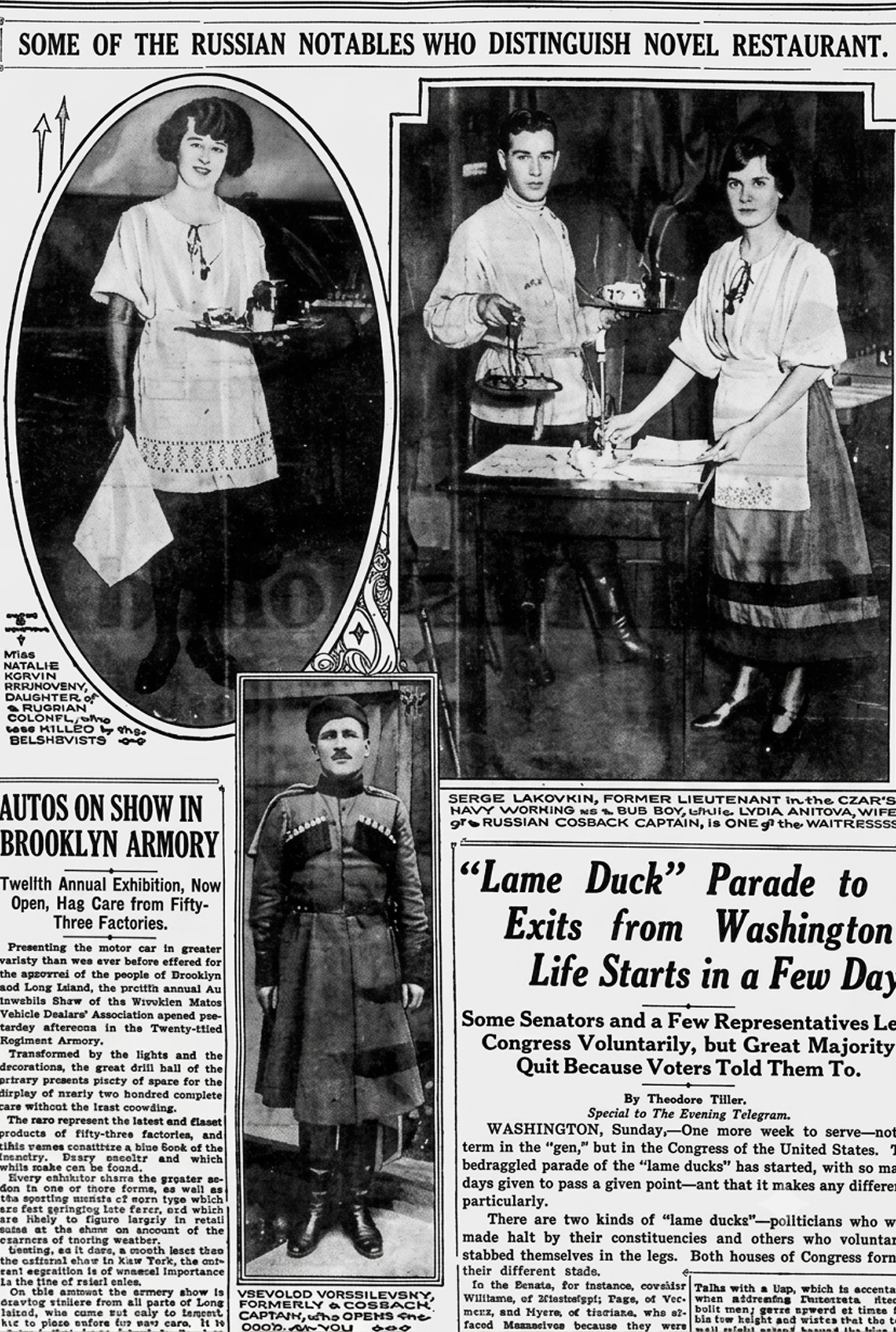
Newspaper article regarding opening of Russian Eagle restaurant.
Source: New York Evening Telegram, 27 Feb. 1923 (est.)
Back in Minsk, the advertisements in Zvezda showed there was a plethora of old films. On February 28, 1923, the Grotesk movie theater had advertised Strast' dikaria [Passion of the Savage], with Francesca Bertini.7 We cannot find a film with exactly that title, but Bertini did make a film, Anima Selvagia (Savage Soul) in 1917.
Then came a moment where the titles became grim. On March 2, the Internatsional theater showed a film it called Lyubov' katorzhanina (A Convict’s Love). The advertisement said it starred “the celebrated actress of the Jewish theaters, Kamenskaya.”8 However, we have not been able to find any film with that name, let alone any film with a similar name listing either Ester or Ida Kamenskaya (mother or daughter) in the cast.
On March 6, the Red Star cinema screened Prizrak brodit po Yevrope (A Spectre Haunts Europe) (1923),9 with a title taken from a line written by Karl Marx. The review in Zvezda likened the film to a lumpy pancake. The reviewer excoriates the film, then ends the review with this line, “From the artistic side, the picture is good.”10
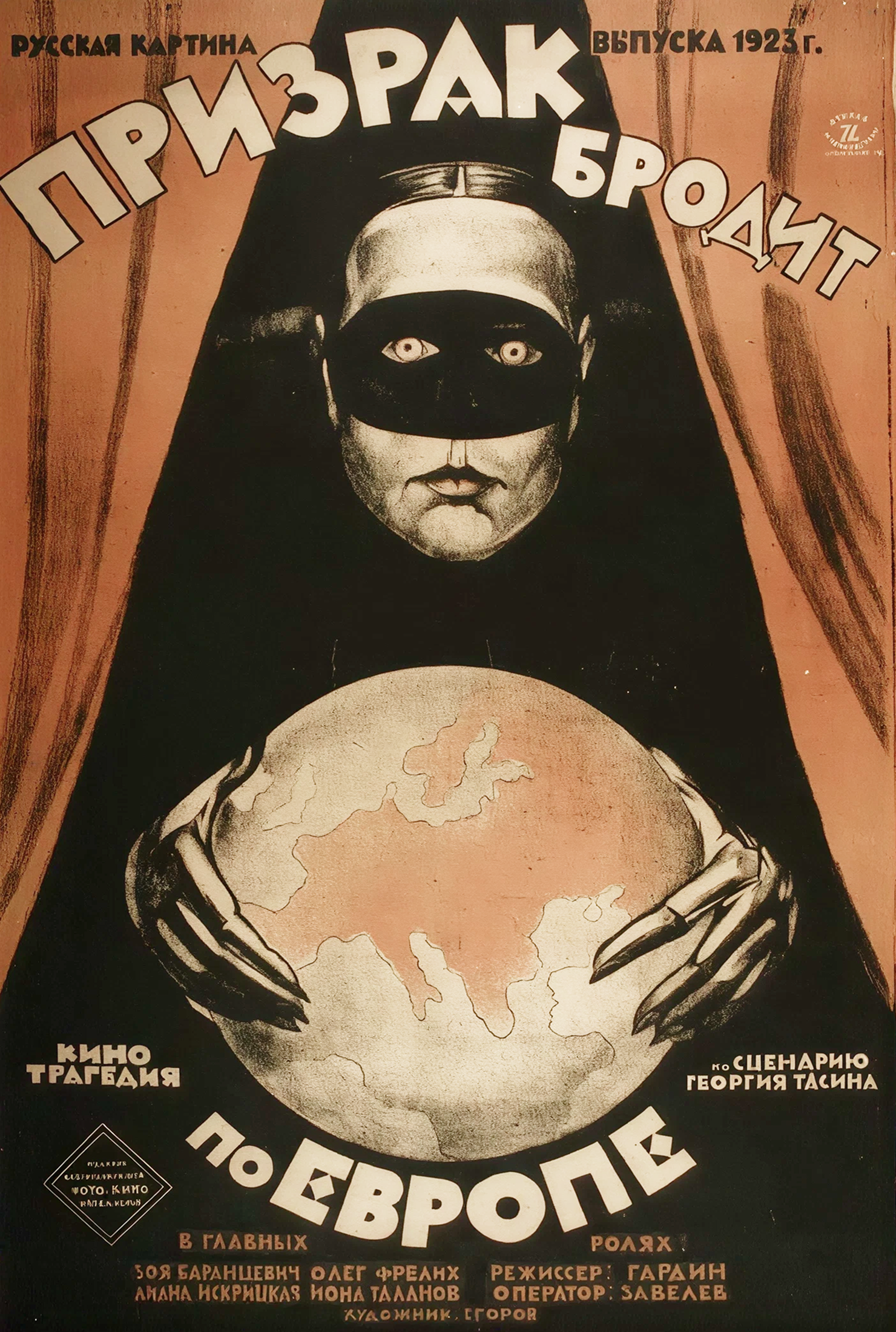
Poster for the movie “A Spectre Haunts Europe”
Source: https://www.kinopoisk.ru/picture/2195690/, PD-US,
A first warning sign regarding the economic health of the cinemas also came in March. The Red Builder, the cinema of the Rabis (The Art Workers Union), did not advertise in March. In fact, it never advertised again.
But March was exhilarating for films shown. The Internatsional screened Zolotoye ozero [Golden Lake] on March 6. This was no doubt the German film Der Golden See, part 1 of a series known as Die Spinnen [The Spiders] (1919), directed by Fritz Lang.11
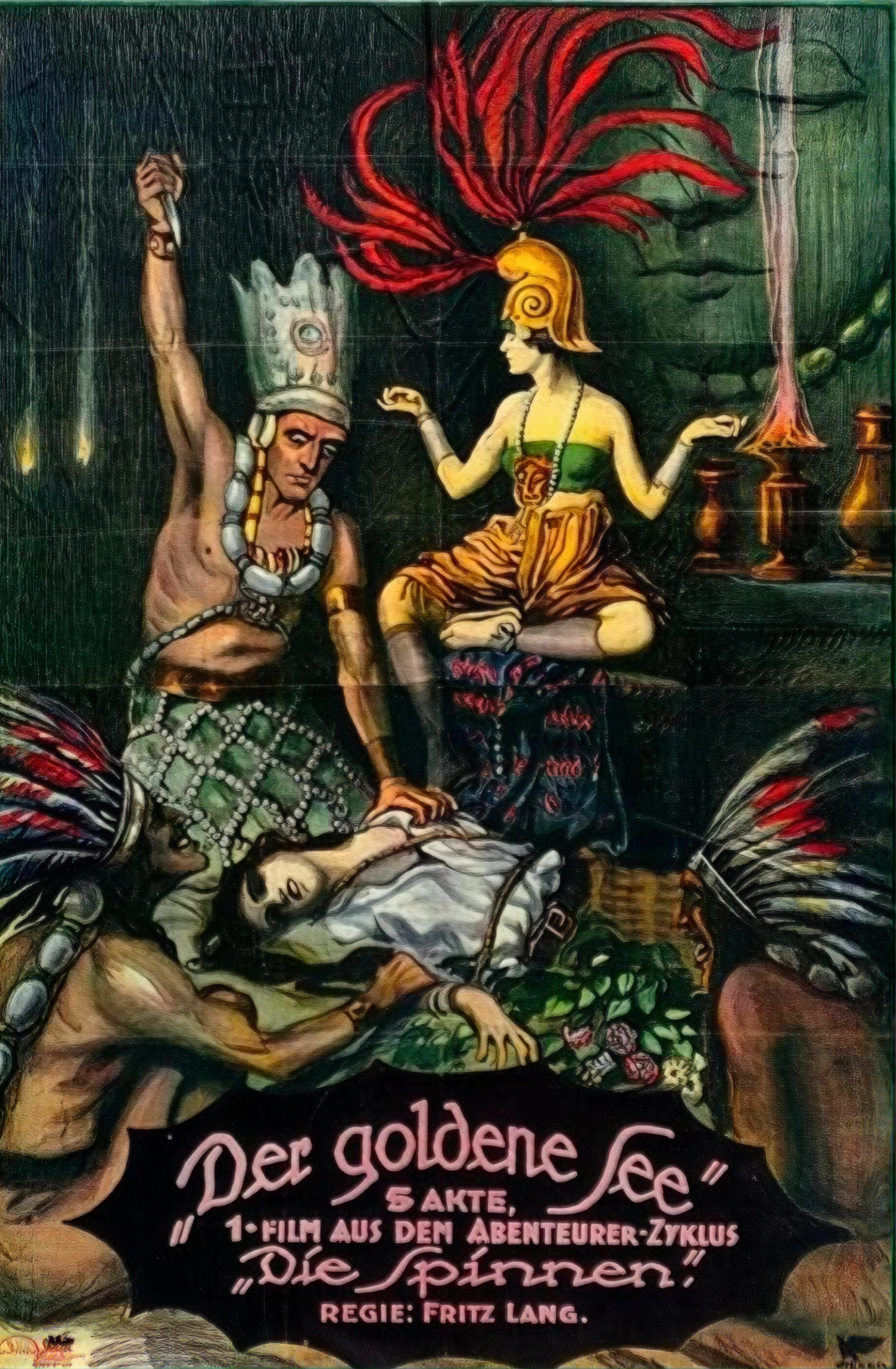
Poster for the movie “Der Golden See”.
Source: http://www.movieposterdb.com/poster/515ac0f3, PD-US,
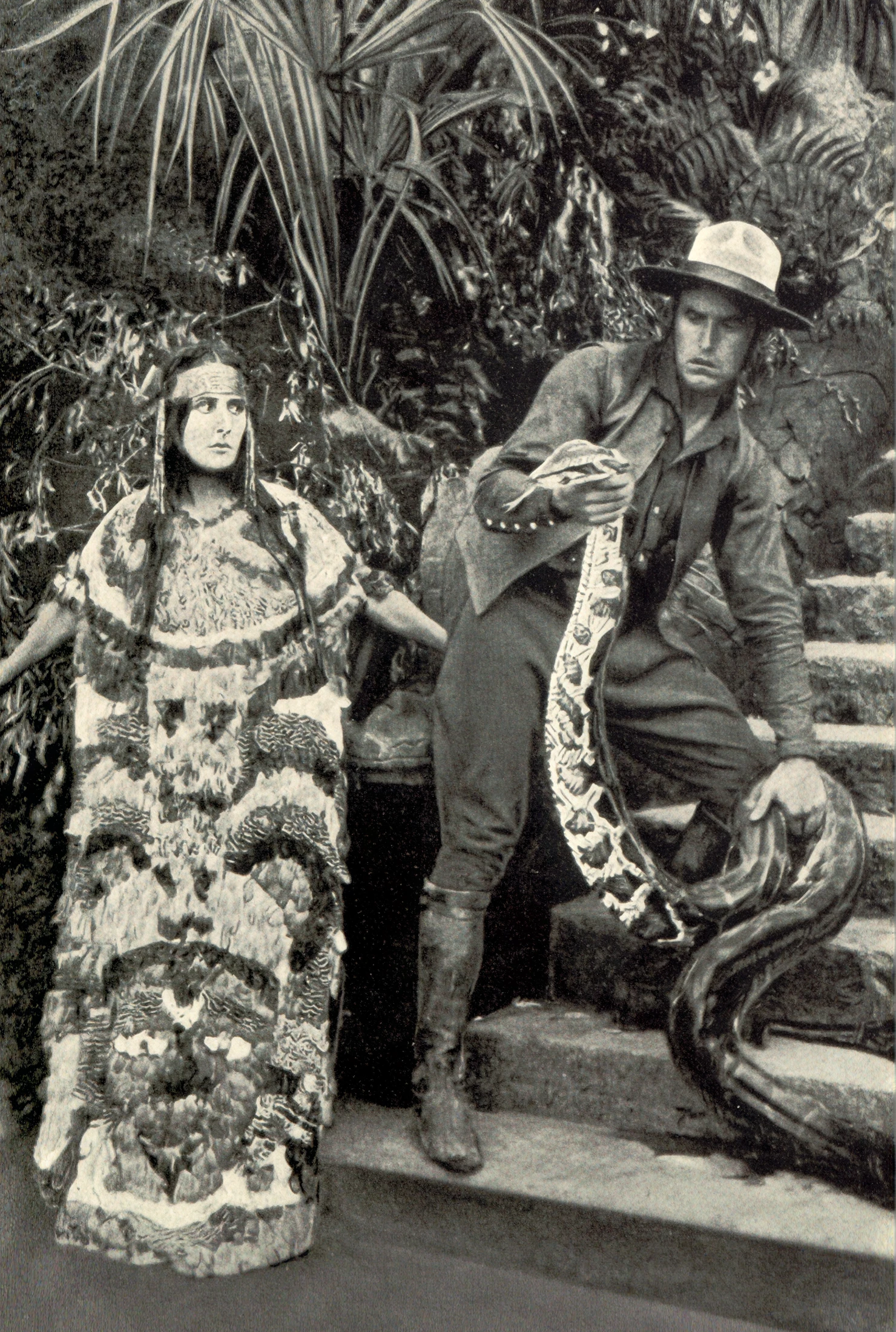
Still from the movie “Der Golden See”.
Source: https://www.virtual-history.com/movie/film/10598/die-spinnen-1-teil---der-goldene-see#google_vignette
Der Golden See
Also on March 6, the Kultura movie theater said it was showing Gornyye shakaly [Mountain Jackals] “based on the life of smugglers.”12 We can find nothing on it.
Still on March 6, turning to romance, the Grotesk advertised Pod oblomkami belykh strastey [Beneath the Ruins of White Passions], which looks delicious, but about which we can find nothing. If you needed to cleanse your palette after a hot-blooded romance, the film was paired with an unnamed Charlie Chaplin comedy.13 A key to determining the film is that it was advertised as starring “Michurin and Chernova.” The duo made three films together, and the closest one to this title is the once controversial film, Prestupnaya strast' ottsa [The Criminal Passion of the Father] (1913). (see here).
A little more than a week later, on March 15, swashbuckling returned. The Red Star had Graf Kaliostro [Count Cagliostro], the German film Der Graf von Cagliostro [The Count from Cagliostro], which starred Conrad Veidt (1920).14
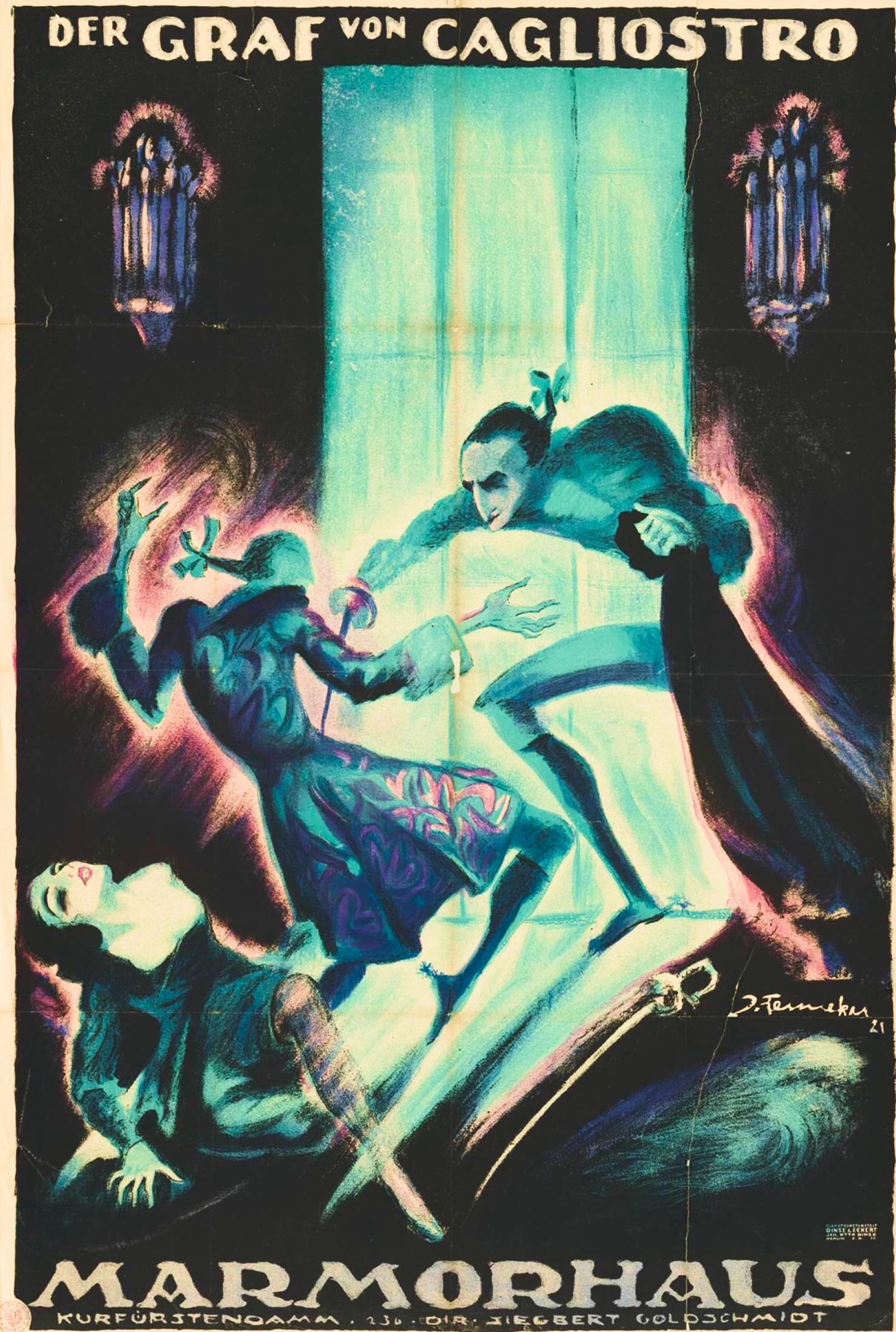
Poster for the movie “Der Graf von Cagliostro”.
By Josef Fenneker.
Source: https://www.imdb.com/title/tt0012234/
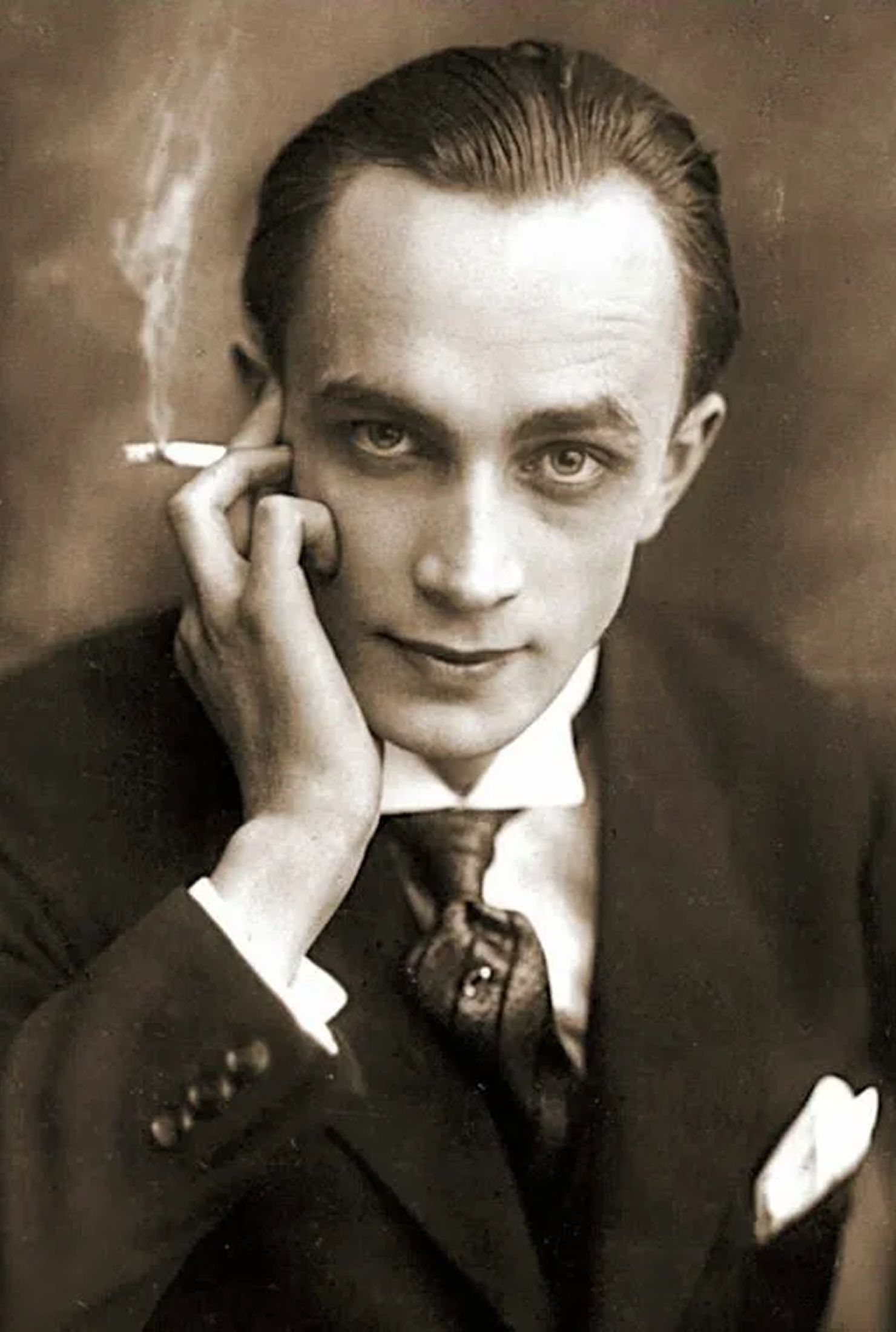
Conrad Veidt.
Source: https://www.antoniacarlotta.com/home/conrad-veidt
Things then turned to crime.
On March 15 the Internatsional screened Prestupleniye doktora Rulanda [The Crimes of Dr. Ruland]. This Austrian film, made in 1920, was originally titled Doktor Ruhland. It starred Liane Haid.15
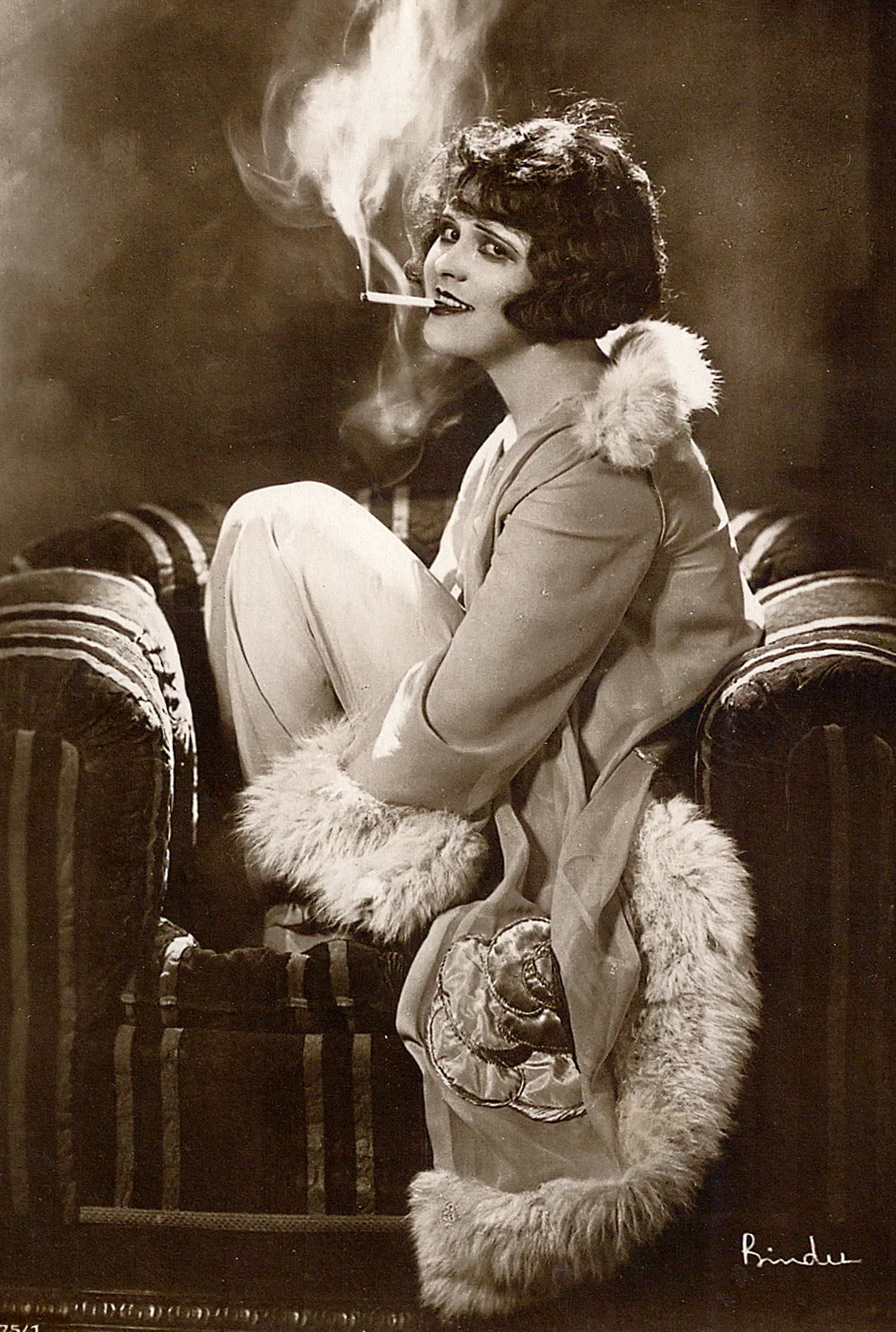
Liane Haid. By Alexander Binder, 1920.
Source: https://awers-rewers.pl/liane-haid/
The Kultura followed that same day with Tayna Chernoy Bashni [The Secret of the Black Tower], which it said was a 5-part American detective film.16 We can find nothing on it.
Advertising on March 15, but claiming a start date of March 13, the Grotesk ended the first half of March by showing the Russian film Otets Serafim [Отец серафим; Father Seraphim] (1922).17
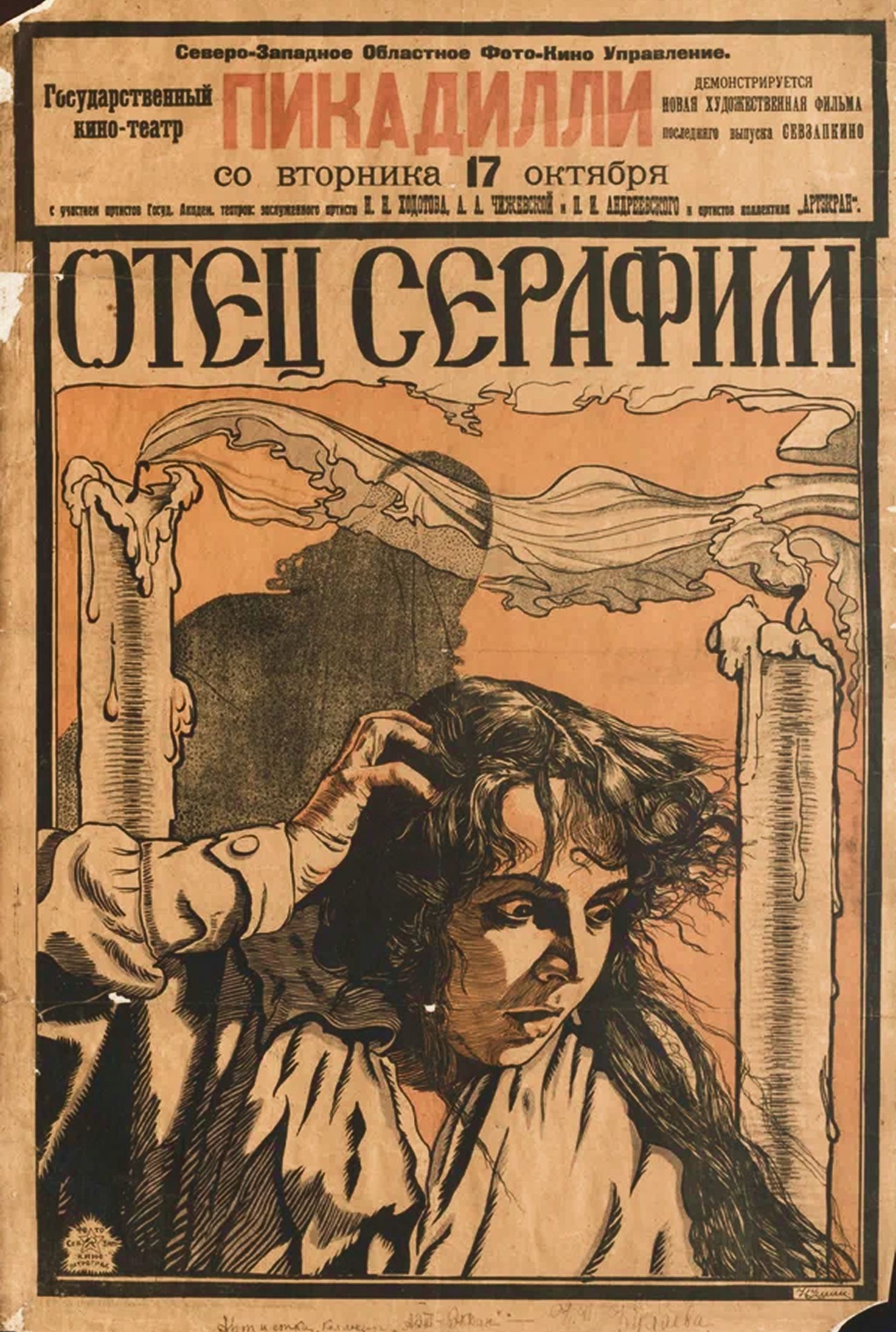
Poster for the movie “Father Serafim”, 1922.
Source: https://www.kinopoisk.ru/film/441968/
The Spartak fought back by bringing back an earlier film, one starring the beautiful Lya Mara, Miss Berrill. (see here)
1 Psikheya [Псхея; Psyche]. Zvezda [Звезда; Star], 49 (1351) 1 Mar. 1923.
2 Psikheya [Псхея; Psyche]. Kino-teatr.ru https://www.kino-teatr.ru/kino/movie/empire/86080/annot/ Accessed 30 Jun. 2026.
3 Psihe [Psyche]. Filmas.LV https://www.kino-teatr.ru/kino/movie/empire/86080/annot/ Accessed 30 Jun. 2026.
4 Psicha, die Tänzerin Katharina der Großen [Psicha, Catherine the Great's Dancer]. IMDB https://www.imdb.com/title/tt0473077/ Accessed 23 Jul. 2026.
5 “Psycha,” Russian Film Here. Film Daily, 24 Dec. 1923, p. 2.
6 Citation.
7 Strast' dikarya [Cтрасть дикаря; Passion of the Savage]. Zvezda [Звезда; Star], 49 (1351) 1 Mar. 1923.
8 Lyubov' katorzhanina [Любовь каторжанина; A Convict’s Love]. Zvezda [Звезда; Star], 50 (1352) 2 Mar. 1923.
9 Prizrak rodit po Yevrope [Призрак бродит по европе; A Spectre Haunts Europe]. Zvezda [Звезда; Star], 53 (1355) 6 Mar. 1923.
10 Prizrak brodit po Yevrope [Призрак бродит по европе; A Spectre Haunts Europe]. Zvezda [Звезда; Star], 56 (1358) 9 Mar. 1923.
11 Zolotoye ozero [Золотое озеро; Golden Lake]. Zvezda [Звезда; Star], 53 (1355) 6 Mar 1923.
12 Gornyye shakaly [Горные шакалы; Mountain Jackals]. Zvezda [Звезда; Star], 53 (1355) 6 Mar 1923.
13 Pod oblomkami belykh strastey [Под обломками белых страстей; Beneath the Ruins of White Passion]. Zvezda [Звезда; Star], 54 (1356) 7 Mar. 1923.
14 Graf Kaliostro [Граф Калиостро; Count Caliostro]. Zvezda [Звезда; Star], 60 (1365) 15 Mar. 1923.
15 Prestupleniye doktora Rulanda [Преступление доктора Руланда; The Crime of Dr. Ruhland]. Zvezda [Звезда; Star], 60 (1365) 15 Mar. 1923.
16 Tayna chernoy bashni [Тайна черной башни; The Secret of the Black Tower]. Zvezda [Звезда; Star], 60 (1365) 15 Mar. 1923.
17 Otets Serafim [Отец Серафим; Father Seraphim]. Zvezda [Звезда; Star].