
The Minsk City Government Takes Over the Cinemas
Old Cinematic Friends and New Ones
1923, Part II
In Minsk, by February in 1923, the old cinemas had re-opened. Many of the films shown had been released before the October 1917 Revolution during which the Bolsheviks seized control of the government, but some of the films were as recent as 1922 issues.
The newly formed USSR and its republics were facing terrible money problems. The years of fighting between 1914-1920 (World War I and the Soviet Civil War/Border War with Poland) had devastated the land and the economy. Lenin’s New Economic Policy, put into place in 1921, allowed capitalism in some areas of the economy in order to jump-start them. Cinema was one of those areas. Popular films helped.
By February 13, 1923, the cinemas were advertising in the Minsk newspaper Zvezda [Star]. A Red Star cinema ad said it was showing Tayna indusa [The Secret of the Hindu], starring Fern Andra. This was probably Praschna’s Geheimnis [Praschna’s Secret]1, a 1922 German silent film starring Fern Andra. Praschna is a Sanskrit word and is often used as a name. A second possibility for this film is Saferndi, die Tänzerin von Dschiapur [Saferndi, the Dancer of Jaipur] (1920).2 Jaipur is a famous city in India.
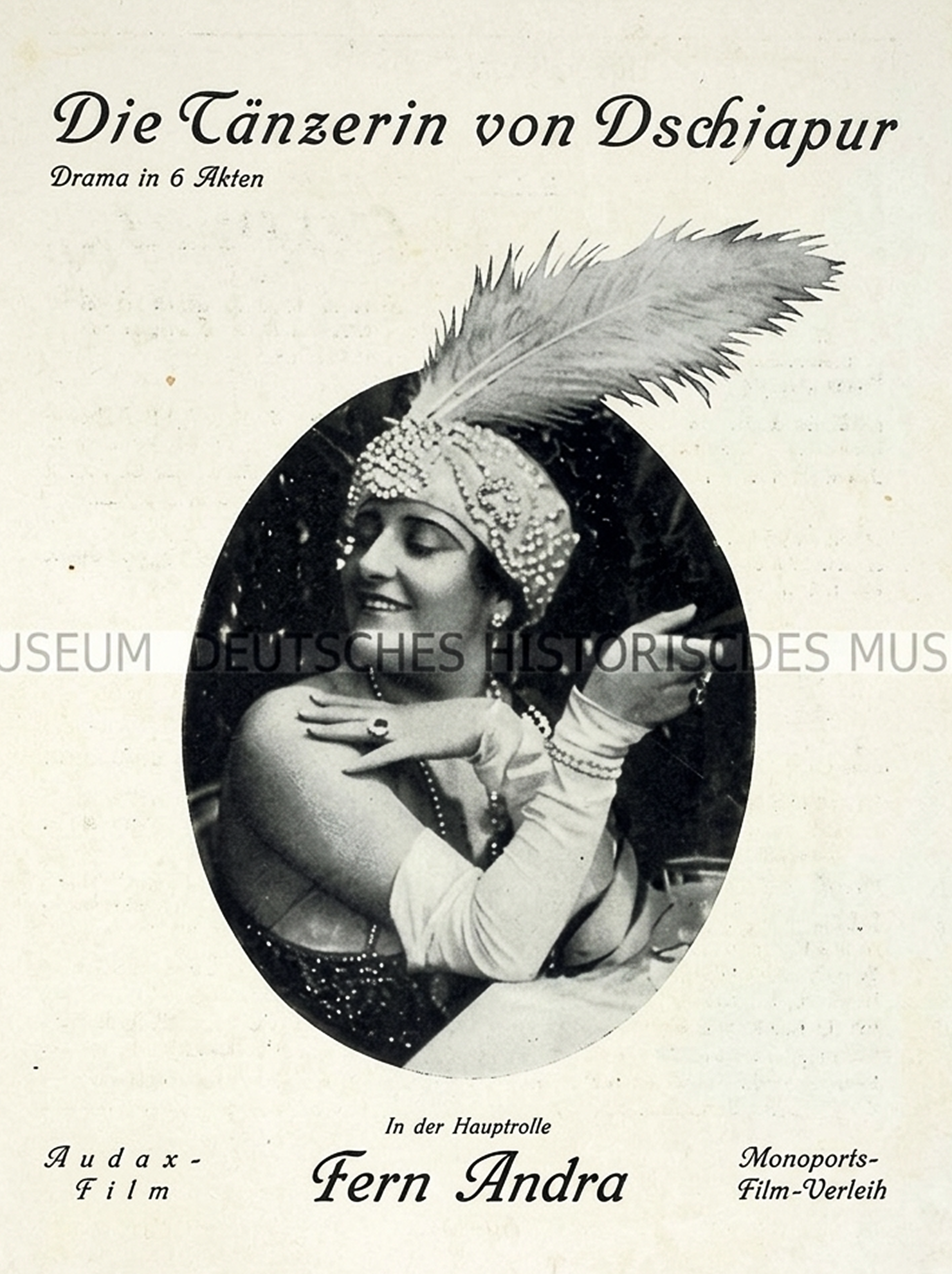
A program for The Dancer of Jaipur from the Richard Falk Printing Company.
Source: Filmprogramm zu Saferndri, die Tänzerin von Dschiapur [Saferndri, die Tänzerin von Dschiapur; Saferndri, the Dancer of Dschiapur], 1920. Deutsches Historisches Museum, Berlin, inv. no. Do2 91/3627. Deutsche Digitale Bibliothek. www.deutsche-digitale-bibliothek.de/item/6ISVJJZEVQDZHTDK4PAXMCFF7WJ53GSW
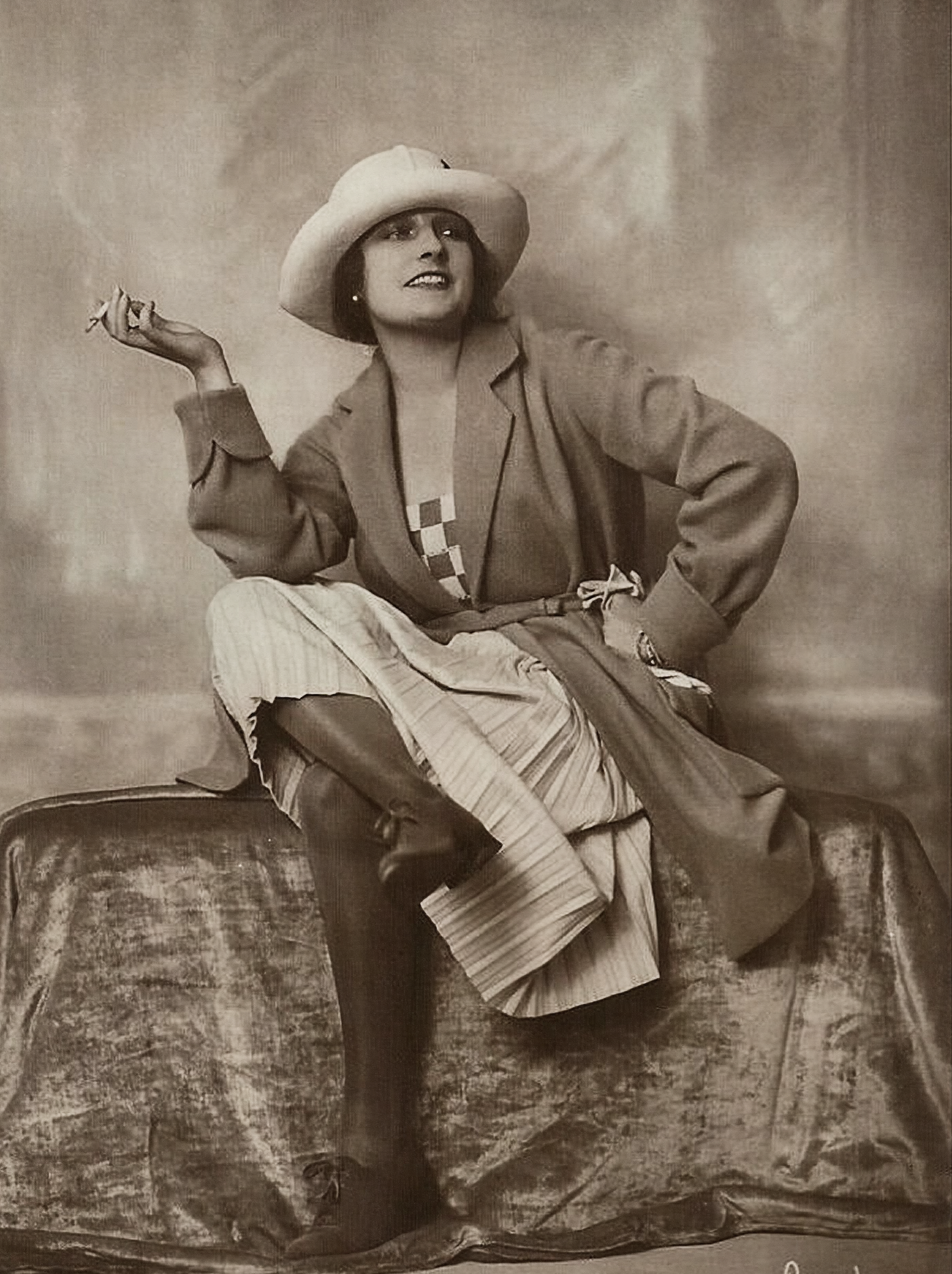
A still of Fern Andra, by Alexander Binder.
Source: Public domain, via Wikimedia Commons.
The advertisements were not always accurate. The Grotesk cinema claimed it had a film, Nana [Nana], from the novel by Emile Zola, that starred Francesca Bertini. There appears to be no such film. There is a 1917 Italian version of Nana called Una donna fuesta Nana [A Woman Named Nana], which did not star Francesca Bertini, but Tilde Kassay. The Grotesk advertised this film through February 27.
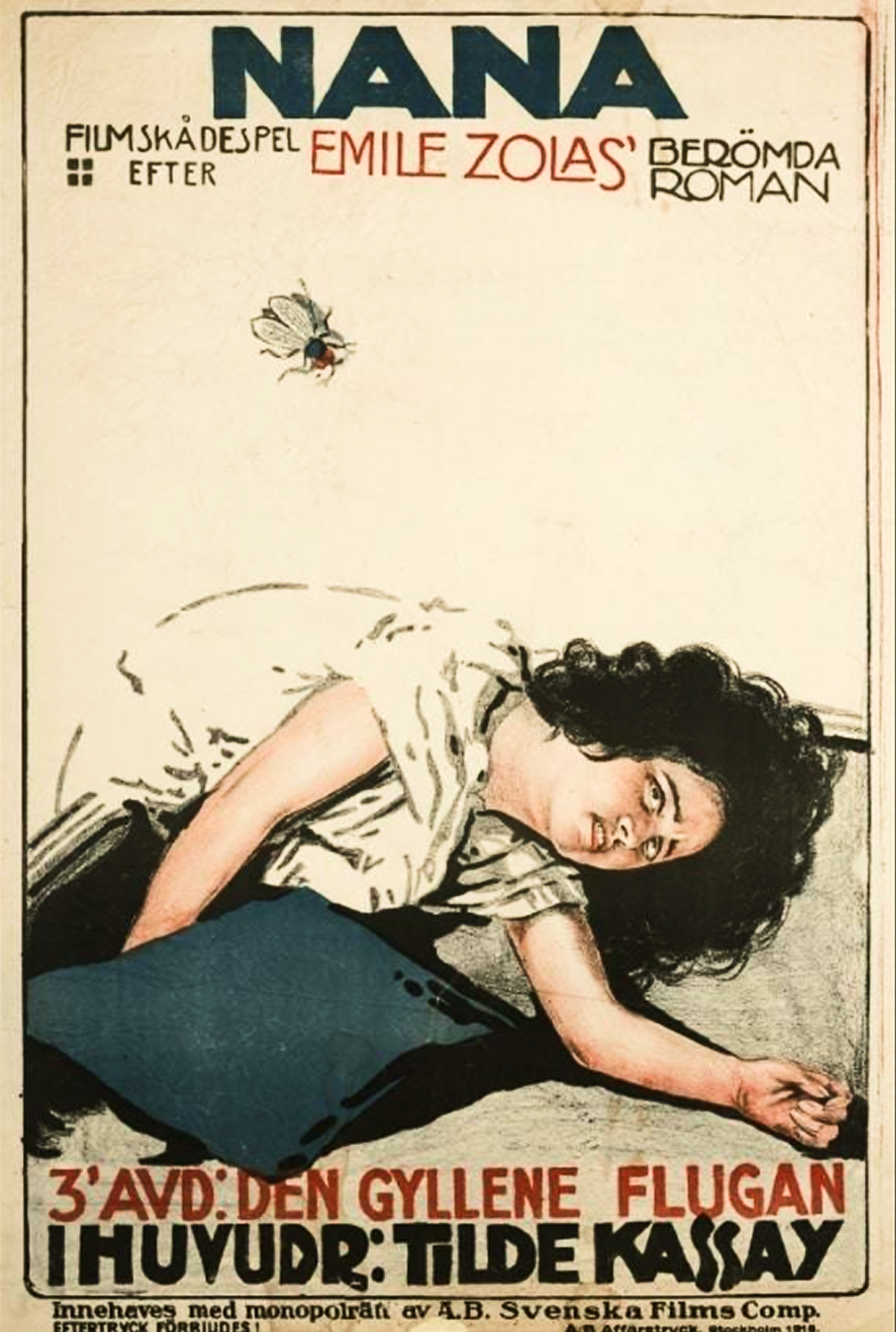
Nana, Swedish language poster, 1917.
Source: https://letterboxd.com/film/nana-1917/watch/
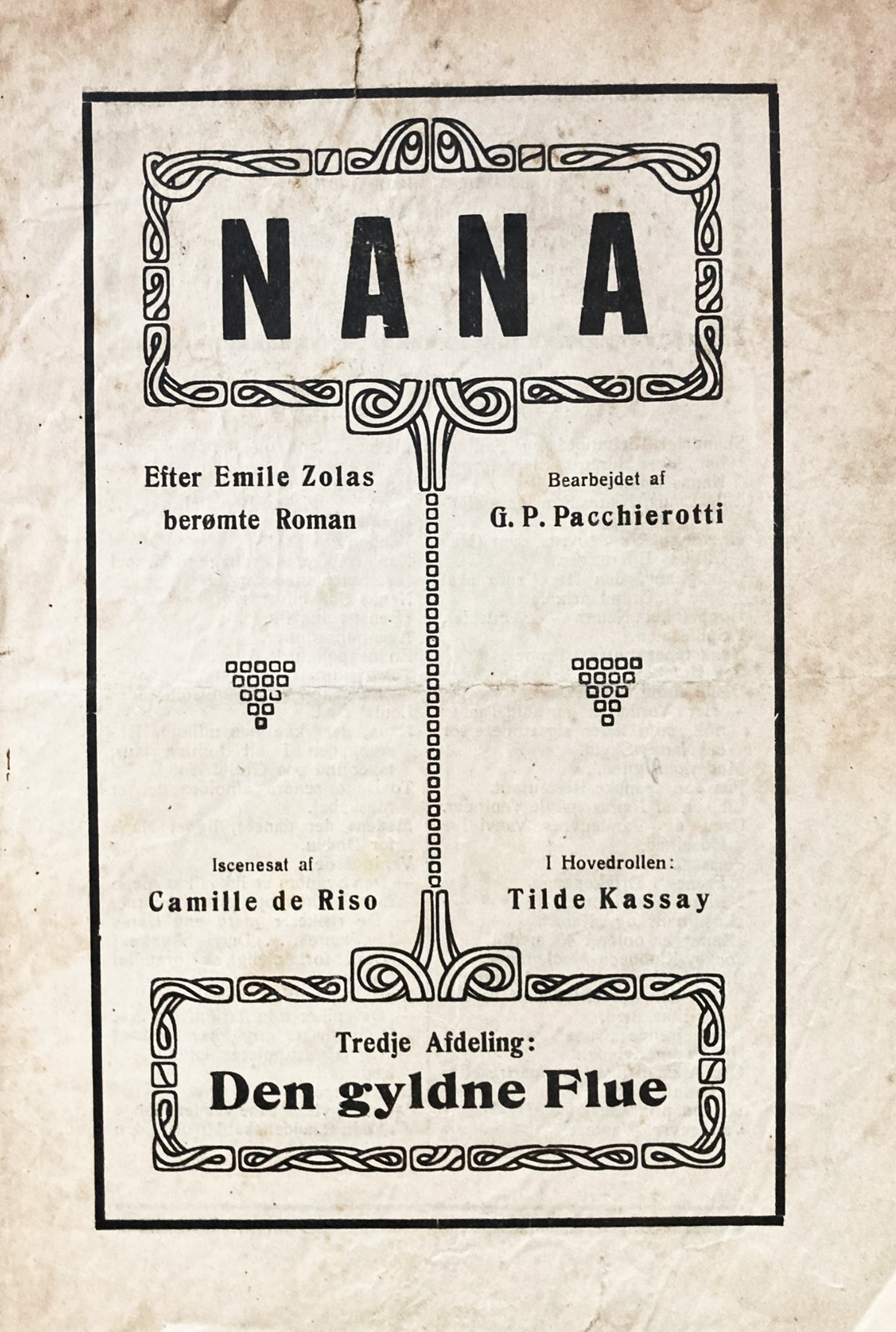
Nana, Danish Movie Program, 1918.
Source: https://www.ebay.co.uk/itm/186376187507
In 1923, Minsk cinemas apparently were getting economically healthier. In November of 1922, film control had been handed to the Minsk Gorono [City Department of Education]. The Minutes of the Minsk City Council meeting of February 26, 1923, state that when the Gorono took over the theaters on November 15, 1922, those theaters had a debt of “23 billion” (presumably rubles). The minutes say by the time of the February 26 council meeting, the debt was “liquidated.”3 It does not say how.
Lenin’s January 1922 directive on cinema had called for establishing a definite proportion between entertainment films and scientific films.4 It did not give the amounts of either side of the proportion. The edict allowed for both propaganda and profit. The February 26, 1923, minutes of the Minsk City Council meeting contain a list of goals, including: “it is also necessary to pay attention to the artistic side of the films shown;” and a need “to give the maximum of scientific and propaganda pictures.”5
One attendee at the meeting complained that “cinema has been turned into a commercial enterprise” which “must be stopped.” Another attendee pointed out that “cinemas are a powerful agitational and propaganda tool, which must be made accessible to the proletarian element.” That speaker wanted to single out one cinema for the workers, “where the best films would be shown,” and the other two would be left to the “non-working element,” which should “pay for themselves.”6 Whether “best” meant artistic or “scientific” films was not stated.
Popular films seemed to be winning. The Internatsional [Internationale] showed the famous German film Dr. Mabuse, der Spieler [Dr. Mabuse, the Gambler] as Doktor Mabuze [Dr. Mabuse].
Dr. Mabuse 1922.
The Kultura [Culture] got its hands on a film from the old Russian Golden Series, Diana na okhote [Diana on the Hunt] 7 , starring Marie Rutsch. It was paired with something called Korol' Nakhalovy [King of the Impudent], purported to be a comedy, for which we can find nothing.

Maria Rutsch, AI enhanced.
Source: https://www.kino-teatr.ru/kino/acter/w/empire/258779/bio/
The Spartak [Spartacus] showed the early German film, Dubrowsky, der Räuber Ataman [Dubrovsky, the Robber Chief] (1921) based on the Pushkin story and starring Russian heartthrob Osip Runich.8 We have been unable to find any images related to this film.
Spartak also showed 1918’s Ya Pomnyu Val'sa Zvuk Prelestnyy (Mechta Zhizni) [I Remember the Enchanting Sound of the Waltz (The Dream of Life)]. The film was based on the play by N.I. Potapenko, Volshebnaya skazka [The Magic Fairy Tale].9
On February 20, a new film starring German actress Ellen Richter film came to Minsk and screened at the Red Star. She had earlier starred in Die Abenteuerin von Monte Carlo [The Adventuress of Monte Carlo] (see here). Her new film had the Russian-language title of Yegipetskaya noch' [Egyptian Night]. The film was probably Das Rätsel der Sphinx [The Riddle of the Sphinx].
The Kultura and the Red Builder (formerly the Lux) brought apparent agitprop to the screen. The Kultura screened Tragediya na severe [Tragedy in the North], described as an artistic drama, and the Red Builder had Dom Zhivykh Lyudey [House of Living People].
On the other hand, the Spartak showed the German film Miss Beryll ... die Laune eines Millionärs [Miss Beryll ... a Millionaire's Whim], under the Russian-language title Miss Berill [Miss Beryll] , starring Lya Mara, on February 21.
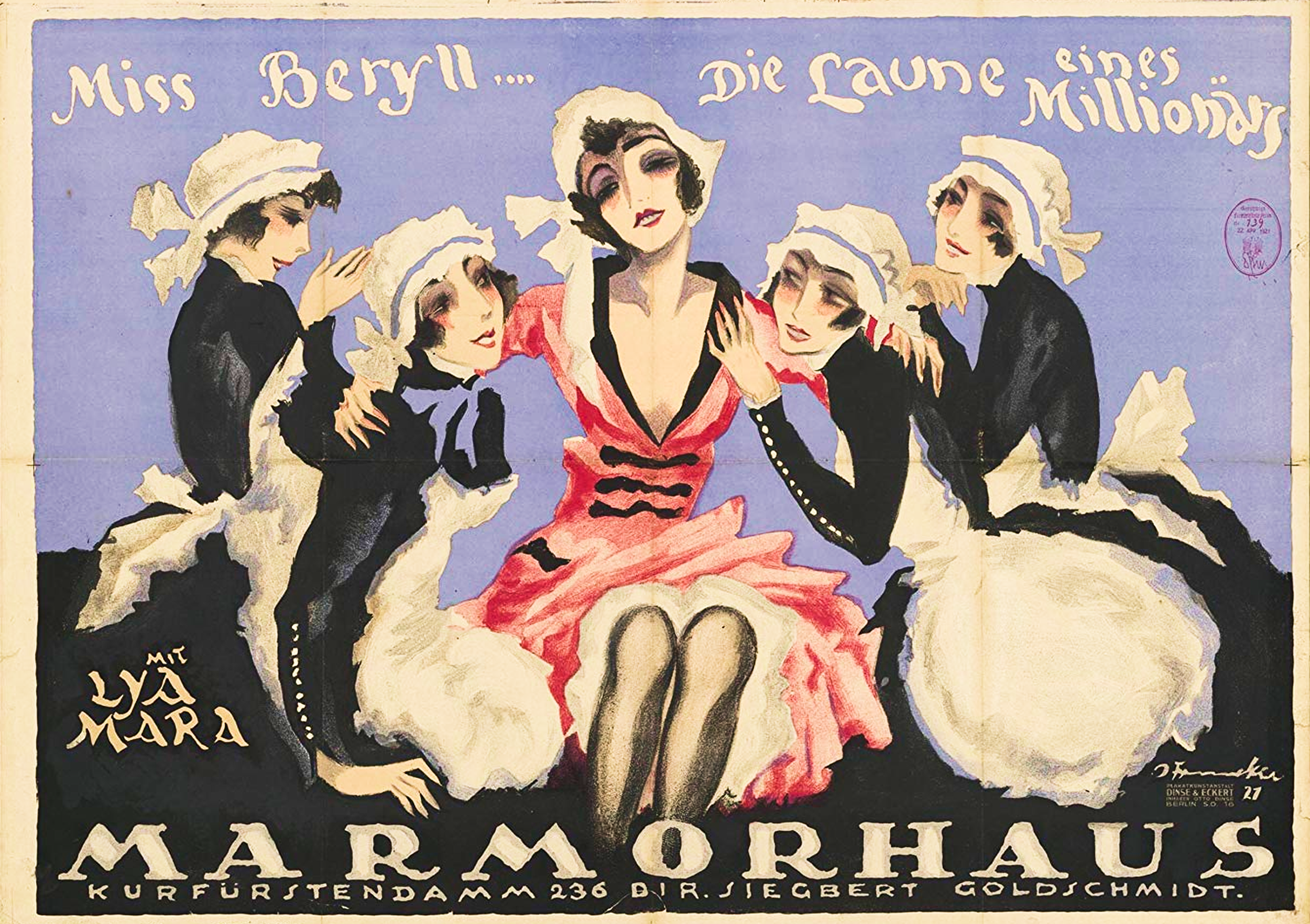
Miss Beryll, poster by Josef Fenneker.
Source: https://www.imdb.com/title/tt0457416/mediaviewer/rm1378841856,%20PD-US,
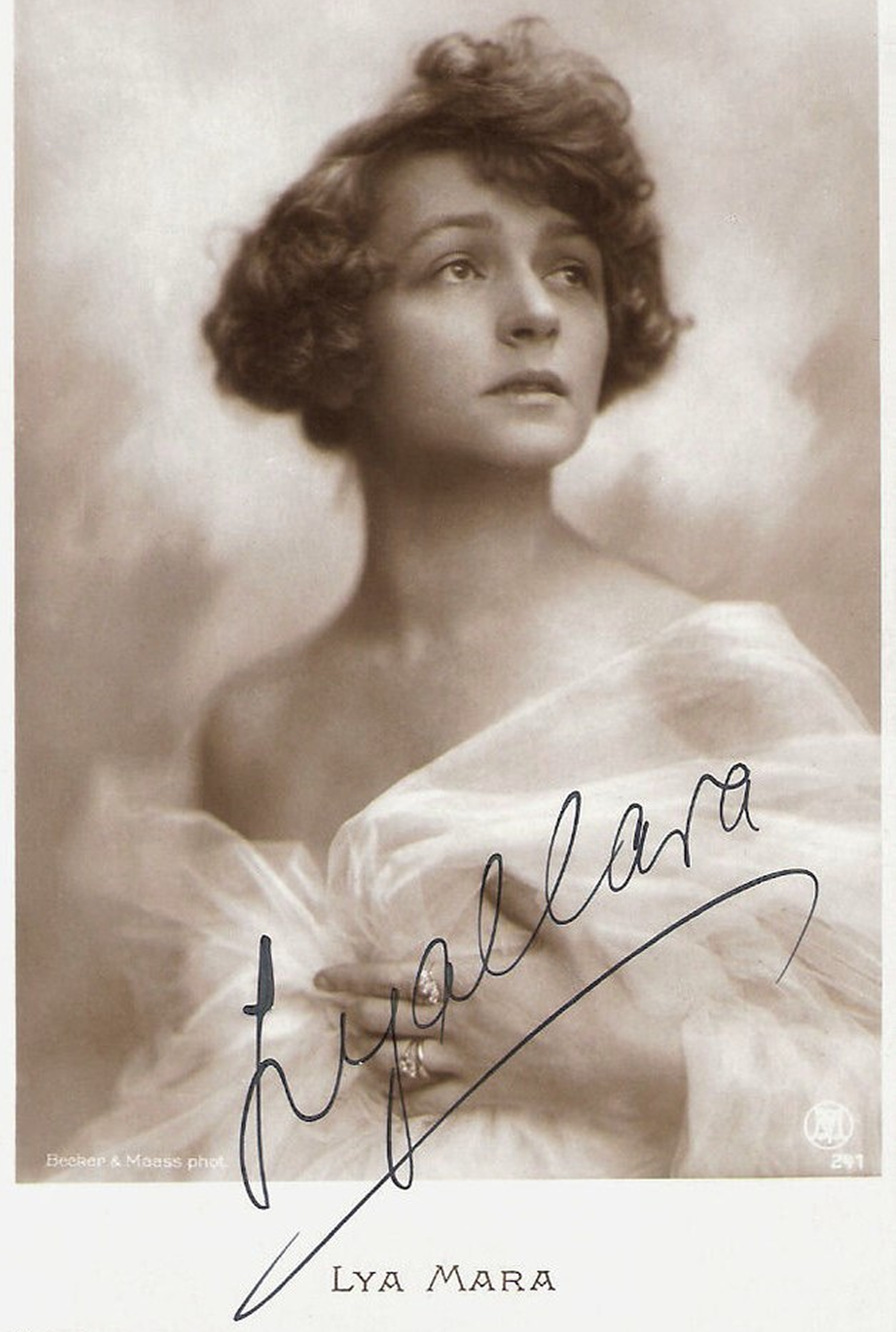
Lya Mara, star of Miss Beryll.
Source: Maass Becker & Maass, Public domain, via Wikimedia Commons.
The Spartak followed with Annushkino Delo [Annushka’s Affair], starring Zoya Barantsevich.
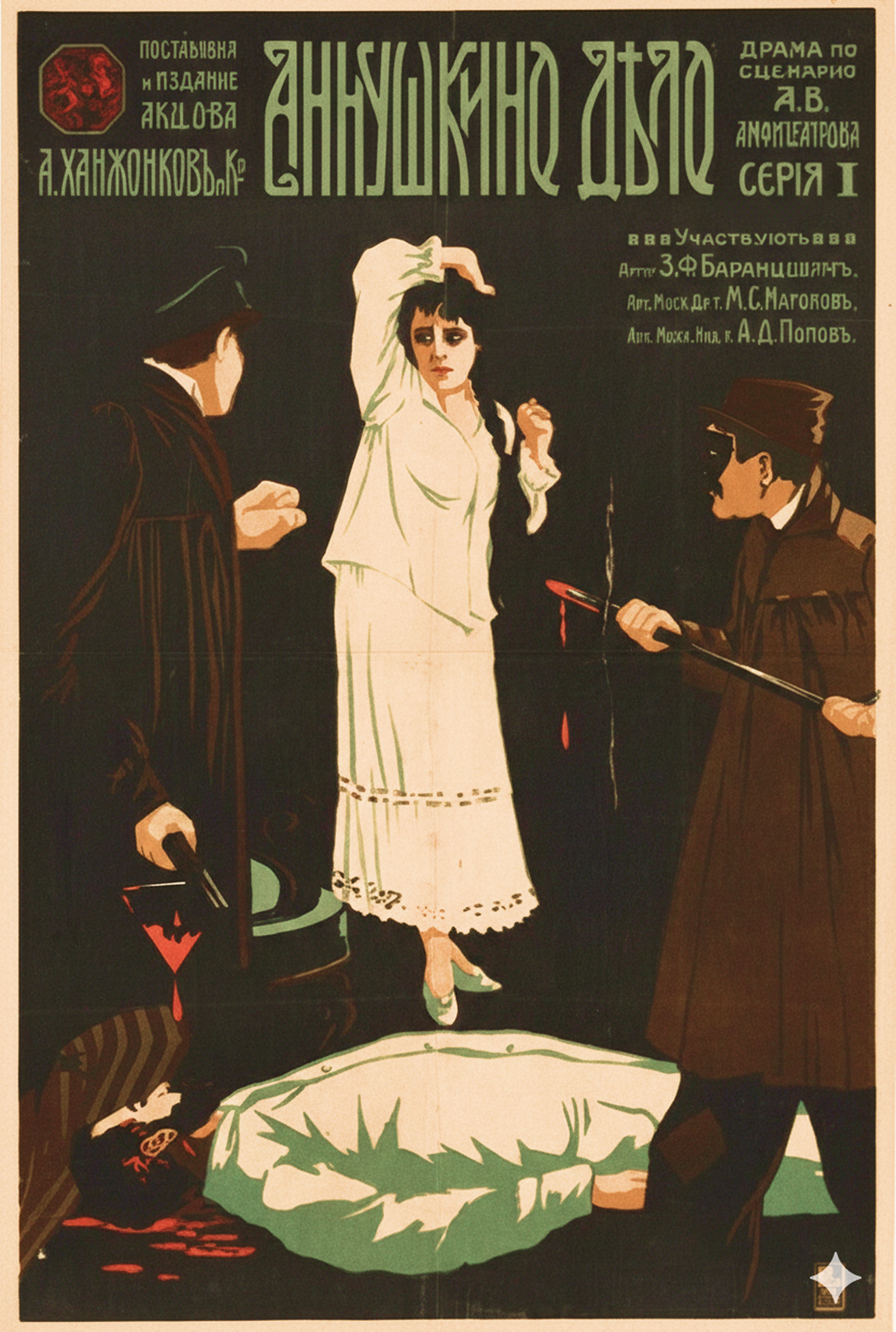
Poster for Annushka’s Affair, AI enhanced.
Source: https://www.kino-teatr.ru/kino/movie/empire/122244/annot/
The Red Giant opened Karnaval Zhizni i Smerti [The Carnival of Life and Death], which it described as “The Latest Foreign Hit of 1922.” It is probably the Danish film Livets Karneval [Carnival of Life], which involves a Russian character.
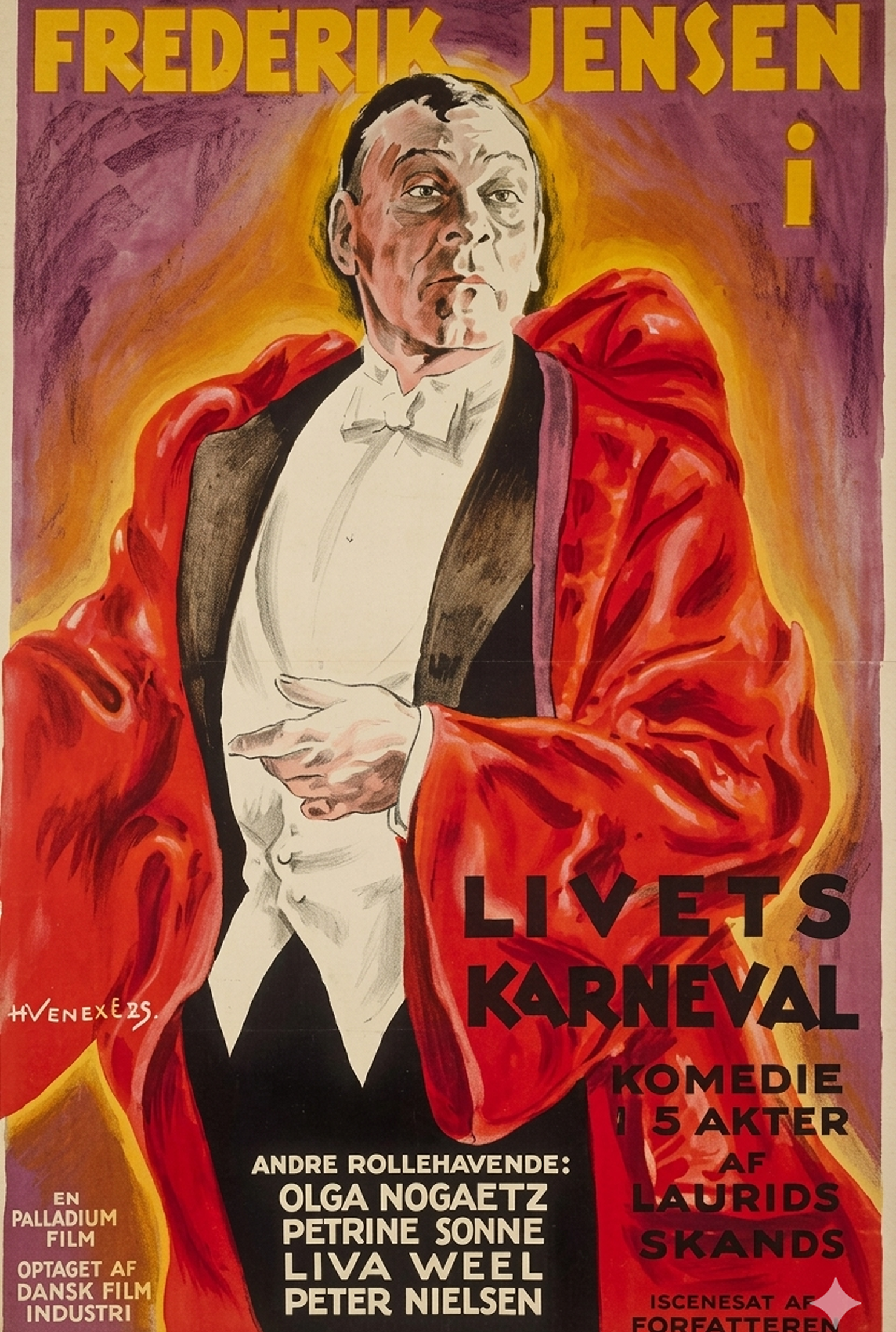
Poster for Livets Karneval, AI enhanced.
Source: https://efilmler.com/titles/539314/livets-karneval
The Kultura showed Kumir Molodezhi (Flirt) [Idol of Youth (The Flirt)] (1922).
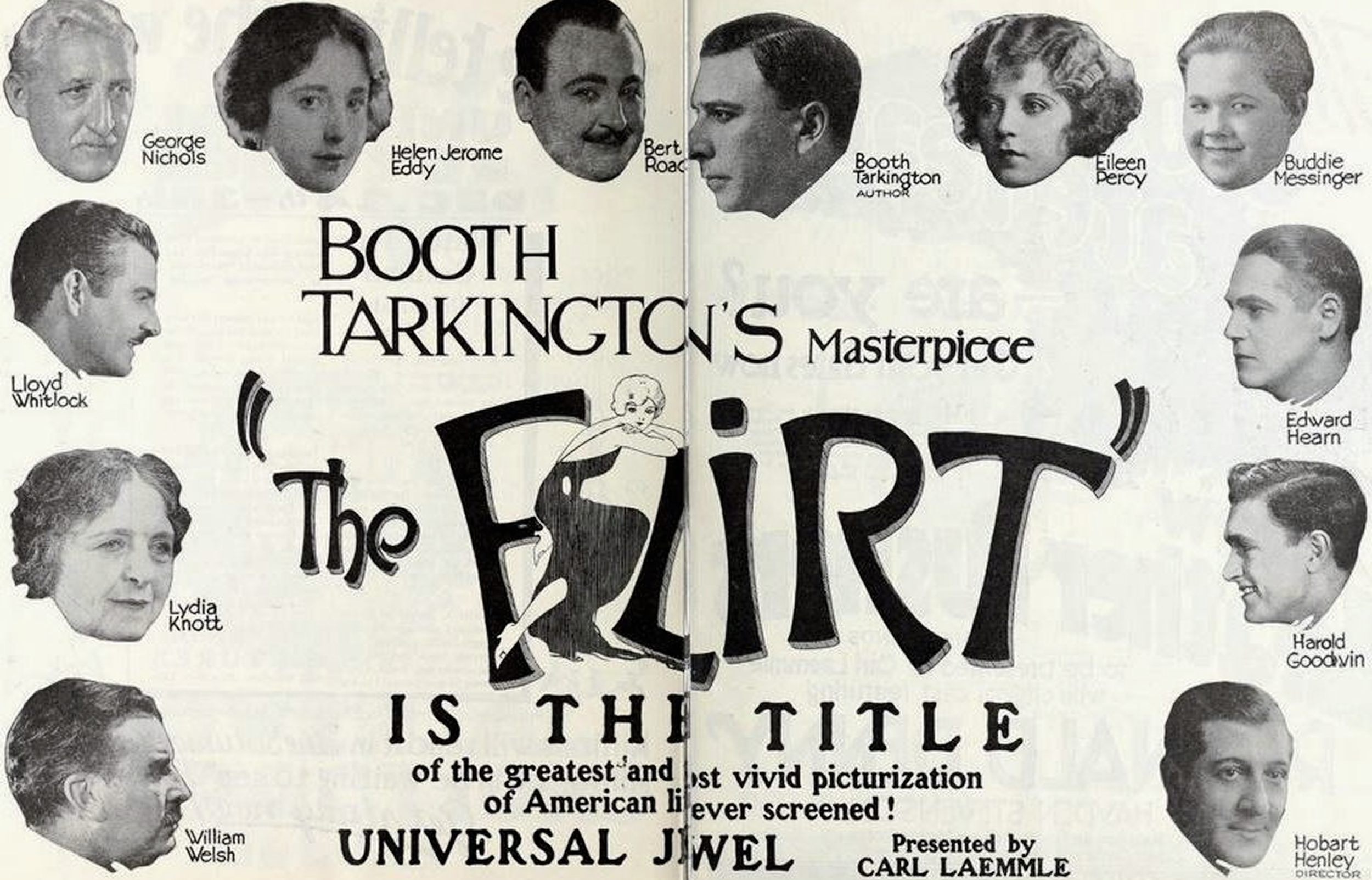
Poster for The Flirt, by Universal Pictures – Universal Weekly, 1922.
Source: https://commons.wikimedia.org/w/index.php?curid=32658640
Also in February, the Gorono thought of the children of Minsk. A Zvezda news story of February 25 reported an undetermined number of film showings for children. It must have been a large number. Zvezda reported that 13,000 children, in all, had attended the various screenings.10
The cinemas had films to show, whether they had just been stored by theater owners, rented from private parties, or had come in from Soviet Russia or Germany. They were earning money.
The real question was — would the cinemas make enough to survive?
1 “Praschna’s Geheimnis”, IMDB https://www.imdb.com/title/tt0418074/ Accessed 30 Apr. 2026.
2 "Saferndri, die Tänzerin von Dschiapur”, IMDB https://www.imdb.com/title/tt0418125/ Accessed 30 Apr. 2026.
3 Protokol zasedaniya Sektsii Narobraza Minskogo Gorsoveta [Протокол заседания Секции Наробраза Минского Горсовета; Minutes of the Public Education Section of the Minsk City Council], 26 Feb. 1923. Gosudarstvennyy arkhiv Minskoy oblasti [Государственный архив Минской области; State Archives of Minsk Region GAMn], Fond 6 Opis’ 1, Delo 23, Doc. 8b.
4 "Lenin, V.I. Directives on the Film Business”, dictated 17 Jan. 1922. Lenin Collected Works Progress Publishers 1971, vol. 42, pp. 388-89. Marxists Internet Archive https://www.marxists.org/archive/lenin/works/1922/jan/17.htm
5 Minutes of the Public Education Section of the Minsk City Council, p. 8.
6 Minutes of the Public Education Section of the Minsk City Council.
7 “Diana na ochote” [Диана на Охоте: Diana the Huntress] Kino-Teatr.ru https://www.kino-teatr.ru/kino/movie/empire/89931/annot/ Accessed 30 Jan. 2026.
8 Gorelick, B. M. "Ot 'Atamana' k 'Orlu': Predposylki i obstoyatel'stva pushkinskogo debyuta v Gollivude" [От «Атамана» к «Орлу»: Предпосылки и обстоятельства пушкинского дебюта в Голливуде; From The Gang Lord to The Eagle: The Background and Circumstances of Pushkin's Hollywood Debut]. Rossica: Literaturnyye svyazi i kontakty [Rossica: Литературные связи и контакты; Rossica: Literary Connections and Contacts], no. 3, 2022, pp. 82–104. CyberLeninka, cyberleninka.ru/article/n/ot-atamana-k-orlu-predposylki-i-obstoyatelstva-pushkinskogo-debyuta-v-gollivude Accessed 3 May 2026. Recommended for its take on Russian refugee filmmaking in Germany, imports from Germany into the U.S.S.R., and the film itself. For a little more, see Dubrovskiy — ataman razboynikov [Дубровский — атаман разбойников; Dubrovsky — Ataman of Bandits], 1921, Kino-CCCP, kino-cccp.net/load/5-1-0-5071 Accessed 3 May 2026.
9 Khanzhonkov, Aleksandr. Pervyye gody russkogo kino promyshlennosti: Vospominaniya [Первые годы русской кино-промышленности: Воспоминания; The First Years of Russian Film Industry: Memoirs], Isskustvo, 1937, p. 170.
10 Kinoseansy dlya detey [Киносеансы для детей; Film showings for children]. Zvezda [Звезда; Star], 46 (1348), 25 Feb. 1923.