
March in Minsk, Part II
Officials Fight Over What to Show
In March of 1923, famine relief was coming to Belarusians through the American Relief Administration (see here). It also came through the Soviet government, which was collecting taxes from cinemas also for famine relief (see here). On the cinema front, it seemed more films were becoming available to the Minsk theaters.
Other than that, cracks were beginning to show. The one cinema seemingly dedicated to agitprop, the Red Builder, had stopped advertising in the Minsk newspaper, Zvezda, after one ad. The Minsk city government was fighting over how to implement Lenin cinema rules, tied to both Lenin’s New Economic Policy and his edict calling for a proportion of entertainment and “scientific” films.
The March advertisements in Zvezda show the pattern of pretty girls to the Red Army cinemas and detective and adventure films to the others continued in the last half of the month.
The Red Army cinema Spartak showed what it called one of the best recent German films, Izabella [Isabella].1 We found a plot summary for a 1915 film called Izabella. (konets puti). (Isabella [End of the Path]) in Kino: Dvukhiyedel'nik o-va kinodeyateley (Cinema: Fortnightly Journal of the Society of Film Workers), but it does provide any production details.2
The Red Army’s Grotesk theater brought back the German film Das Kabinet des Dr. Caligari [The Cabinet of Dr. Caligari], released in Minsk as Kabinet doktora Kaligari (see here). While not usually remembered necessarily for its female lead, the Grotesk put her, the German actress Lil Dagover, first in its ad.3
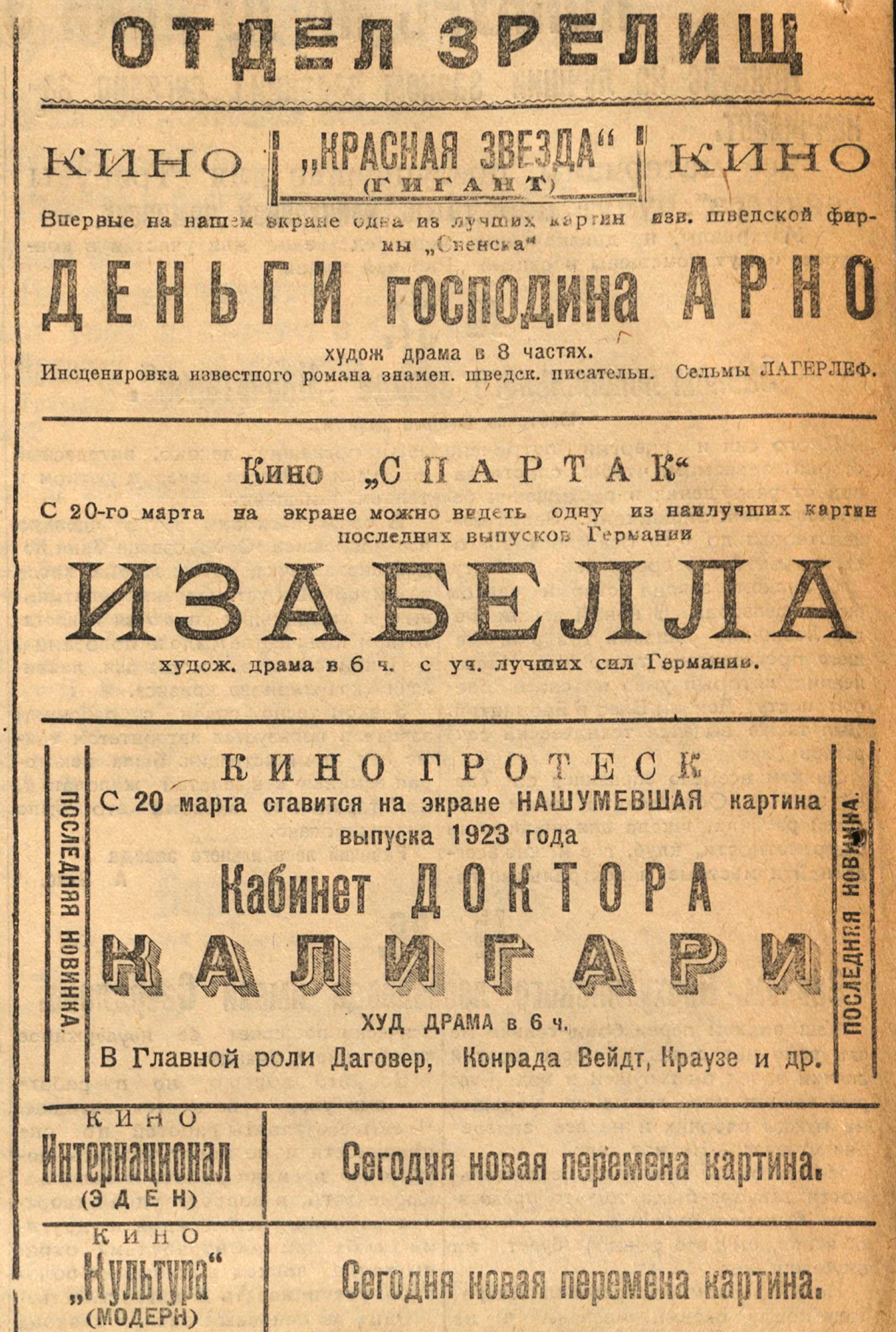
Zvezda, no. 64 (1366), 20 Mar. 1923.
Third from the bottom is the ad for The Cabinet of Dr. Caligari. The first name mentioned of the performers is Даговер [Dagover].
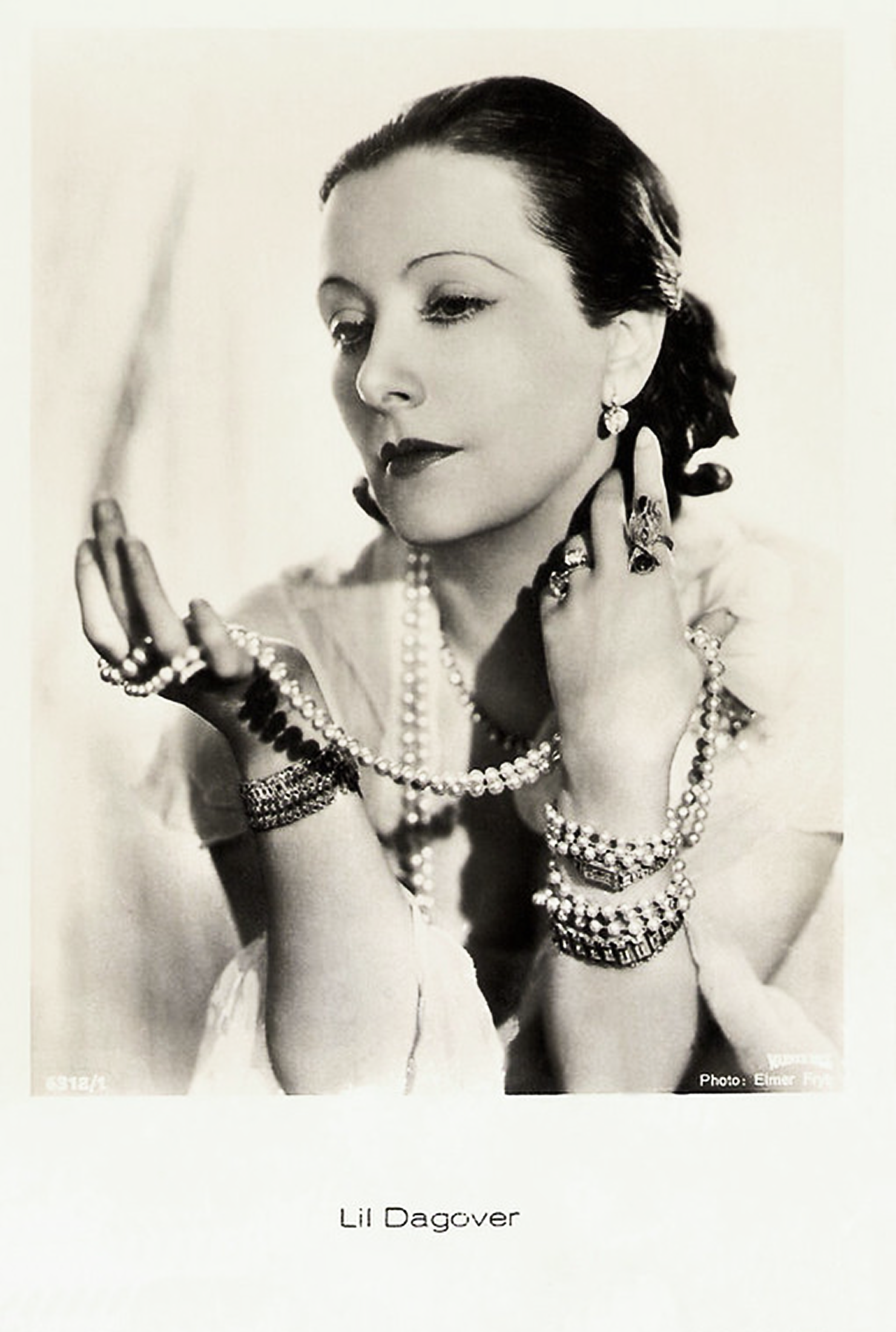
Lil Dagover, German postcard by Ross Verlag, Berlin.
Source: https://www.flickr.com/photos/truusbobjantoo/7353503648
The Red Army’s Red Star theater continued the pattern of pictures with beautiful starlets when it showed Herr Arne’s Pengar [Mr. Arne’s Money], released in Minsk as Den'gi gospodina Arno.4
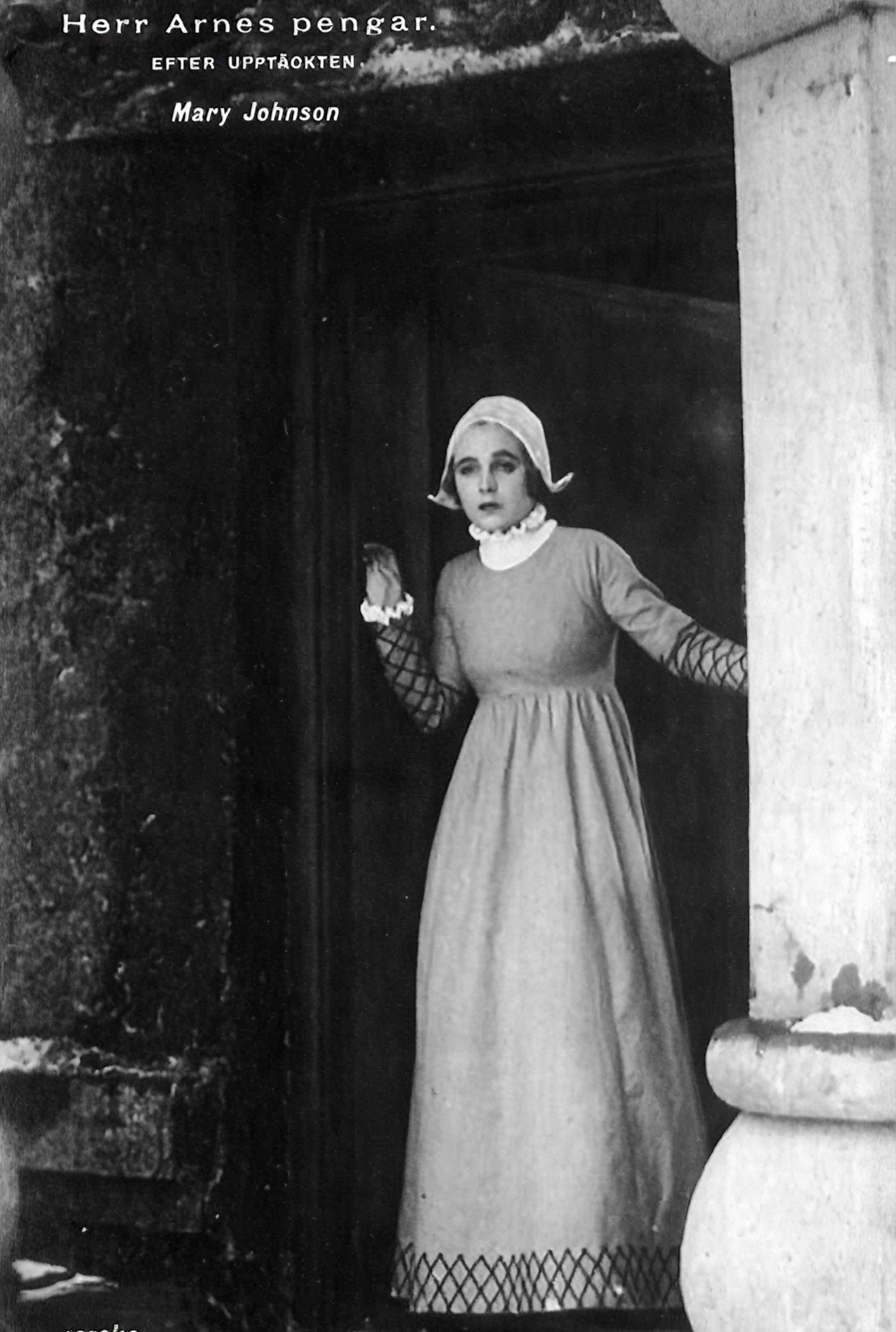
Mary Johnson in Mr. Arne’s Money. Photograph by Svenska Biografteatern. Picture postcard, Public Domain.
Source: https://commons.wikimedia.org/w/index.php?curid=18431729
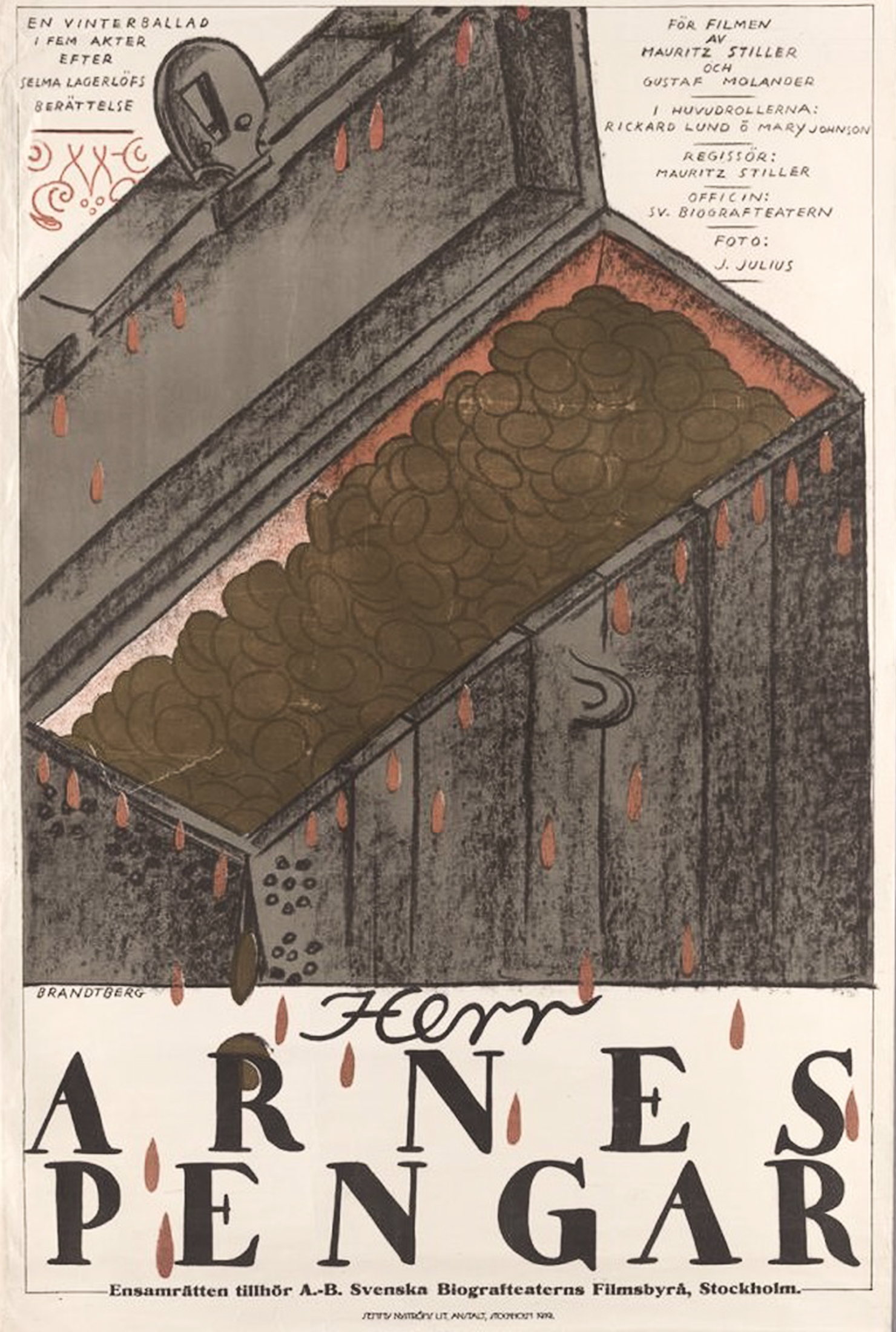
Poster for the movie “Mr. Arne’s Money”.
Source: https://www.justwatch.com/pl/film/herr-arnes-pengar
Archival documents hinted at the future of Belarusian cinema. Before he left his position at Kinoresbel (which operated the cinemas before the city of Minsk took over), departing head of the organization, Moise Dinershtein, described the “northwestern” region of cinemas as including Minsk and the then-Russian cities of Vitebsk, Smolensk and Gomel. In March, Vitebsk invited cinema heads from the other three cities to a March 15 meeting to discuss how to work together.5 We are still searching for the documented results. But this shows how these cities were considered a group, even though they were still located in two different countries.
Back in Minsk, the Internatsional broke the pattern of the Red Army theaters getting films with beautiful starlets while the others got the rest. The Internatsional showed V volnakh zhiteyskoy suyety [Amidst the Waves of Life’s Bustle],6 which starred the beautiful Mia May. We have not found an original title for this film.

Mia May in Mistress of the World, 1919.
Source: https://commons.wikimedia.org/w/index.php?curid=31525346
The Kultura returned to the pattern with what it called the American detective film, Tayna gostinitsy [Mystery of the Hotel]7. The ad for the film gives no other information, and we can find no film with that name in American records.
On March 23, the Grotesk advertised Sin'ora tereza (Zamknutyye usta) [Signora Teresa (Sealed Lips)],8 which supposedly starred Francesca Bertini and Mario Bonar. There is no evidence that those two ever appeared in a film together.
Grafinya Dyubua (Madlen) [Countess DuBois (Madeleine)]9 appeared at the Spartak, with the ad claiming it was part of the Miss Berrill cycle. We have found nothing to support that. There was a film named Madlen that was advertised in Kino-Fot.
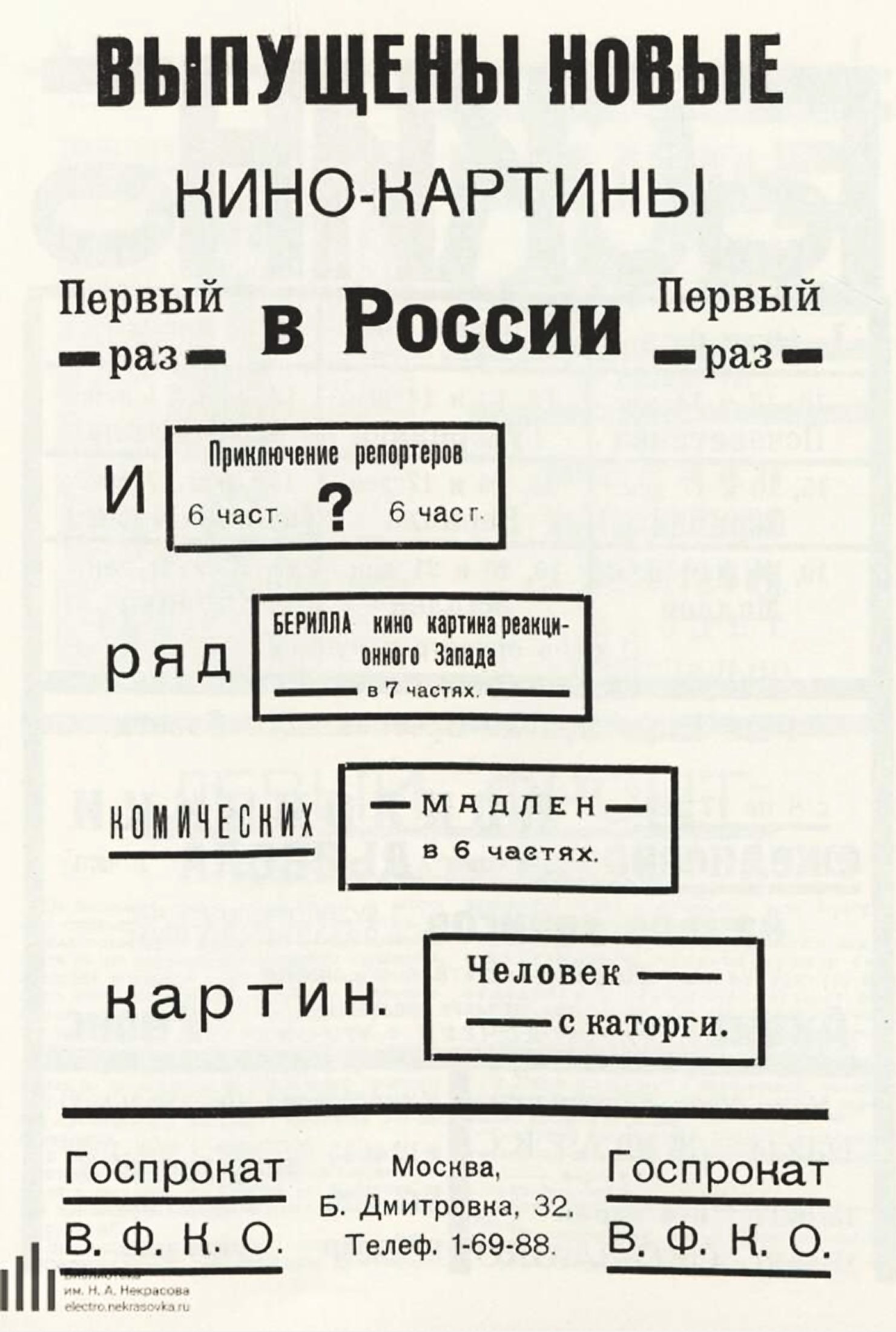
The ad describes “newly released” motion pictures, including The Adventure of Reporters, Beryl (certainly Miss Beryll), Madlen, and A Man from Penal Servitude.10
By examining the plot details for Madelen in Kino-Fot we were able to, with high probability, identify this film as a German production called Madeleine. It starred Ria Jende, who is now almost forgotten.
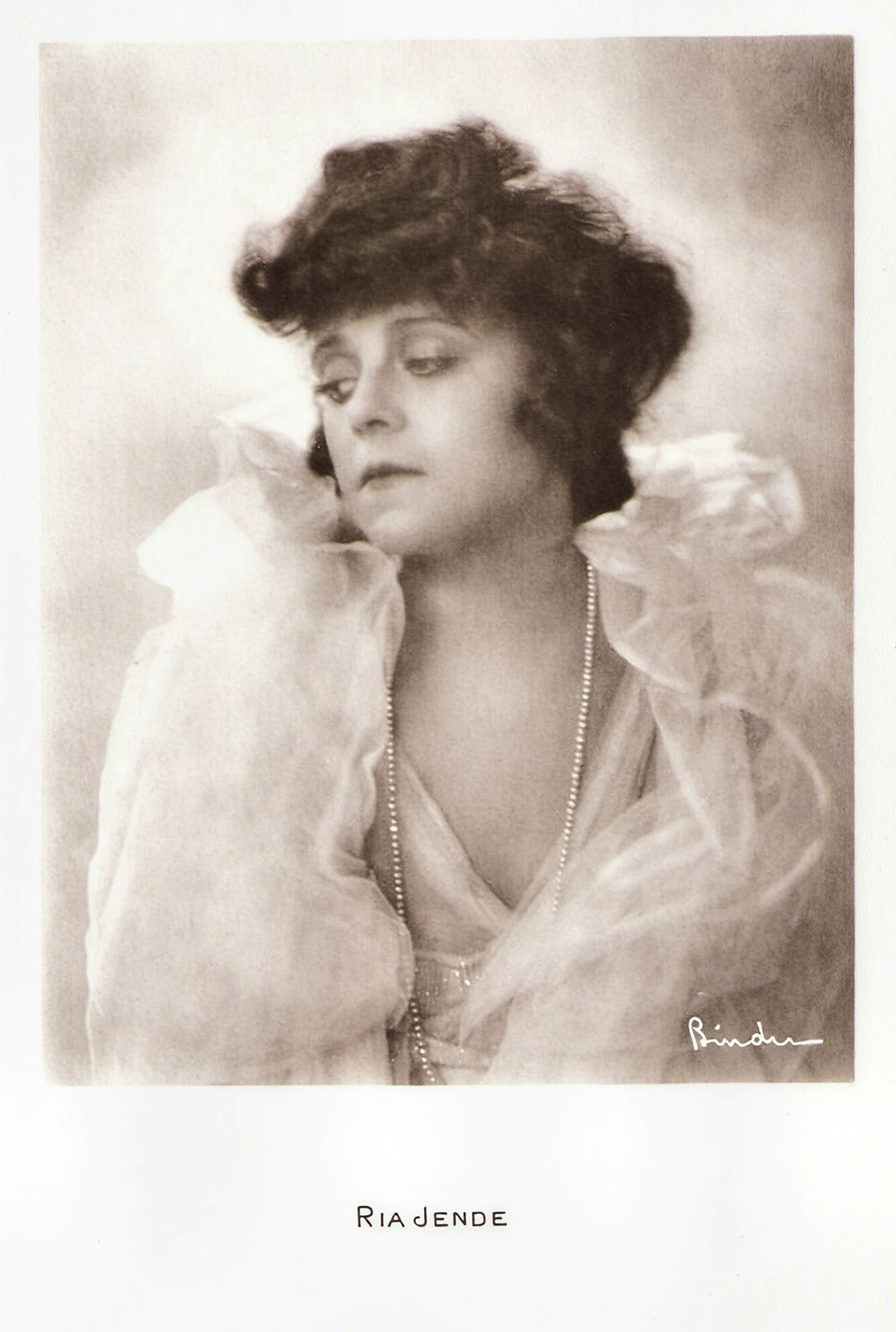
Ria Jende. German postcard by Photochemie, Berlin. Photo: Alex Binder.
Source: https://www.flickr.com/photos/truusbobjantoo/10452445506
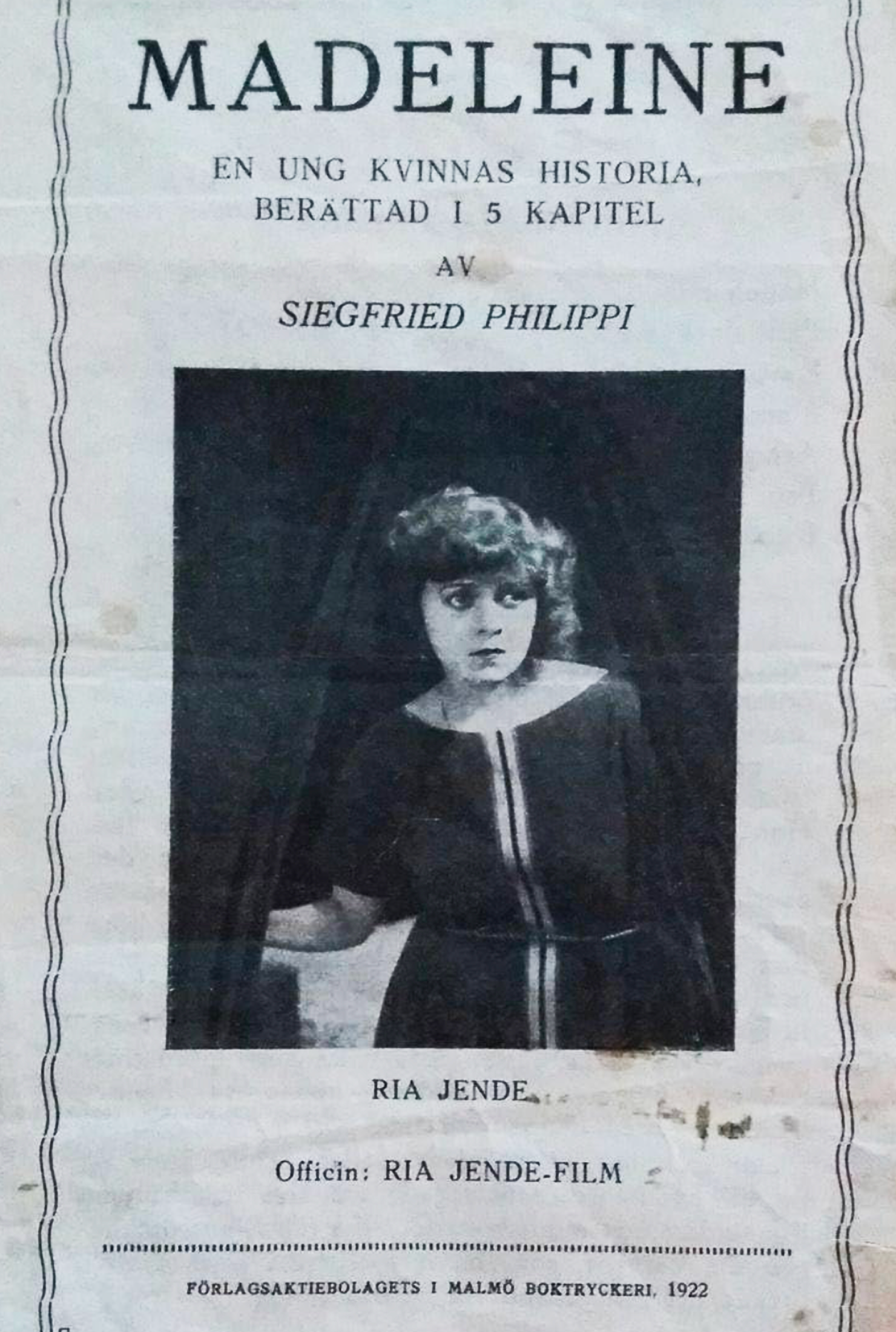
Poster for the movie “Madeleine”.
Source: https://www.imdb.com/?ref_=mv_close
The Red Star then had Prazdnik Rozelly (Rosella’s Holiday, or the Celebration or Feast of Rosella).11 This film was advertised as Italian but was actually German. It starred Lya Mara.
The last few films advertised for March include the Russian made Poslednyaya stavka mistera Ennioka [Mr. Enniok's Last Bet] (1922)12 and the detective film Khishchniki zamka Torrano [Predators of Torrano Castle], of which we know nothing.13
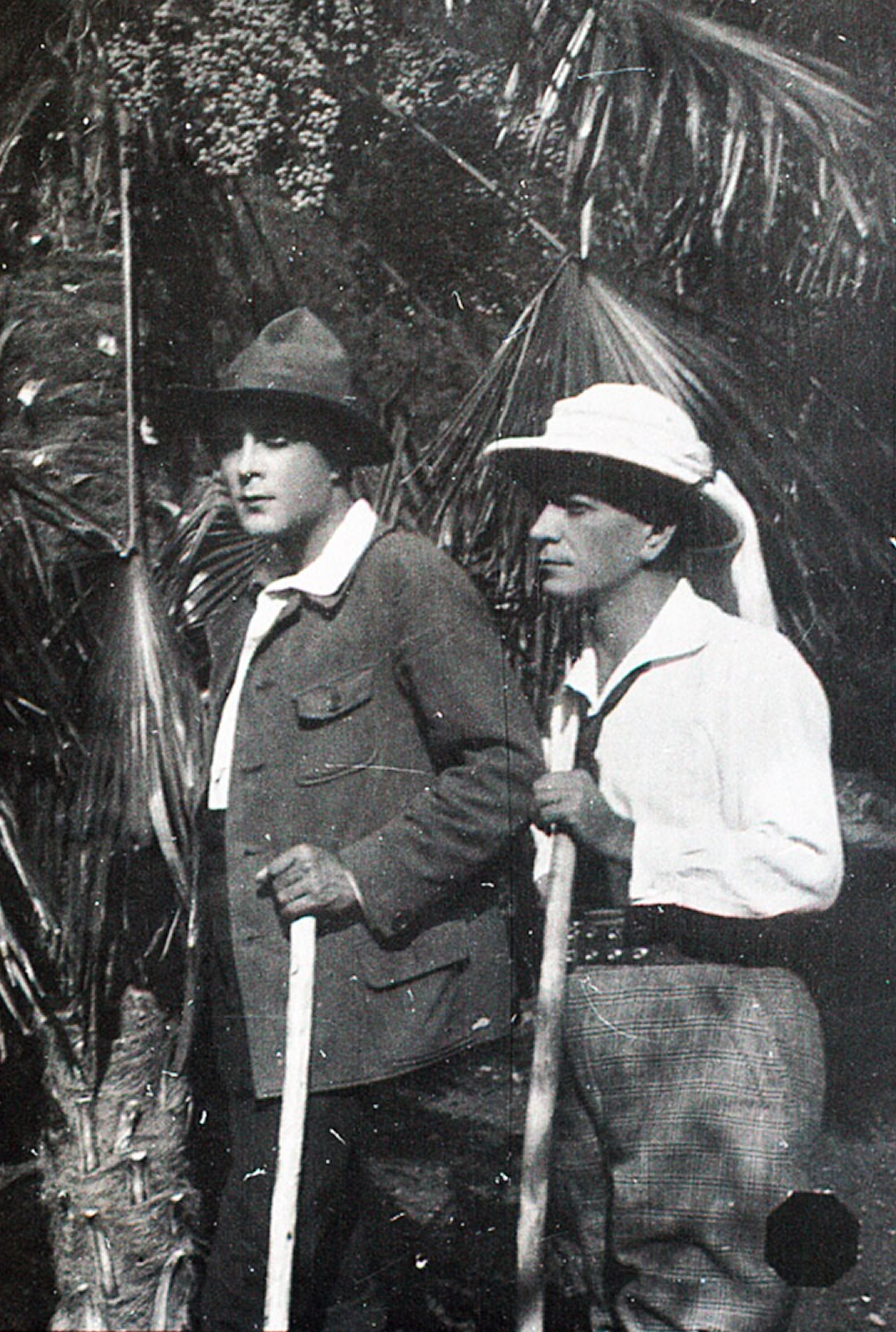
Still from Mr. Enniok’s Last Bet.
Source: https://vufku.org/en/lost/the-stake-of-mr-enniok/
The final new film from March is Teni grekha [Shadows of Sin] (1923), shown at the Red Star.14 It’s actually a French production L'ombre du péché [Shadows of Sin], starring Diana Karenne, born in Kyiv.15 The movie was directed by Moscow-born Yakov Protazanov,16 later one of the early great Soviet directors.
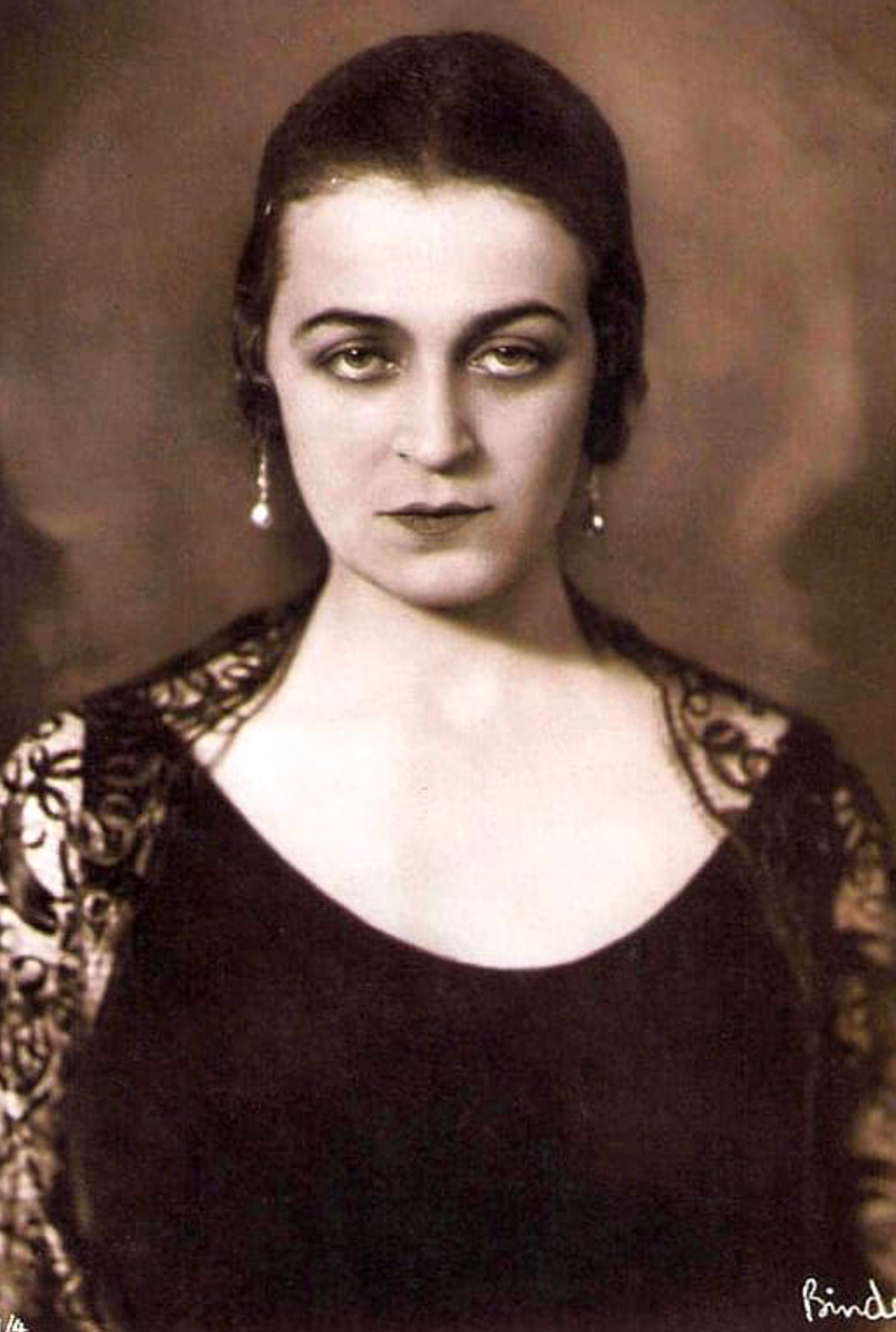
Diana Karenne. Photo: Alex Binder.
Source: https://www.imdb.com/name/nm0439188/mediaviewer/rm622172929/?ref_=nm_ph_2

Diana Karenne.
Source: Public Domain, Wikimedia Commons.
As we noted above, Vitebsk invited Minsk, Gomel, and Smolensk to join it in trying to draft a common cinema strategy. As Vitebsk was reaching out to the Belarusian capital, Minsk, and its Russian sister cities Gomel and Smolensk, the Belarusian government was making a bid to recover Vitebsk, Gomel, and Smolensk. Belarusian historian Alená Markova writes that it was a subject of the 7th Congress of the KP(b)B (Communist Party (Bolsheviks) of Belarus). (Note that Markova is using a different transliteration of Alexander Charviyakov’s name. More on Charviyakov here
Markova, 35-36
His efforts would bear fruit the following year.
1 Izabella [Изабелла; Isabella]. Zvezda [Звезда; Star], 64 (1366) 20 Mar. 1923.
2 Izabella (Konets puti) [Изабелла (Конец пути); Isabella (End of the Path)] in Kino: Dvukhnedel'nik o-va kinodeyateley [Кино: Двухнедельник о-ва кинодеятелей; Cinema: Fortnightly Journal of the Society of Film Workers]. 1/5 Jan. 1923.
3 Kabinet doktora Kaligari [The Cabinet of Dr. Caligari]. Zvezda [Звезда; Star], 64 (1366) 20 Mar. 1923.
4 Den'gi gospodina Arno [Деньги господина Арно; Mr. Arnault’s Money]. Zvezda [Звезда; Star], 64 (1366) 20 Mar. 1923.
5 Gor. Minsk Glavpolitprosvetu [Гор. Минск Главполитпросвету; City of Minsk, to Glavpolitprosvet] 6 Mar. 1923. Natsional’nyi arkhiv Respubliki Belarus [Национальный архив Республики Беларусь; National Archives of Belarus (NARB)], Fond 42, Opis’ 1, Delo 917, p. 52.
6 V volnakh zhiteyskoy suyety [В волнах житейской суеты; Amidst the Waves of Life’s Bustle]. Zvezda [Звезда; Star], 66 (1368) 22 Mar. 1923.
7 Tayna gostinitsy [Тайна гостиницы; Mystery of the Hotel]. Zvezda [Звезда; Star], 66 (1368) 22 Mar. 1923.
8 Sin'ora Tereza (Zamknutyye usta) [Синьора Тереза (Замкнутые уста); Signora Teresa (Sealed Lips)]. Zvezda [Звезда; Star], 67 (1369) 23 Mar. 1923.
9 Grafinya Dyubua (Madlen) [Графиня дюбуа (Мадлен); Countess DuBois (Madeleine)]. Zvezda [Звезда; Star], 70 (1372) 26 Mar. 1923.
10 Kino-Fot [Кино-фот; Cinema-Photography] No. 5, Dec. 1922, p. 5
11 Prazdnik Rozelly (Праздник Розеллы; Rosella’s Holiday or Feast of Rosella]. Zvezda [Звезда; Star], 71 (1373) 28 Mar. 1923.
12 Poslednyaya stavka mistera Ennioka [Последняя ставка мистера энниока; Mr. Enniok's Last Bet]. Zvezda [Звезда; Star], 72 (1374) 29 Mar. 1923.
13 Khishchniki zamka Torrano [Хищники замка Торрано; Predators of Torrano Castle]. Zvezda [Звезда; Star], 72 (1374) 29 Mar. 1923.
14 Teni grekha [Тени греха; Shadows of Sin]. Zvezda [Звезда; Star], 73 (1375) 30 Mar. 1923.
15 “Dianna Karenne” Women Film Pioneers Project https://wfpp.columbia.edu/pioneer/diana-karenne/ Accessed 11 July 2026.
16 Ciné-Resources http://www.cineressources.net/recherche_t_r.php?type=FOR&pk=50775&rech_type=E&textfield=Ten%27greha&rech_mode=contient&pageF=1&pageP=1/ Accessed 11 July 2026. Protozanov, Yakov, Encyclopedia.com https://www.encyclopedia.com/people/literature-and-arts/film-and-television-biographies/yakov-protazanov/
17 Marková, Alena, The Path to a Soviet Nation. The Policy of Belarusization. Brill Schöningh 2021, pp. 34-35.