
The Photo-Kino Department
The government turns to private citizens
1921
As the Belarusian government settled in, it created its own People’s Commissariat of Education, or Narkompros, which had a Glavpolitprosvet (Main Administration for Political Education), which had a Foto-Kino podotdel [Photo-Kino Sub-Department] that handled film.1 Moise Dinershtein, who had been head of the Rabis (The Art Union), was named the Deputy Head of the Department.2
The new Photo-Kino Sub-Department (for ease of use, we will just call it a Department) realized it needed experienced people to help get films and help the movie theaters run. Two of the first that the Department turned to were Shlomo Schnittman, who once ran the Eden theater in Minsk (later the International) and Abram Lifshitz, who had run the Giant (later the Red Star). Lifshitz was named head of the Photo-Kino Department. Schnittman was still a private citizen, although he was given the title of “Commissioner of the Glavpolitprovset” (The Main Department for Political Education). Both men appeared to be oborotistyy, “wheeler-dealers” with a long history in the cinema. They turned out to be aferistyy, con men.
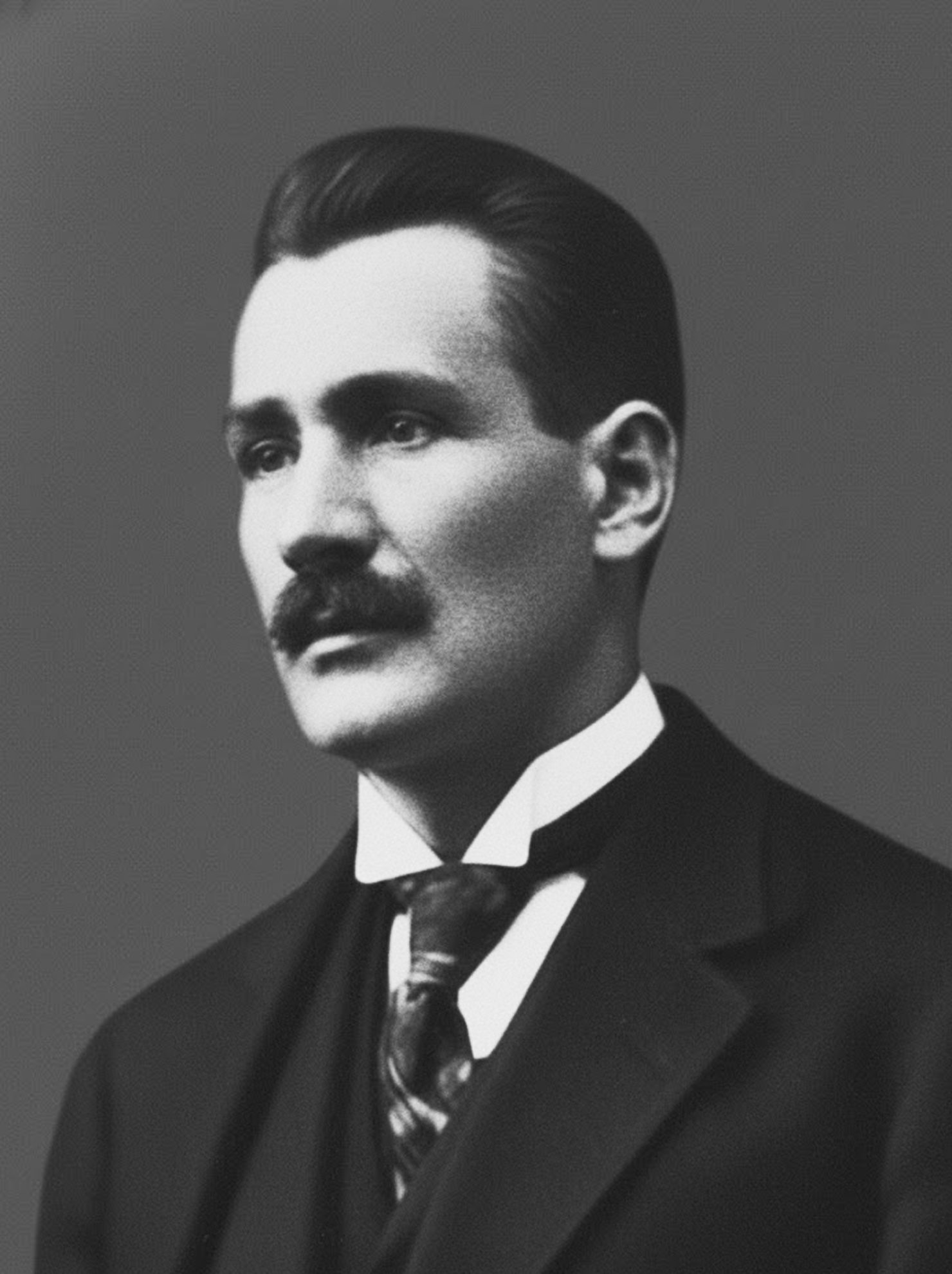
Shlomo Schnittman.
Source: National Archives of Belarus (NARB).
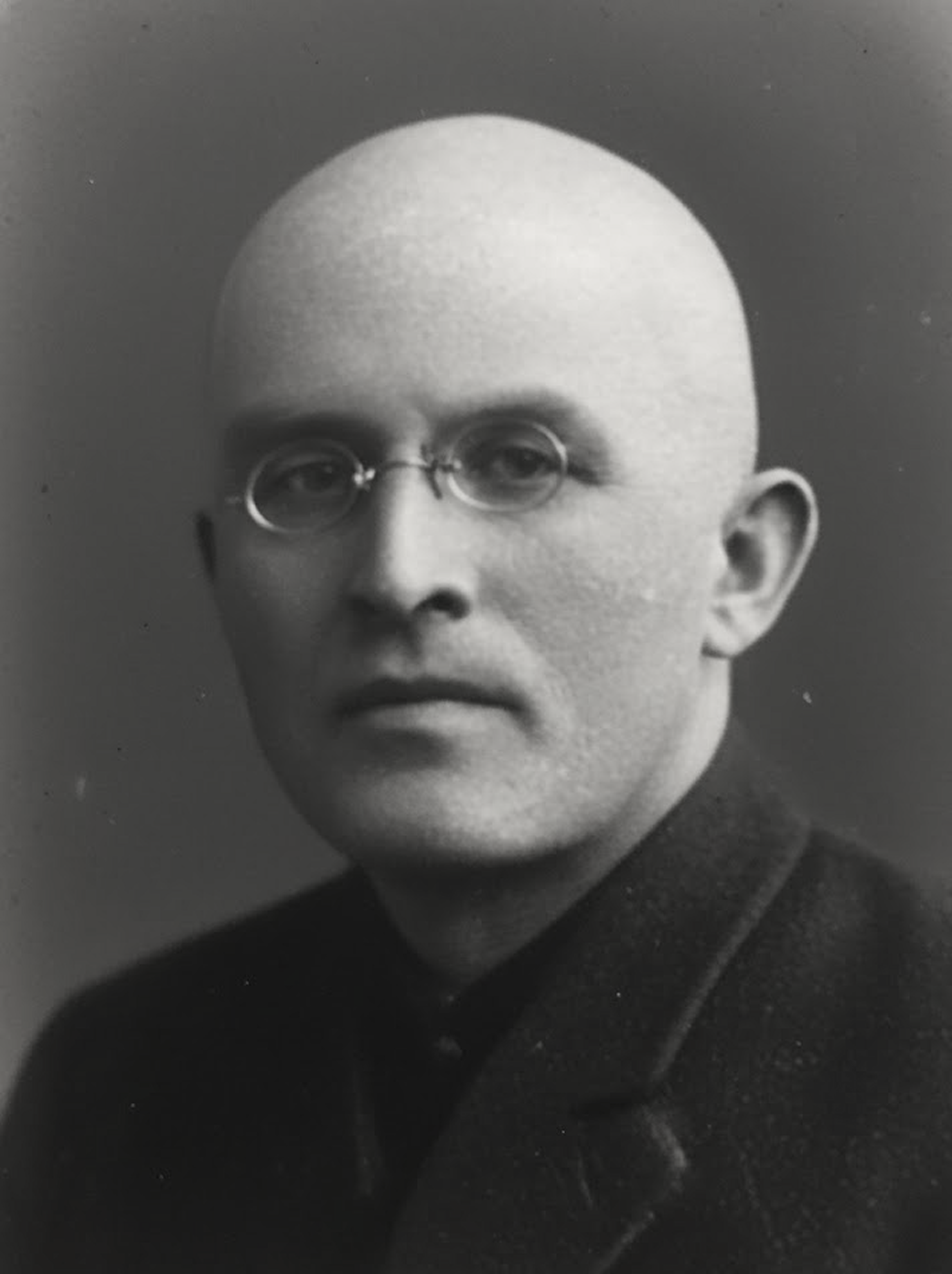
Abram Lifshitz.
Source: National Archives of Belarus (NARB).
The two men were investigated in the waning months of 1921 after testimony from Victor Nesterovich, who was the Deputy Head of the Photo-Kino Department. The most damning sentence in the investigative report is:
Conclusion of Report3
A report from April 1921 contains a list of films owned by the Photo-Kino Department.
- Savva [Savva] by Leonid Andreev, drama in 6 parts
- Lyubov' i druzhba [Love and Friendship], drama in 6 parts
- Detskaya prestupnost' [Juvenile Delinquency], scientific film in 3 parts
- Istoriya ital'yanskoy revolyutsii [History of the Italian Revolution] in 1 part
- Volos dolog, da um korotok [The Hair is Long, but the Mind is Short], comedy in 3 parts
- Postroyka mostov [Construction of Bridges], scientific film in part 1
- "Gorod Kalmar [Kalmar Town], view in part 1
- Fal'shivyy kupon [False Coupon] by Tolstoy, drama in 4 parts
- Vstavay podymaysya rabochiy narod [Arise, Rise, Working People], agitational drama in 4 parts
- Kak bylo, no tak ne budet [As It Was, But It Won't Be], by Lunacharsky, drama in 5 parts
- T'ma zhizni (obmantuya) [The Darkness of Life (Deceived)] by Tolstoy in 5 parts
- Skazka o rybake i rybke [The Tale of the Fisherman and the Fish], children's program in 2 parts
- Kavkaz [Caucasus], a geographical essay in 3 parts
- Pchelovodstvo [Beekeeping], scientific film in 2 parts4
We know that the 1913 film False Coupon was shown in Grodno (Click here to see where we reported on that)
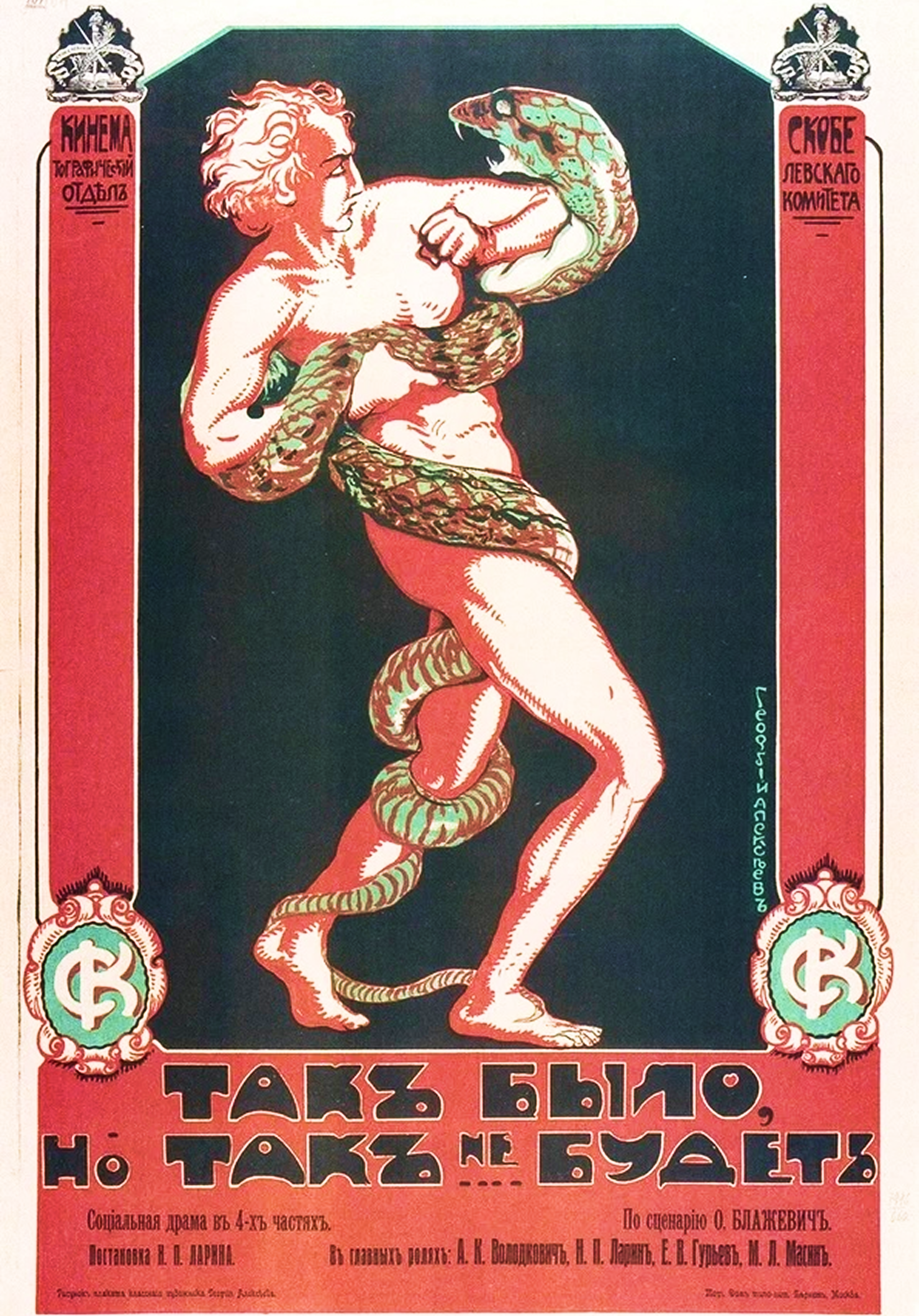
As It Was, But Not As It Will Be, poster.
Source: https://www.kinopoisk.ru/film/731046/
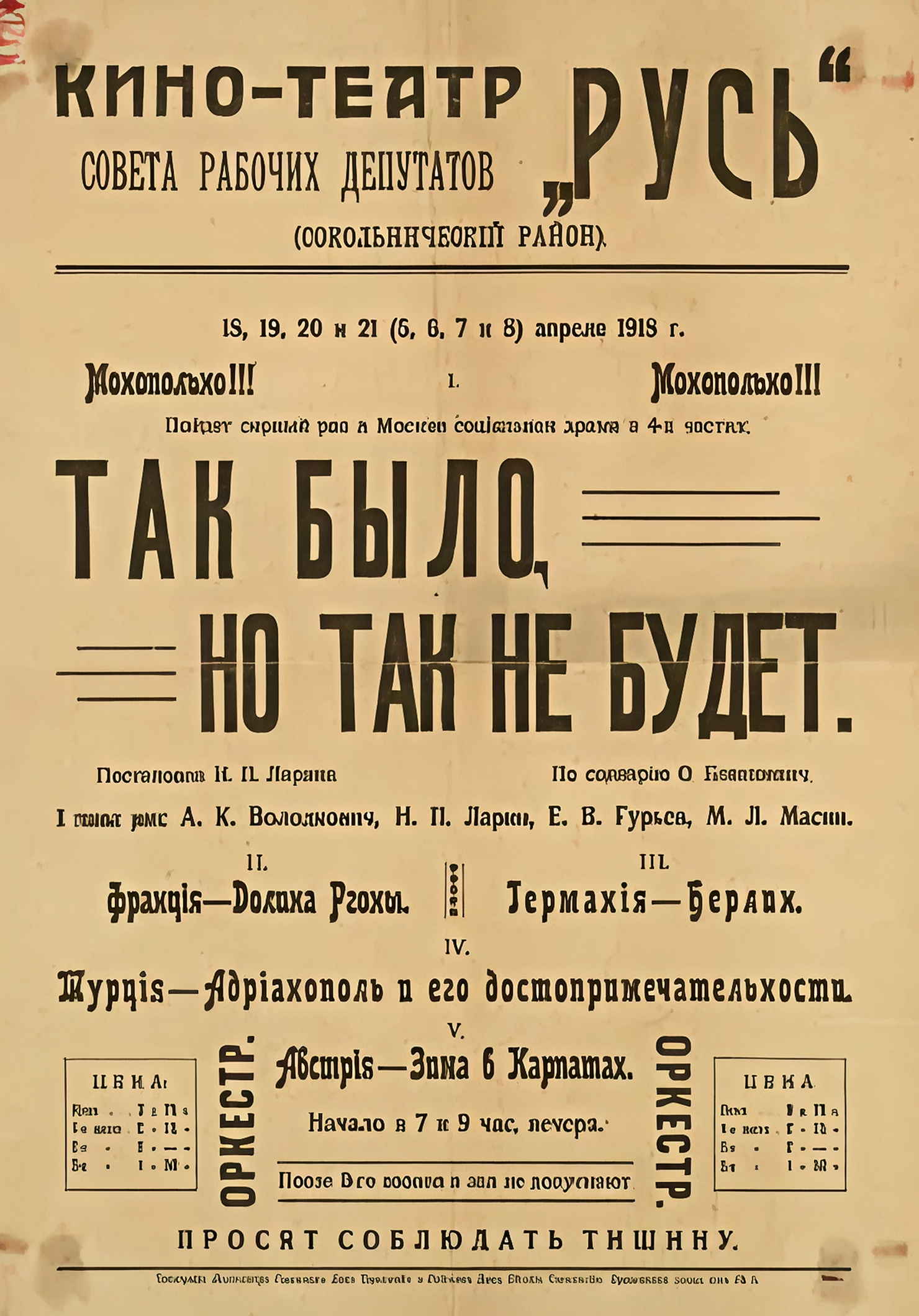
As It Was, But Not As It Will Be poster.
Source: https://www.kino-teatr.ru/kino/movie/empire/14469/annot/
In mid-1921, the Photo-Kino Department sent Israel Schnittman, Sholmo’s son, to Petrograd to obtain a film about the Kronstadt Uprising of March 1921, which was put down by Leon Trotsky.
Kronstadt Uprising, March 1921.
Source: Seventeen Moments in Soviet History. https://soviethistory.msu.edu/1921/kronstadt-uprising/kronstadt-uprising-video/
The younger Schnittman was also entrusted to obtain the films Proletariat [Proletariat],5 and Golod v Povolzh'ye [Hunger in the Volga Region],6 which was shown at the Red Star (see that information here)
In the summer of 1921, Lifshitz masterminded a complicated scheme that netted him and the senior Schnittman a great deal of money. In July, Lifshitz concluded a contract with someone named Elin for delivery of films. Elin got half of the total profits of the Minsk cinema theaters, and Lifshitz kept another 25%. (The report does not say where the rest of the money went, presumably to the Photo-Kino Department). Lifshitz claimed the money he took was to support employees, but he paid money to both the former director of Red Star theater (Aron Leibovich) and to the new director, Aron Javits.7
Sometime in all of this, Lifshitz worked out a deal with Schnittman. Lifshitz offered Schnittman and a man named Belenky a chance to “rent the cinema” (unnamed in the conclusion of the Photo Kino investigation report but presumably the Red Star) because, and quoting Lifshitz, "the new economic policy allows renting without employees." That deal never came off, and Lifshitz and Elin continued to work together, but Schnittman still benefited by receiving one-third of total proceeds. (The exact split is unclear.)8
In the conclusion, Nesterovich, the Deputy Head of the GPP, was cleared and cited as a “’pawn’ in the hands of the experienced and daring businessmen Livshits and Shnittman.”9
Lifshitz and Schnittman were arrested by the Cheka (Soviet secret police) in January of 1922,10 Javits was dismissed from his post as head of the Red Star on January 3. At that time, M. Belkind was named as head of the Photo-Kino Department.11 Schnittman’s son, Israel, who had been running the Culture cinema, although the exact charges are unclear.13
1 Akt [«Акт»; Act], 31 May 1921. Natsional'nyi arkhiv Respubliki Belarus [Нацыянальны архіў Рэспублікі Беларусь; National Archives of Belarus] (NARB), Fond 101, Opis' 1, Delo 639, pp. 202–204. This document describes Photo-Kino as a subdivision of the Art Department.
2 «Vypiska iz prikaza No. 76» [«Выписка из приказа за № 76»; Excerpt from Order No. 76], 15 Jul. 1921. NARB, Fond 42, Opis' 1, Delo 1052, p. 25, sec. 56.
3 Zakliuchenie otcheta [Заключение отчета; Conclusion of a Report], 21 Nov. 1921. NARB, Fond 101, Opis' 1, Delo 330, p. 23–23b.
4 Sobstvennye kartiny Tsentral'nogo Sklada Belorussii, zakuplennykh Foto-Kino podotdelom [Собственные картины Центрального Склада Белоруссии, закупленных Фото-Кино под-отделом; Films from the Central Warehouse of Belarus Purchased by the Photo-Cinema Subdepartment], 17 Apr. 1921. NARB, Fond 101, Opis' 1, Delo 639, p. 139.
5 Proletariat na strazhe Revoliutsii [Пролетариат на страже Революции; The Proletariat Stands Guard ov er the Revolution] Kino-teatr.ru, https://www.kino-teatr.ru/short/movie/sov/89750/annot/ Accessed 16 Dec. 2025.
6 Mandat [Мандат; Mandate], 22 Oct. 1921. NARB, Fond 42, Opis' 3, Delo 2634, p. 5. The document bears a handwritten date of 22 Oct. 1921, likely added when it was entered as evidence in the case against Schnittman; the document itself contains no typed date.
7 Zakliuchenie otcheta [Заключение отчета; Conclusion of a Report], 21 Nov. 1921. NARB, Fond 101, Opis' 1, Delo 330, p. 23–23b.
8 Zakliuchenie otcheta.
9 Zakliuchenie otcheta.
10 Prikaz no. 2 po Glavpolitprosvetu SSR Belorussii [«Приказ no. 2 по Главполитпросвету С.С.Р. Белоруссии»; Order No. 2 of the Main Political Education Department of the SSR of Belarus], 2 Jan. 1922. NARB, Fond 101, Opis' 1, Delo 640, p. 40.
11 Prikaz No. 2 po Glavpolitprosvetu SSR Belorussii.
12 Prikaz No. 161 [Приказ no. 161; Order No. 161], 29 Nov. 1921. NARB, Fond 101, Opis' 1, Delo 196, p. 125b.
13 Prikaz No. 3 po Glavpolitprosvetu SSR Belorussii [Приказ no. 3 по Главполитпросвету ССР Белоруссии; Order No. 3 of the Main Political Education Department of the SSR of Belarus], 3 Jan. 1922. NARB, Fond 101, Opis' 1, Delo 640, p. 40b.