
November, 1923
The Cinema Situation in Minsk Gets Worse
November 1923 brought only a faint glimmer of hope for the cinemas.
On November 4, 1923, the Minsk based newspaper Zvezda ran an article that announced the Red Star and Kultura cinemas would sell discounted tickets on November 6th and 7th. It did not say which films were showing. The Internatisional movie theater would have free films for Red Army soldiers, again un-named.1
On November 8, the Red Star temporarily became a venue for live acts. Zvezda articles on November 9 and 11 ballyhooed the performance of the Bim-Bom Clowns. Bim was almost always Ivan Radunsky, Bom was played by various other performers, including, in this case, Nikolai Viltzak.2 Also in this case, Radunsky was away and Garin took his place.
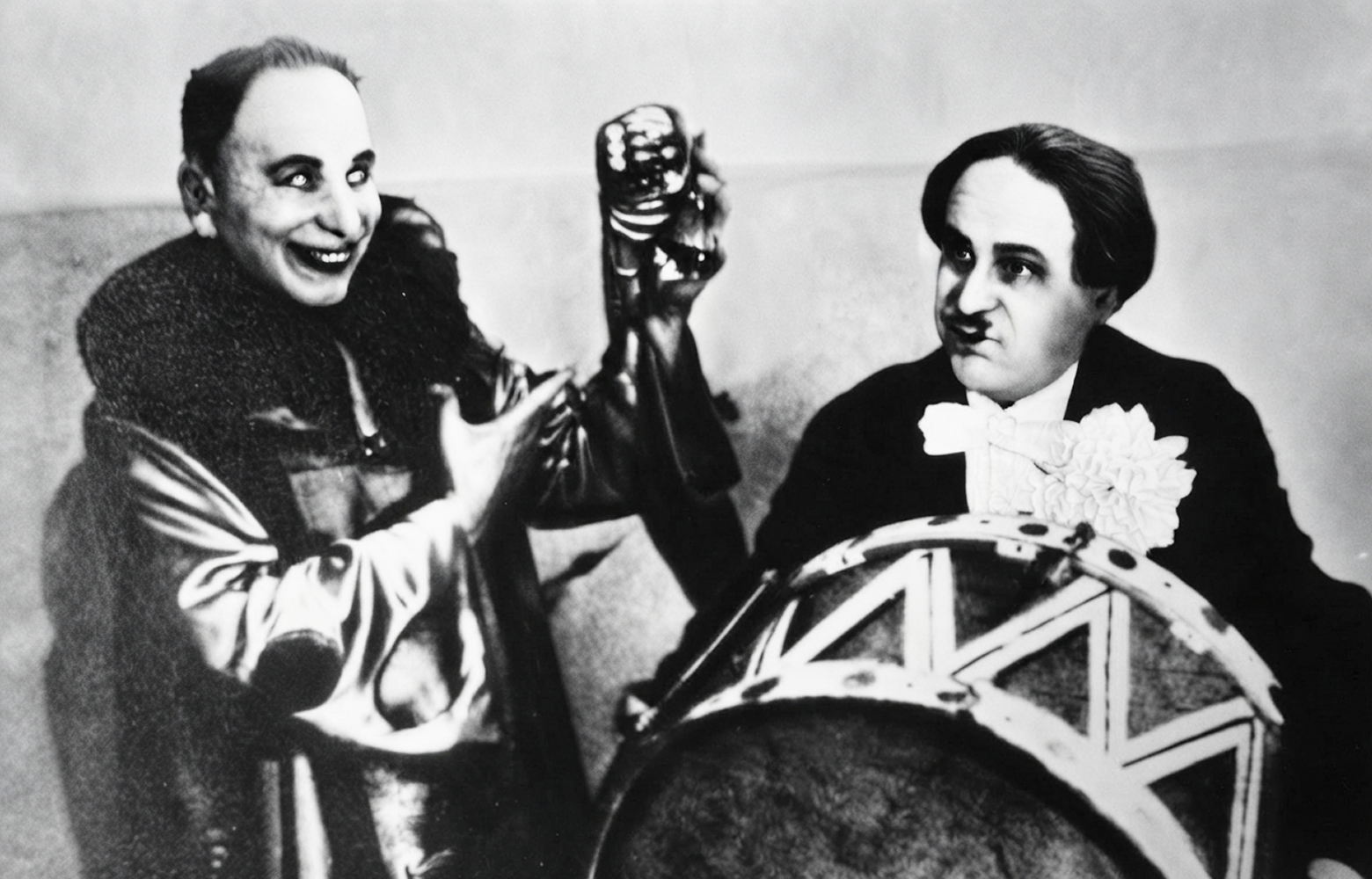
Postcard of Radunsky (reader’s left) and Viltzak (with drum). AI enhanced.
Source: Personal Collection.
Also on November 8, Zvezda reported that the Narkompros (the People’s Commissariat of Education) decreed that children under 16 could not be admitted to films that did not have an “educational character.” Children’s cinema performances had to end by 9:00 p.m., other screenings had to end by 1:00 in the morning.3
Still on November 8, a meeting of the Presidium of the Mingubrabis (the Minsk Provincial Art Workers Trade Union) announced that a wage dispute by the striking workers at the Lotto Club located at the Grotesk cinema was settled. The Grotesk had been operated by Podiv 4 (the Political Department of the 4th Smolensk Rifle Division).4 In May 1923, Podiv 4 leased the Spartak to some men to operate a Lotto Club. In these clubs, players held numbered cards and a Master of Ceremonies drew tickets with numbers. Those that matched enough card and ticket numbers could win prizes. But the management of the Grotesk Lotto Club did not pay the workers and so they went on strike (see here). By early November of 1923 the workers agreed to accept 75% of what they were owed.5
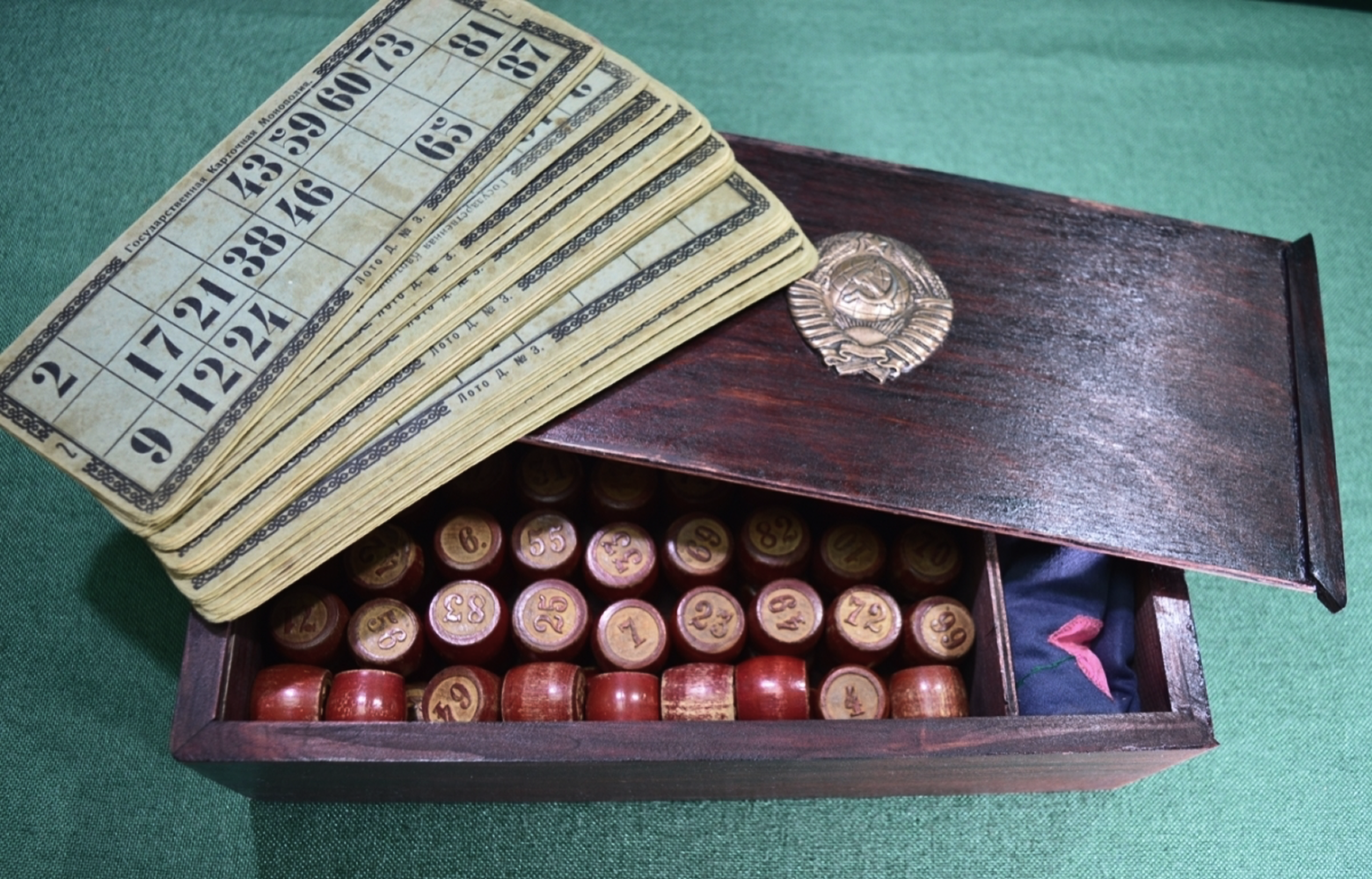
LOTO, State Playing Card Monopoly, RSFSR, 1930s.
Source: https://habartorg.ru/catalog/4742/
At the same November 8 meeting, attendees heard of the desperate straits of the Spartak cinema collective. The Spartak was the second theatre the Podiv controlled. The Rabis took it over for the summer but did not make enough to pay its workers. The Presidium was told that the Spartak cinema collective would “fall apart” and 15-20 people would lose their jobs if no action was taken.6
Still on November 8, Zvezda reported that the Red Star would show a picture titled Vladychitsa mira (Mistress of the World), 1919. This was a German film with the original title of Die Herrin der Welt (again, Mistress of the World). It was also known as Zhenshchina s milliardami (The Woman with Billions).7
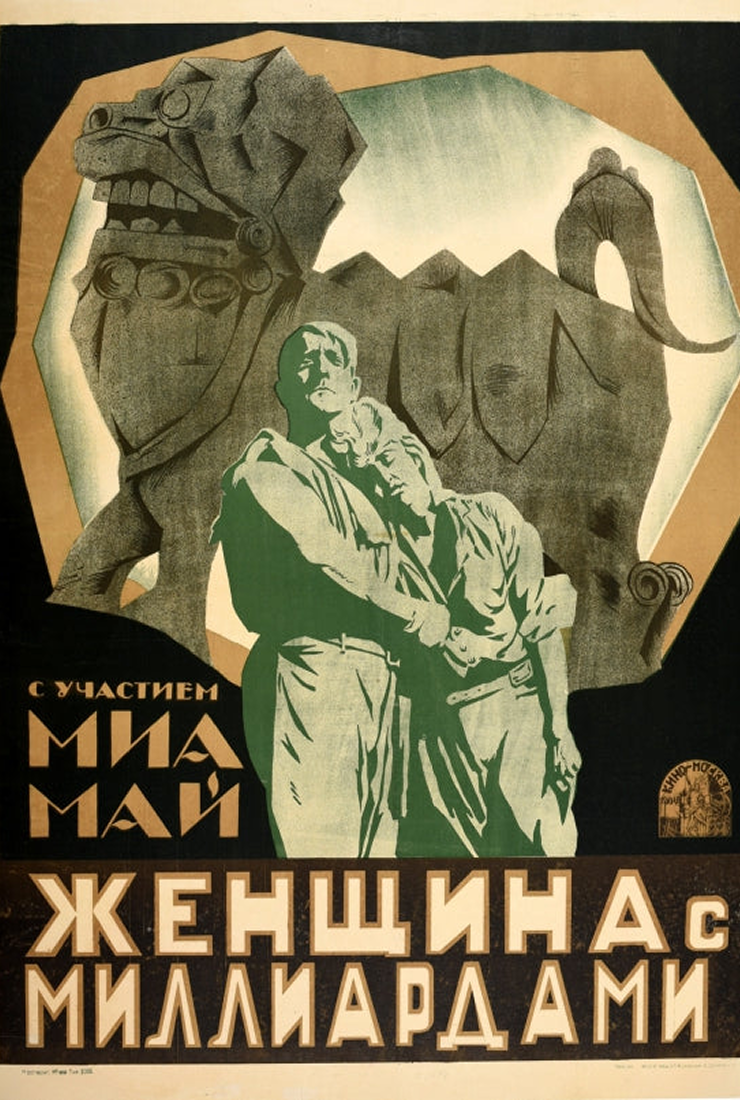
Russian Film poster for Zhenshchina s milliardami (The Woman with Billions).
Source: https://www.abebooks.com/art-prints/Woman-Billions-Mistress-World-Silent-Film/31922483356/bd
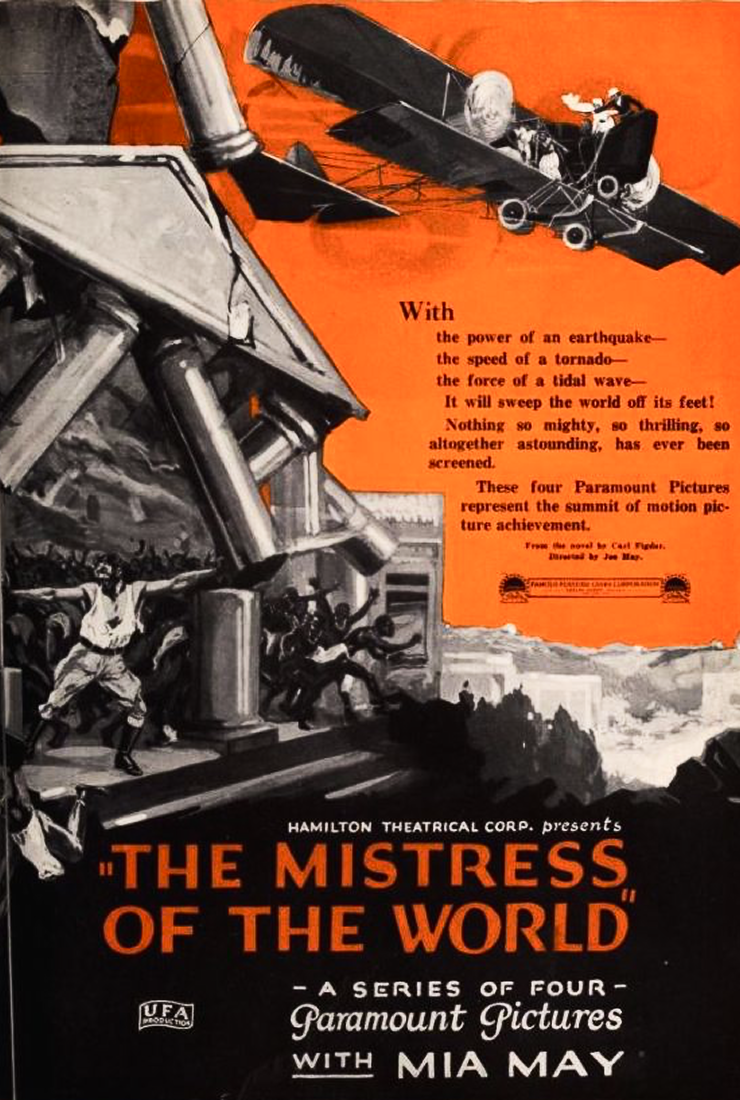
1919 international ad for The Mistress of the World.
Source: Public domain, via Wikimedia Commons.
On November 13, the Rabis responded to a request from the Narkomfinbel (the People’s Commissariat of Finance of Belarus or NKF) for reviews of the film Ikh gibel’ (Their Demise). (See here).
This film had been released in the U.S. as Civilization (1916). In return for waiving fees, an NKF “Expert Commission” wanted reviews of the film. The Rabis provided two. One called the film “revolutionary.” Another noted that the film was an old production, but with new intertitles.8 (See more on peremontazh, or re-editing, here). The NKF still charged half fees.
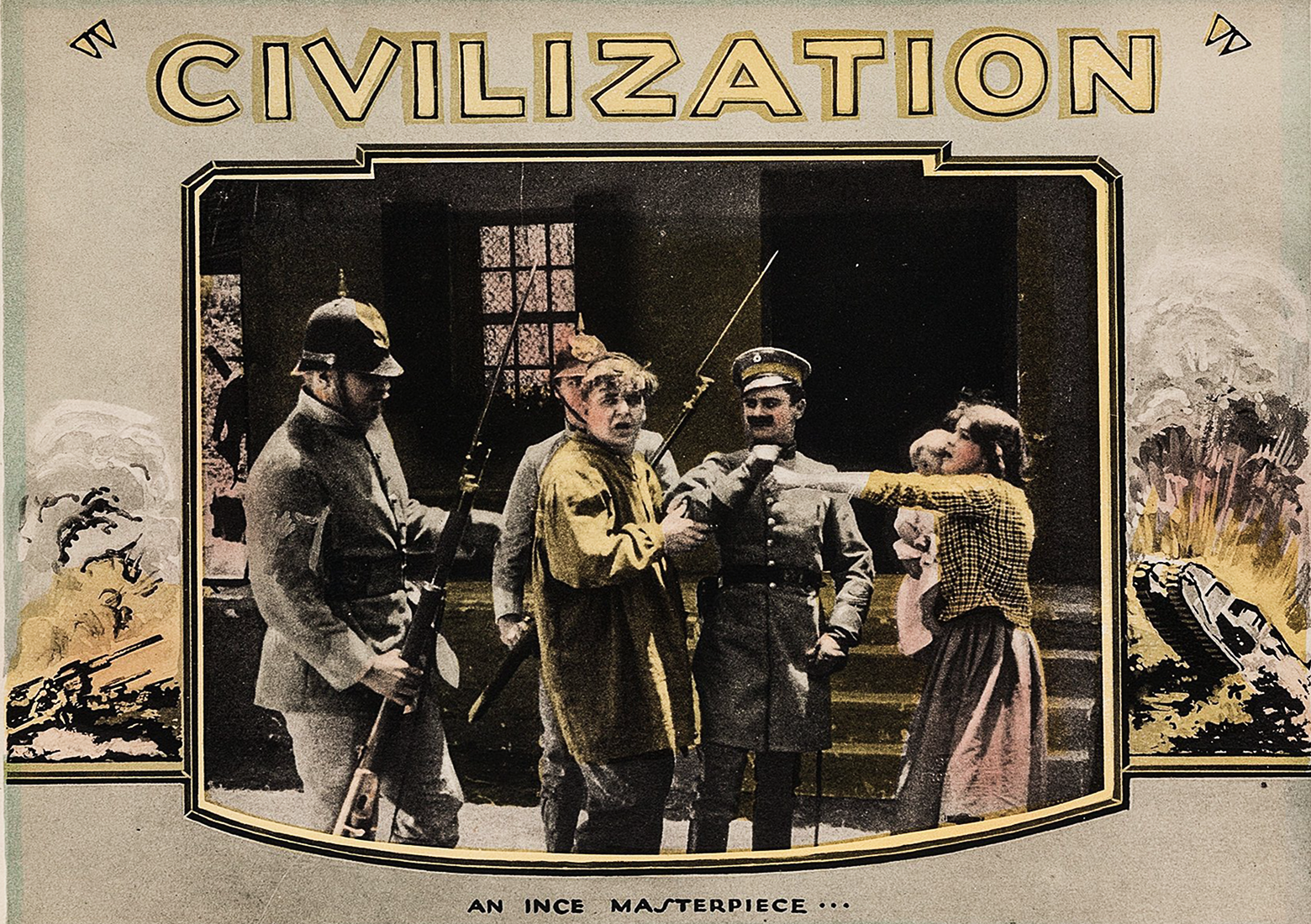
Lobby card from the film, Civilization.
Source: Triangle film, Public domain, via Wikimedia Commons.
On November 14, 1923, the Rabis Board (not the Presidium as in the meeting above) discussed a 3% supplementary tax the Narkompros (The People’s Commissariat of Education) wanted to put on cinemas for the benefit of the Red Cross. The Rabis decided to ask the tax on cinemas be reduced to 2%.9
At that same meeting the Rabis Board found that the Spartak Collective had been mismanaged (the report used the word “crimes”) and that there were no funds to pay taxes. Bragin, who was head of the Cinema Administration of the Gorono, was assigned to determine whether the Cinema Administration should take control of the Spartak. (There was no discussion of a role for Podiv 4.)
Later, the Rabis decided sent someone to Smolensk, the city that was home to Podiv 4, which ran the Spartak, to discuss the situation with the cinema.10
At almost the same time, the Rabis asked the Narkomfinbel to defer collection of the taxes owed by Spartak to allow its representative to talk things over with Podiv 4.11 Apparently the talks did not go well. On November 17, 1923, the Rabis appointed one its members to represent the Minsk Rabis in a suit brought against Podiv 4. No other details of the suit are available.12
The last related document we can find is a copy of the Minutes from a November 24 meeting between Rabis and Podiv 4 representatives. Both sides only say “A special cinema, Spartak, is allocated for Red Army soldiers.13 There was no change in status of the Spartak, and so was probably not good for the Rabis lawsuit.
On November 19, the Rabis asked the Glavlit (Main Administration for Literary and Publishing Affairs), for duty and fee exemptions on the German film, Prozhigateli zhizni (Squanderers of Life) for a Rabis fundraiser.14 The original German name was Treibende Kraft (Driving Force).
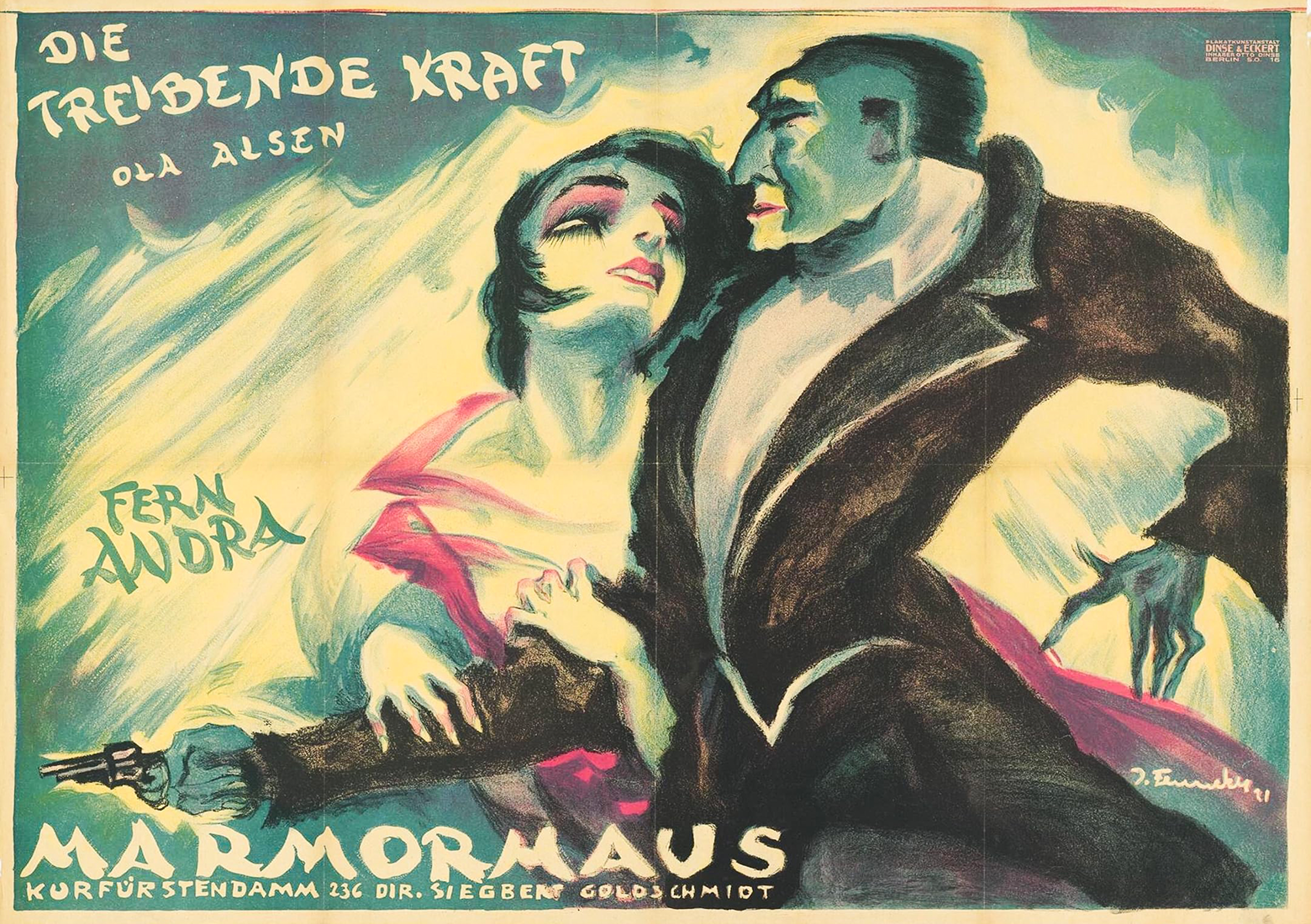
Film poster for Treibende Kraft, by Josef Fenneker.
Source: https://www.imdb.com/title/tt0012778/mediaviewer/rm2636150016
A late November exchange of letters highlighted other cinema problems. Writers called for special cinemas for workers and students because neither could otherwise afford to see films and for Sovprofbel (the Belarusian Council of Trade Unions) to use the former Lux and former Illusion cinemas for workers.15
A writer named Alperovich responded that neither building any longer had chairs or a projector, and that the Lux was occupied by a builders’ club. Alperovich also pointed out that there could be screenings at the House of Culture and the Red Profintern Club.16 We cannot confirm whether it was the same person, but Alperovich was also the name of the head of the Podiv 4 film directorate.
1 Zvezda [Звезда; Star], No. 259 (1561), 4 Nov. 1923.
2 Ehrman, Grace. Bim-Bom: How a Soviet Clown Duo Defied the Soviets. The Collector https://www.thecollector.com/soviet-clown-duo-bim-bom/ 25 Aug. 2024; Jacob, Pascal. “Russian Clowns.” Cirque-CNAC, Centre National des Arts du Cirque / Bibliothèque nationale de France, https://cirque-cnac.bnf.fr/en/clowns/clown-characters/russian-clowns Accessed 29 Sept. 2026.
3 Nedopushcheniye detey v teatry i kino [Недопущение детей в театры и кино; Excluding children from theaters and cinemas]. Zvezda, No. 261 (1563), 8 Nov. 1923.
4 V Minskiy gorispolkom [В Минский горисполком; To the Minsk City Executive Committee]. Undated, probably late October — early November 1922. Gosudarstvenny arkhiv Minskoy oblasti, GAMn [Государственный архив Минской области; State Archive of Minsk Region], Fond 322, Opis 1, Delo 89, p. 284.
5 Protokol № 31 zasedaniya Prezidiuma Minskogo gubernskogo RABIS [Протокол № 31 заседания Президиума Минского губернского РАБИС; Minutes No. 31 of the meeting of the Presidium of the Minsk Guberniya RABIS] 8 Nov. 1923. Natsionalny arkhiv Respubliki Belarus’ NARB [Национальный архив Республики Беларусь (НАРБ); National Archive of the Republic of Belarus (NARB)], Fond 307, Opis’ 2, Delo, 2, p. 65.
6 Protokol no. 31 zasedaniya Prezidiuma Mingubrabisa [Протокол № 31 заседания Президиума Мингубрабиса; Minutes no. 31 of the meeting of the Presidium of the Minsk Provincial Trade Union of Art Workers] 8 Nov. 1923 NARB, Fond 307, Opis’ 2, Delo 2, p. 65.
7 Shklovsky, Victor “O zakonakh kino.” [О законах кино; On the Laws of Cinema]. Russkii sovremennik, 1924, 1, pp. 245–2. Republished in Novoye literaturnoye obozreniye [Новое литературное обозрение; New Literary Review]. https://nlobooks.ru/article/11317/ Accessed 29 Sept. 2026. See footnote 1 of this article.
8 V Ekspertnuyu komissiyu pri N.K.F. В Экспертную комиссию при Н.К.Ф.; To the Expert Commission under the People's Commissariat of Finance] NARB, Fond 93, Opis’ 1, Delo, 1119, p. 8.
9 Protokol № 17 zasedaniya pravleniya Minskoy gubernii RABIS [Протокол № 17 заседания правления Минской губернии РАБИС; Minutes No. 17 of the meeting of the of Board the Minsk Guberniya RABIS] 14 Nov. 1923. NARB, Fond 307, Opis’ 2, Delo, 1, p. 73.
10 Udostovereniye No. 1451 RABIS [Удостоверение No. 1451 RABIS; Certificate No. 1451 of the RABIS] 16 Nov. 1923. NARB, Fond 307, Opis’ 1, Delo 15, p. 62.
11 V Narkomfin. Bel. [В Наркомфине. Бел.; To Narkomfin. Bel.] 16 Nov. 1923 NARB, Fond 307, Opis’ 1, Delo 15, p. 61.
12 Udostovereniye [Удостоверение; Identification Card] 17 Nov. 1923 NARB, Fond 307, Opis’ 1, Delo 15, p. 58.
13 Protokol № 14. Zasedaniye Mingorosoveta s sovmestnym uchastiyem rabochikh organizatsiy i voinskikh chastey [Протокол № 14. Заседание Мингоросовета с совместным участием рабочих организаций и воинских частей; Minutes No. 14 of the meeting of the Minsk City Soviet with representatives of workers' organizations and military units] 24 Nov. 1923. GAMn, Fond 6, Opis 1, Delo 22, p. 044b; NARB Fond 6, Opis’ 1, Delo 225, p. 156b.
14 В Главлит [В Главлит; Letter to Glavlit], 19 Nov. 1923, Fond 307, Opis’ 1, Delo 15, p. 53.
15 Zvezda, No. 269 (1571), 18 Nov. 1923.
16 Zvezda, No. 276 (1578), 27 Nov. 1923.